
Rascunho — ainda não traduzido.
Melhor SIM para Galápagos: eSIM vs SIM Física
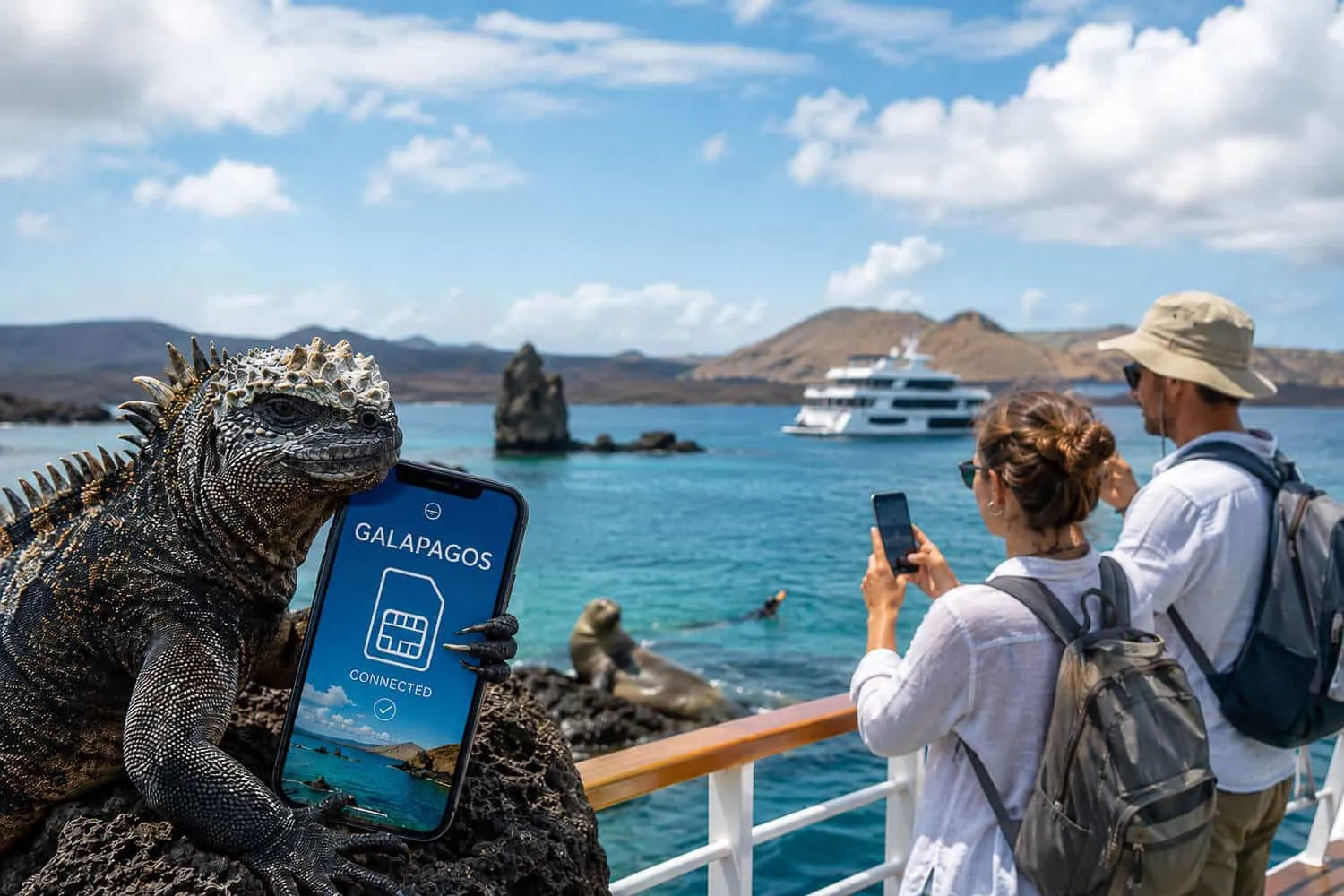
Best SIM Card for Galapagos: eSIM vs Physical SIM (2026)
Internet, Calls, Prices, and General Information
If you’re planning a trip to the islands, you’ve probably already guessed the answer to “will I have signal?” - it’s complicated. Between remote islands, ocean crossings, and a national park that deliberately limits infrastructure, finding the best SIM card for Galapagos isn’t as simple as it is for most destinations. It’s also changing fast - the arrival of Starlink on many cruise ships and hotels has made connectivity noticeably better than it was just a couple of years ago. This guide breaks down exactly what coverage looks like island by island, whether you should get a physical SIM or an eSIM, what Starlink actually changes, and how real travelers have handled it.
Table of Contents
Your Galapagos Islands Essentials - Quick Guide
Short on time? This quick Galapagos guide will help you plan! 
 Where to Stay: - Finch Bay Hotel (Santa Cruz Island) - Hotel Indigo by IHG (San Cristobal Island) - Hotel Iguana Crossing (Isabela Island) Must-Do Experiences: - 360 Tour (San Cristobal highlights by boat) - Kicker Rock Tour (Top snorkeling with big wildlife) - Bartolome Island Tour (Iconic views & marine life) - Floreana Island Tour (Snorkel, fishing & history) - Sierra Negra Volcano Tour (Epic volcano hike) - Los Tuneles Tour (Galapagos’ best snorkeling) Extras you’ll Need: - Travel Insurance with Heymondo (5% discount). - Mobile eSim with Holafly (5% discount) or Airalo Important: Tours sell out fast - book early and plan a backup day.
Do You Need a SIM Card for Galapagos?
Short answer: probably, if you want to check messages, upload photos, or make the occasional call while you’re on the main inhabited islands. Longer answer: it depends on your itinerary. If you’re doing a land-based trip staying in hotels in Puerto Ayora, Puerto Baquerizo Moreno, or Puerto Villamil, you’ll have decent WiFi at most accommodations and restaurants, so a SIM card is more of a nice-to-have for when you’re out and about. If you’re on a multi-day cruise, you’ll spend a lot of time at sea and visiting uninhabited islands with zero mobile coverage - in that case, a SIM or eSIM is really only useful during the hours your boat is docked in a port town. Either way, going in with the right expectations (and the right SIM setup) makes a real difference to how connected you’ll feel during the trip. 
Galapagos Cell Coverage: What to Actually Expect, Island by Island
Coverage in the Galapagos is concentrated almost entirely in the port towns of the three main inhabited islands. Everywhere else - the highlands, uninhabited islands, and open water - you should expect little to no signal, regardless of which SIM or carrier you’re using.
- Santa Cruz (Puerto Ayora): The most reliable coverage in the archipelago. Expect solid 4G in town, along the waterfront, and at most restaurants and hotels. Signal weakens as you head inland toward the highlands and the tortoise reserves.
- San Cristobal (Puerto Baquerizo Moreno): Good 4G coverage around the port and main streets, including popular spots like La Lobería. As with Santa Cruz, coverage drops off quickly outside the town center.
- Isabela (Puerto Villamil): The least developed of the three main islands. Expect patchier coverage, often 3G rather than 4G, and signal that disappears once you head toward Sierra Negra volcano or the wetlands trails.
- Uninhabited islands (Fernandina, Española, Genovesa, Bartolomé, and others): No mobile infrastructure at all. If your cruise itinerary includes these — and most do — plan on being fully offline during those visits.
- At sea: No coverage, on any carrier, on any SIM. This includes most of the time spent sailing between islands on a cruise.
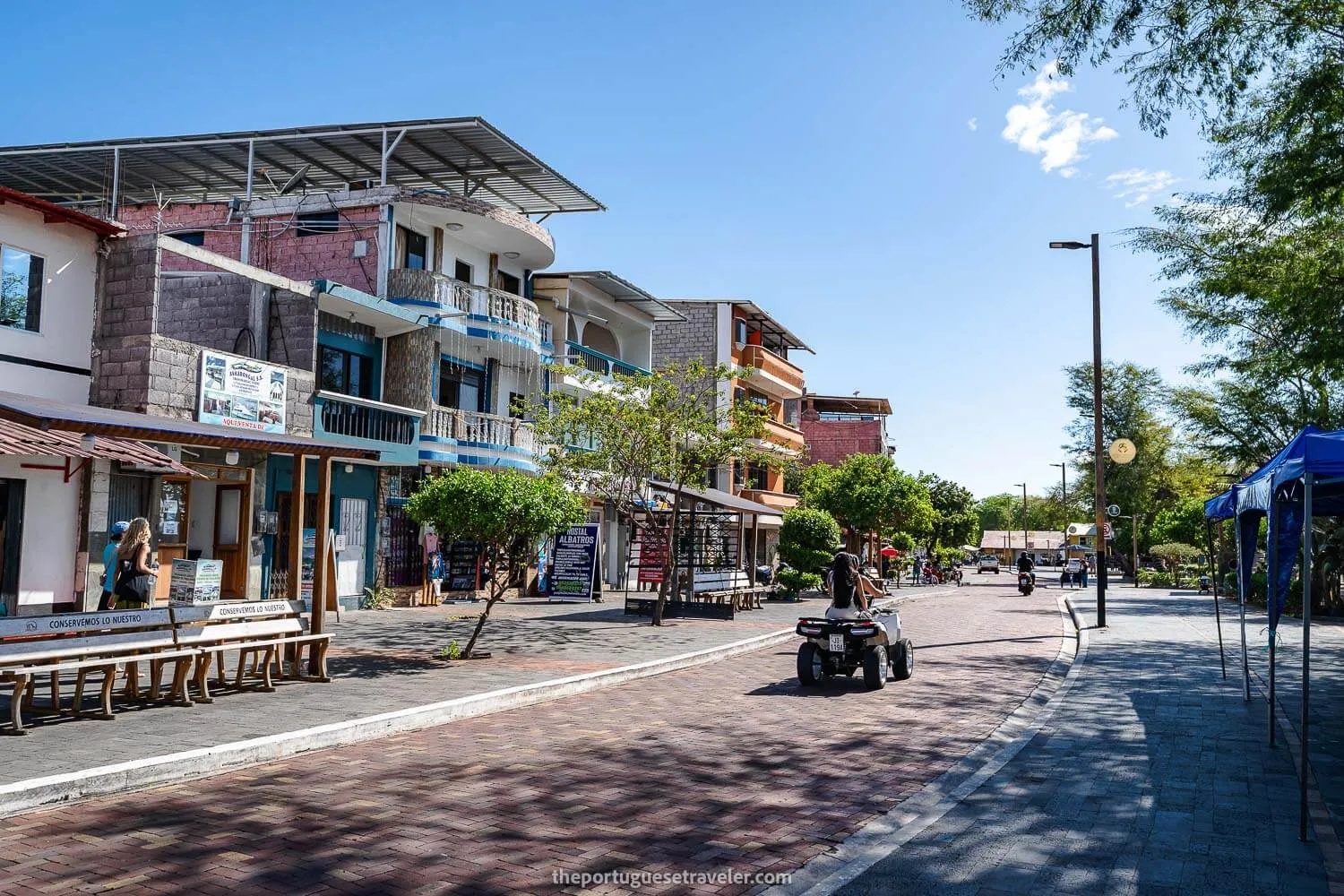
Physical SIM Cards for Galapagos: Claro vs. Movistar
If you’d rather go the traditional route, Ecuador’s two main carriers are Claro and Movistar. Based on traveler feedback and coverage reports from tour operators, Claro tends to have the edge in the Galapagos, though neither carrier will get you signal outside the main towns. A few practical things to know about buying a physical SIM:
- You’ll need to buy it on the mainland - there are no SIM card shops in the Galapagos itself, so pick one up at the airport or a carrier store in Quito or Guayaquil before you fly out (i was able to get a Claro SIM Card on a local electronics shop in San Cristobal, but i had to ask my tour operator for his Ecuadorian ID)
- Your phone needs to be unlocked to accept a foreign SIM. Check with your home carrier before you travel if you’re not sure.
- You’ll typically need to show your passport to register the SIM, and it can take a few minutes at the counter.
- Once installed, you’ll lose your home number for calls and texts unless you have a dual-SIM phone.
The upside of a physical SIM is that it usually includes a local number and voice minutes, not just data - useful if you need to make local calls to tour operators or hotels, and it’s usually cheaper than an eSIM.
eSIM for Galapagos: A Simpler Option for Most Travelers
For most visitors, an eSIM is the far more convenient choice. You buy and install it before you leave home, it activates automatically the moment you land, and you never have to track down a shop or swap a physical card. Your regular number stays active for calls and texts on your primary line, while the eSIM handles your data. This matters more in the Galapagos than almost anywhere else, simply because there’s no official place to buy a SIM on the islands themselves - if you didn’t sort out connectivity on the mainland, an eSIM is your only real option once you’ve already arrived. Holafly and Airalo are two of the most popular eSIM providers for this route, offering limited and unlimited data plans for Ecuador that are simple to set up and don’t require juggling data caps during your trip.  eSim: If you want to get an eSim for the Galapagos, Holafly (5% discount with our link) and Airalo work pretty well. They usually use Claro as a provider. A few notes on eSIMs generally for this destination:
- Most eSIMs are data-only - no local phone number, no SMS, no voice calls. For calls, you’ll rely on WiFi calling or apps like WhatsApp and FaceTime when you have a data connection.
- Your phone needs to be eSIM-compatible - most iPhones from the XS onward and recent Android flagships support it, but it’s worth checking your specific model before buying.
- Coverage still depends on the same local networks (Claro/Movistar/Tigo), so an eSIM won’t magically get you signal in places where physical SIMs don’t work either - it just makes the process of getting connected far easier.
- Plans are generally sold by data allowance and validity period, so pick a plan that matches your trip length rather than over-buying.
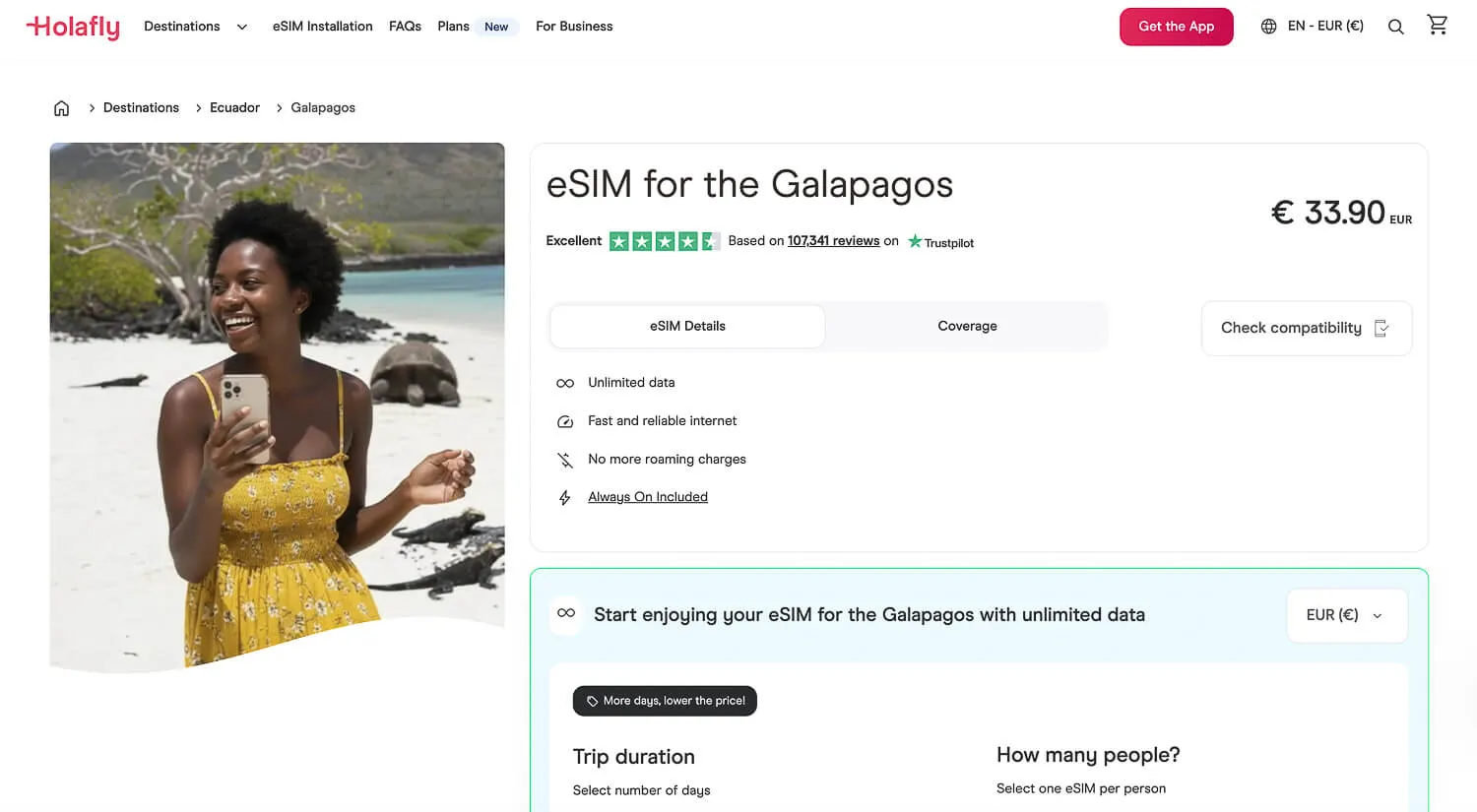
Holafly 7 day-plan for the Galapagos (Movistar)
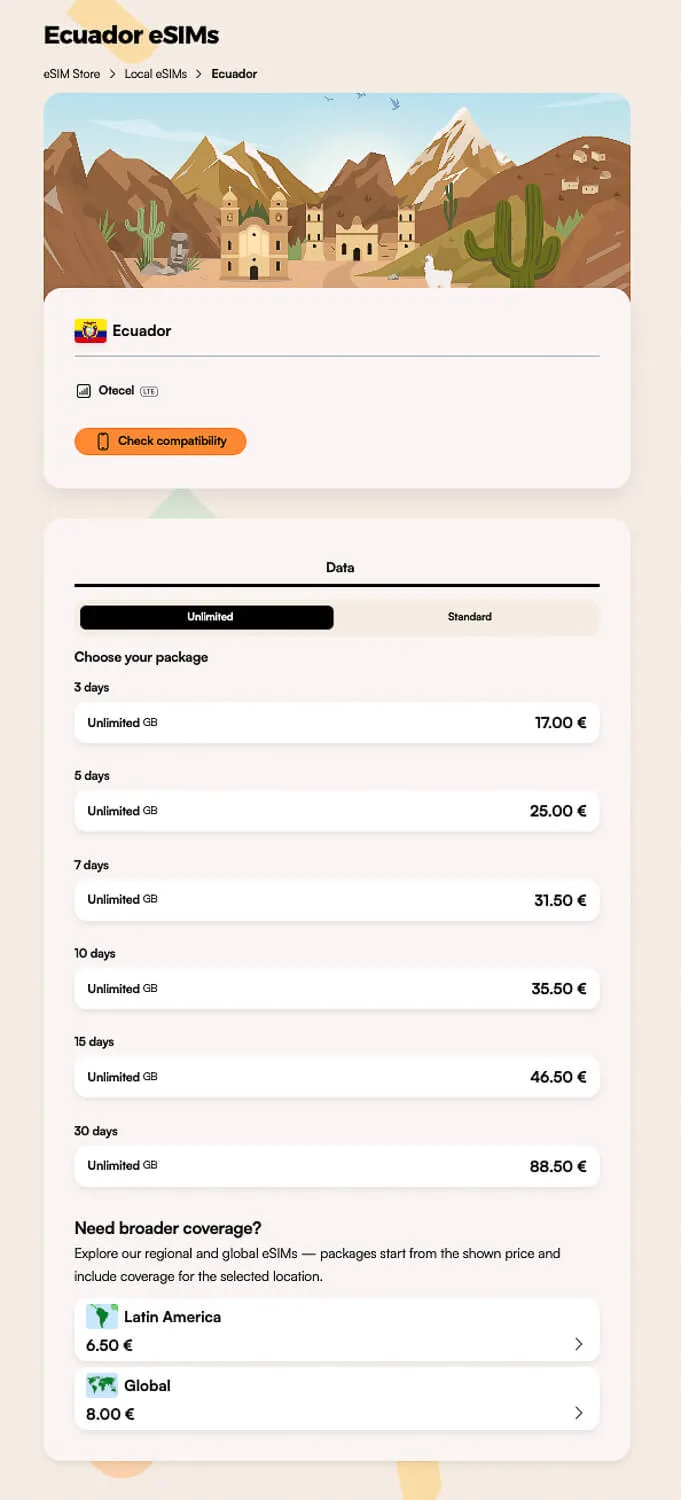
Airalo plans for the Galapagos (Otecel-Tigo)
Best SIM Card for Galapagos: Physical SIM or eSIM?
Here’s how the two options stack up side by side:
| Differences | Physical SIM (Claro/Movistar) | eSIM (e.g. Holafly) |
|---|---|---|
| Where to get it | Airport or carrier store in Quito/Guayaquil only | Bought online before you fly, activates on arrival |
| Setup | Requires passport, in-person registration | Scan a QR code, done in minutes |
| Includes calls/SMS? | Usually yes, with a local number | Usually data-only |
| Phone requirement | Must be unlocked | Must be eSIM-compatible |
| Convenience in Galapagos | Low - barely no shops on the islands themselves | High - no need to find a store anywhere |
| Best for | Longer stays needing a local number | Most travelers, especially shorter trips |
For the vast majority of Galapagos travelers, an eSIM is simply the best SIM card for the Galapagos in terms of convenience - you don’t want to be hunting for a mobile shop the day before a flight to a volcanic archipelago where retail options are scarce to begin with. 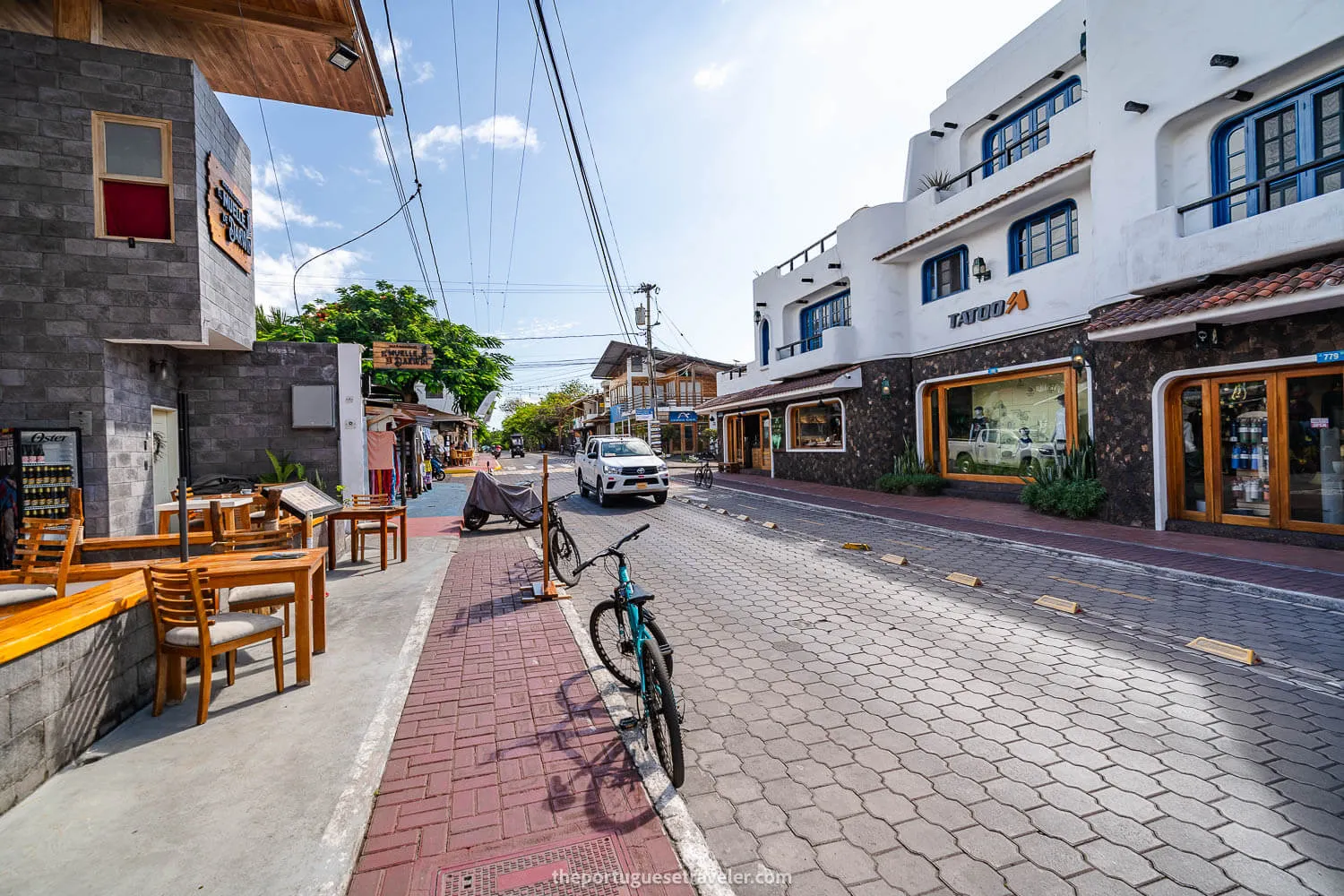
WiFi in the Galapagos: Starlink Has Changed the Game
WiFi has improved dramatically in the Galapagos over the past couple of years, and the reason is almost entirely one thing: Starlink. It’s worth its own section because it changes some of the advice above - especially if you’re on a cruise.
What Starlink Actually Is
Starlink is SpaceX’s satellite internet service. Instead of bouncing a signal off a single distant geostationary satellite (the old, slow approach ships used to rely on), it connects through a constellation of thousands of low-orbit satellites, which means far faster speeds and much lower lag. The Galapagos sits around 1,000 km off mainland Ecuador, well outside the range of any cell tower, so satellite internet is really the only way to get connected once you’re out on the water - and Starlink is a massive upgrade over what came before.
Starlink on Galapagos Cruises
Most Galapagos cruise operators installed Starlink Maritime (the ruggedized, ship-mounted version) during 2023–2024, and as of 2026, the large majority of the fleet - by some estimates, around 90% of active cruise vessels - now runs on it, with the remainder still using older, much slower VSAT satellite systems. Here’s a realistic breakdown of what works and what doesn’t, even with Starlink onboard: Generally reliable:
- Messaging apps (WhatsApp, iMessage) — text and voice notes send quickly, photos take a few seconds
- Social media browsing and posting (Instagram, TikTok) — scrolling and uploading both work, if a little slower than home WiFi
- Email and standard web browsing
Hit-or-miss or not viable:
- Video streaming (Netflix, YouTube) — bandwidth is shared across everyone on board, so streaming is often blocked outright or unusably slow
- Real-time online gaming — satellite latency makes competitive multiplayer impractical
- Video calls — audio calls tend to work fine, but video quality fluctuates and calls can drop
The connection is shared among everyone on the vessel, so speeds dip noticeably at peak times (right after meals, when most passengers are back onboard and online) and pick back up early morning or late at night. Some operators cap bandwidth per device to keep things fair; it’s worth asking your cruise operator directly whether their specific vessel has Starlink installed, since not all of them have upgraded yet.
“Starlink Hotels” in the Galapagos
If you’re browsing accommodation on booking platforms, you may have noticed some Galapagos hotels now include “Starlink” directly in their listing name - something like “Hotel X - Starlink WiFi.” This isn’t a coincidence or a gimmick: it reflects a real shift where island properties are installing their own Starlink terminals to guarantee fast, stable internet, rather than relying on Ecuador’s mainland-run fiber and cellular infrastructure, which can be inconsistent this far out in the Pacific. For travelers, this is genuinely useful information: a hotel actively advertising Starlink in its name is signaling that it has invested in reliable connectivity, which is a fair predictor of a better WiFi experience than at a similarly priced property without it. If staying connected matters to you, it’s worth searching for “Starlink” specifically when comparing Galapagos hotel listings, or simply asking the property directly before booking. Beyond hotels and cruises specifically:
- Restaurants in Puerto Ayora, Puerto Baquerizo Moreno, and Puerto Villamil generally offer guest WiFi, with quality varying by property.
- Airports in the Galapagos offer free WiFi.
Treat WiFi as a backup to your SIM/eSIM setup rather than a replacement - the two together give you the best shot at staying connected when it matters. If you’re on a cruise or staying somewhere with Starlink specifically, that backup is now considerably stronger than it used to be. 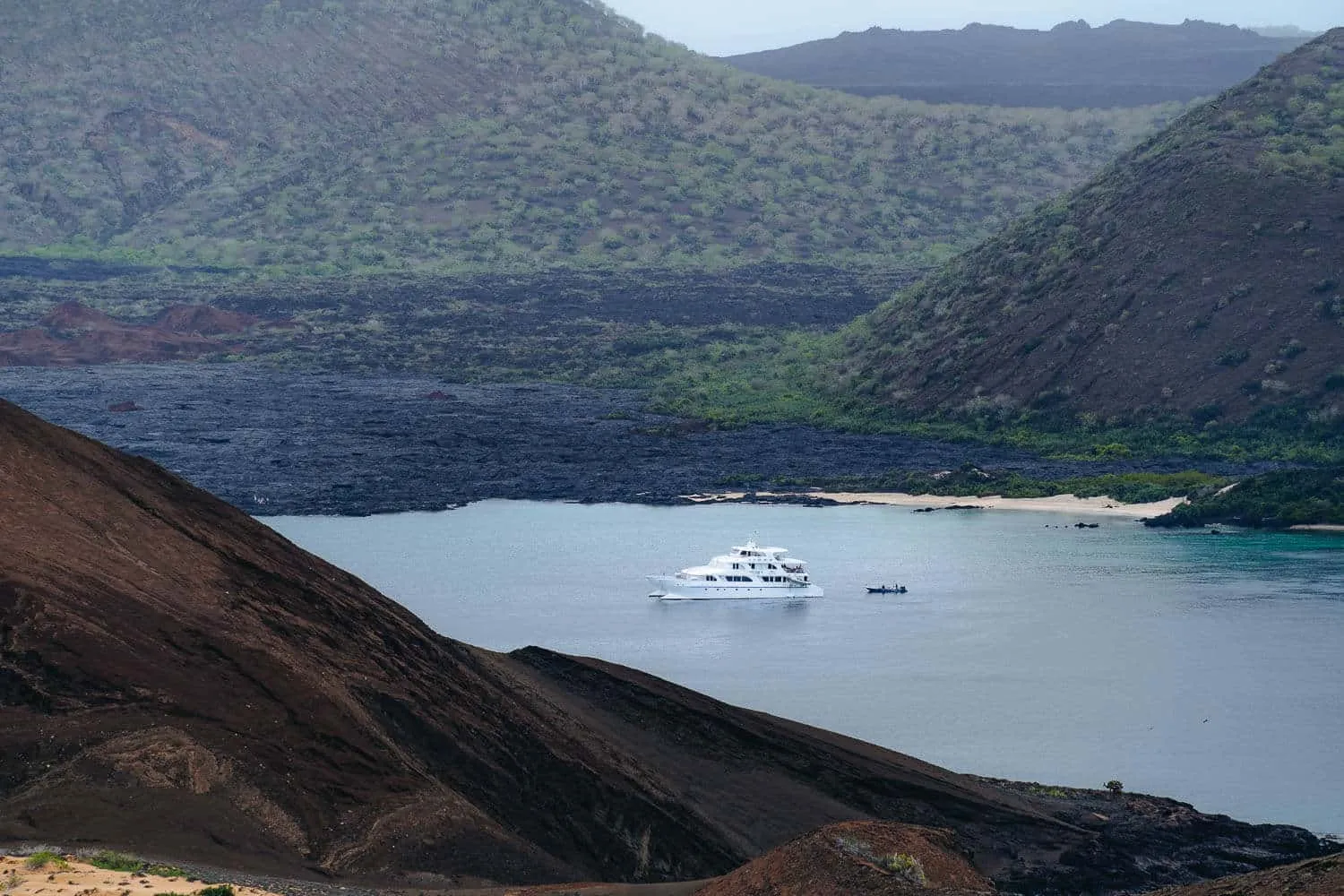
Tips From My Own Experience and Other Galapagos Travelers
Beyond the official guides, coverage here can be a bit hit-or-miss depending on your device, carrier, and even the exact spot you’re standing in. A few recurring themes from multiple travelers who’ve recently made the trip:
- Results with international eSIMs are mixed. Some travelers report their eSIM working fine across all three inhabited islands, picking up the local network without issue. Others have had trouble getting a stable 4G connection and were stuck on slow 2G or 3G for parts of their trip, even in town.
- Messaging apps are the most reliable use of limited data. WhatsApp tends to work even when a connection is weak, while email and larger downloads can take a long time to load.
- Don’t rely on a single connectivity option. Lean on hotel WiFi as a backup when your SIM or eSIM signal is unreliable, and download offline maps in advance to save you when you have no signal at all.
- Test your setup before you actually need it. If possible, confirm your eSIM or SIM is working as soon as you land, rather than waiting until you’re relying on it for something important.
How Much Data Do You Actually Need?
Most Galapagos visitors use far less data than they expect, simply because there’s only signal for part of the day. As a rough guide:
- Messaging apps (WhatsApp, iMessage): around 50 MB per day with photos
- Social media browsing: roughly 150–300 MB per day
- Uploading photos to cloud storage: about 200 MB per batch of 20–30 photos
- Maps and navigation: 20–50 MB per day (less if you download offline maps in advance)
- Video calls: around 500 MB per hour, and only realistic in port towns with 4G
For a typical 7–10 day trip with a few hours of signal per day in port towns, a plan in the 2–5 GB range is generally plenty for messaging, browsing, and photo uploads.
Final Verdict: Best SIM Card for the Galapagos
If you want the simplest, most reliable setup, an eSIM purchased and installed before you leave home is the best SIM card for the Galapagos for most travelers - no shops to find, no passport registration, and it’s ready the moment you land. A physical Claro SIM is still a solid option if you specifically need a local number for calls, and you’re willing to sort it out in Quito or Guayaquil before heading to the islands. Whichever you choose, pair it with hotel or cruise WiFi where available, download your maps and essentials offline, and go in accepting that some of your best Galapagos moments will happen fully disconnected - which, on an island chain built around unplugging from the world, might be exactly the point. 
Where to Stay in The Galapagos Islands
Where you stay in the Galapagos can really shape your experience. You can choose a cruise, which doubles as your floating hotel, or land-based stays on islands like Santa Cruz, San Cristobal, and Isabela, ranging from cozy guesthouses to luxury hotels with ocean views. Personally, I love staying on the islands—it’s magical to wake up to the sound of waves and explore nearby beaches or towns before heading out on day tours. No matter what you choose, booking early is key, especially in high season, to get the best spots and make the most of your trip.  Accommodation: Where to stay and the best hotels and hostels on the three main islands (Santa Cruz, San Cristobal, and Isabela)