
Draft — not yet translated.
Templo Rupestre de Sithulpawwa: Guía Completa
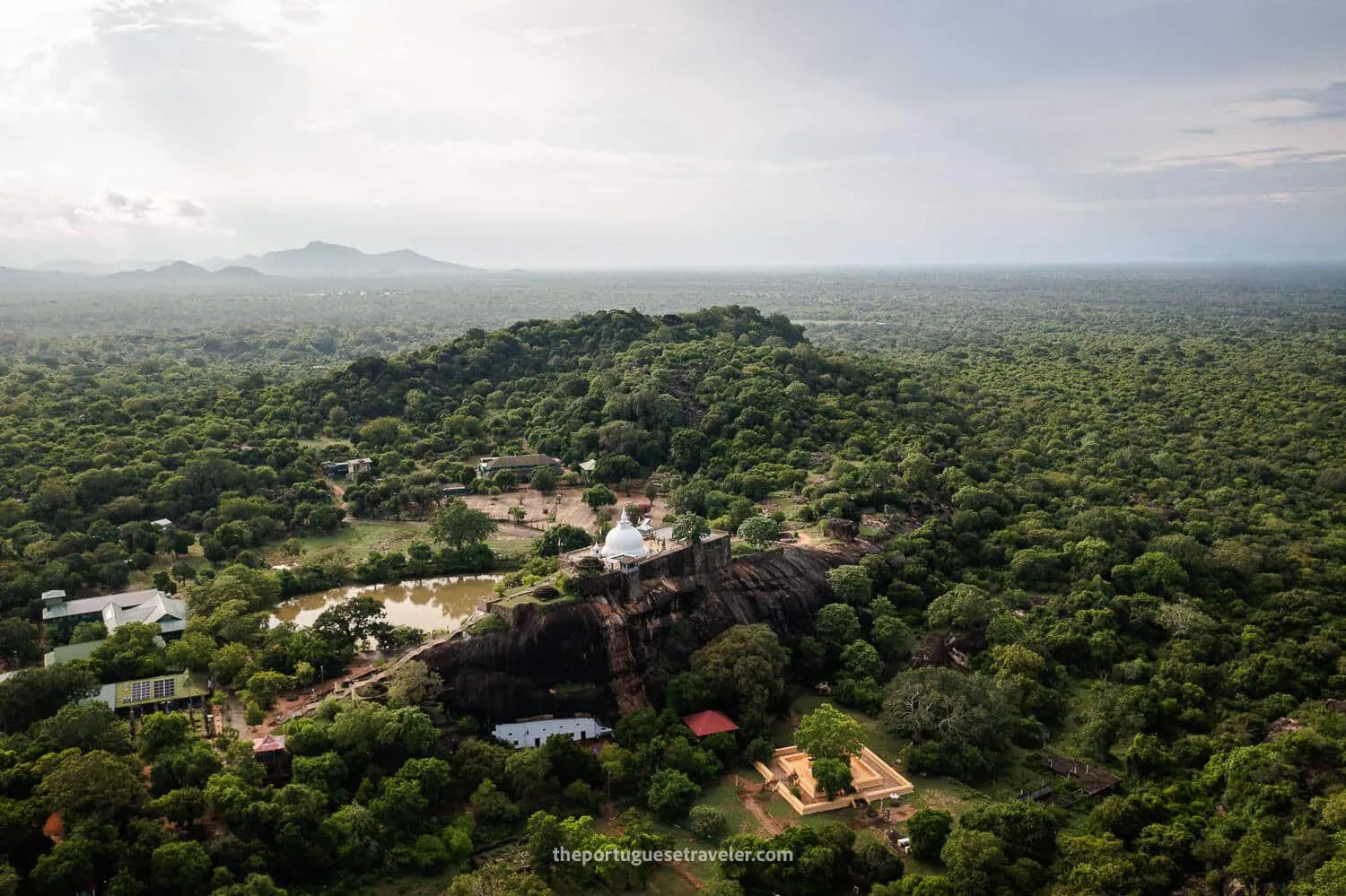
Sithulpawwa Rock Temple: Discover a Hidden Temple
Explore an Ancient Sanctuary Surrounded by Jungle, Rocks, and Wildlife
The Sithulpawwa Rock Temple is one of those places that will leave you wide-eyed and speechless, even if you’ve seen your fair share of temples. Nestled deep in Sri Lanka’s Yala National Park, this temple is more than just a religious site—it’s an adventure that surprises you at every turn. From the moment you enter the park and begin spotting wildlife on the way, to the jaw-dropping views from the top, every part of the experience feels like an unexpected treasure. The journey takes you through dense jungle and past curious creatures, but it’s the temple itself that truly stuns. Surrounded by rugged rock formations and filled with ancient carvings, Sithulpawwa offers a peaceful, powerful atmosphere that stays with you long after you’ve left. Including Sithulpawwa in your Sri Lanka itinerary adds a layer of spiritual depth and natural wonder. With its wildlife-rich trails and panoramic vistas, this hidden gem is well worth the detour.
Table of Contents
Sithulpawwa Rock Temple: Essential Information
If you’re short on time but still want the key details, this section covers everything you need to know before visiting the Sithulpawwa Rock Temple.
- Location: Inside Yala National Park, about 18 km from Tissamaharama, Sri Lanka.
- History: An ancient Buddhist monastery dating back over 2,000 years, believed to have been a meditation site for thousands of arhats (enlightened monks).
- Open Hours: Daily from 6:00 a.m. to 6:00 p.m.
- Key Attractions:
- Large stupa on the rock summit with panoramic views.
- Ancient cave temples featuring murals, buddha statues, and inscriptions.
- Ruins of meditation chambers and monastic structures.
- Spiritual Significance: A major pilgrimage site where monks once practiced deep meditation.
- Wildlife & Nature: In Yala National Park, expect to see elephants, peacocks, and other wildlife.
- Etiquette: Wear white or modest clothing, remove shoes before entering sacred areas, and maintain silence.
- Best Time to Visit: Early morning or late afternoon to avoid the heat and see the temple in peaceful surroundings.
- Contact: +94 473 489 550
For more information please get in touch with the official tourism board at:
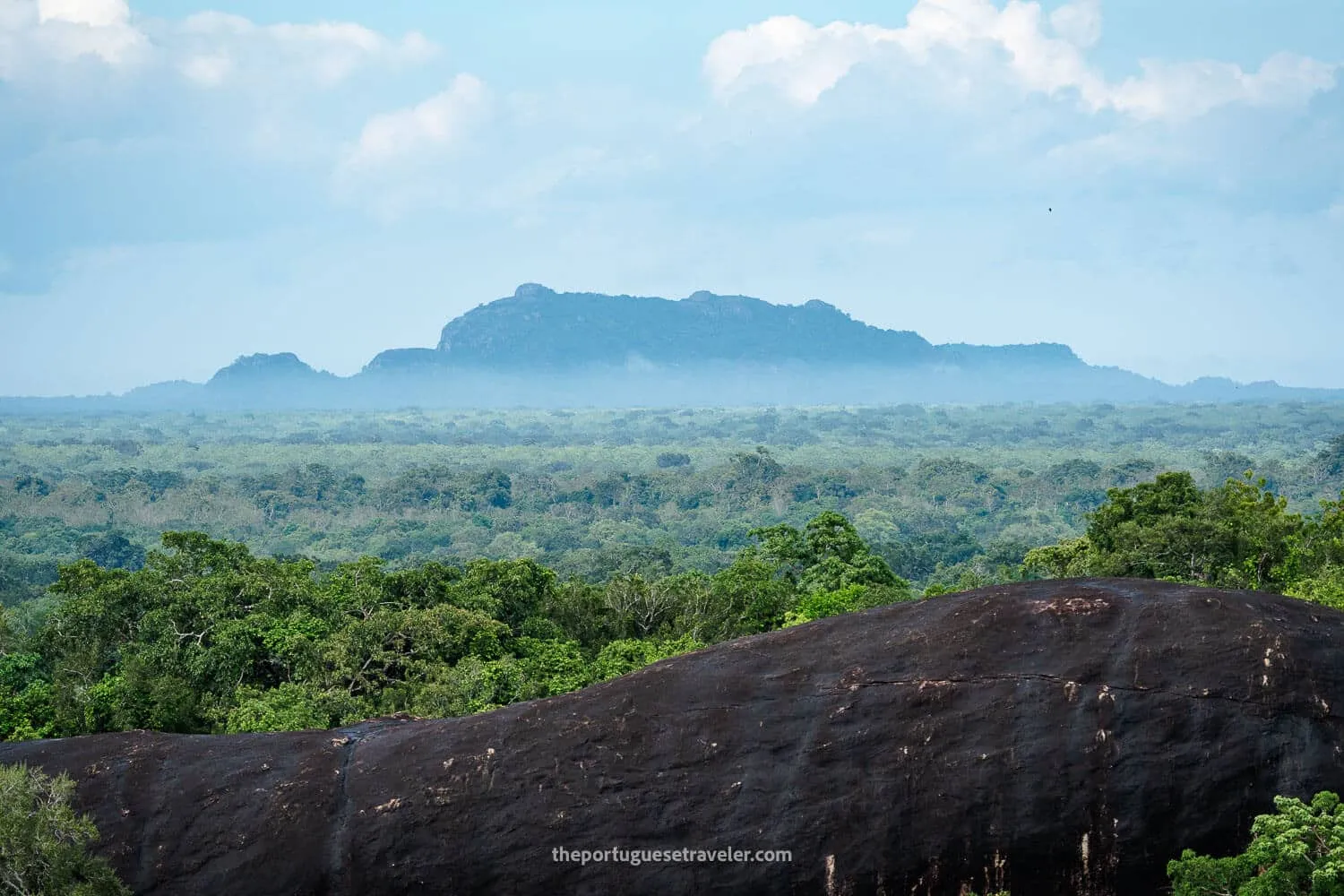
The Sithulpawwa Rock Temple at the Yala National Park
What is the Sithulpawwa Rock Temple?
The Sithulpawwa Rock Temple is an ancient Buddhist monastery located in southeastern Sri Lanka, within Yala National Park. Established by King Kavantissa in the 2nd century BCE, it served as a hermitage for monks practicing meditation and spiritual discipline. With its stupas, rock caves, Dhamma halls, and stone Buddha statues, the temple remains a center of Buddhist worship, meditation, and pilgrimage, offering visitors a glimpse into Sri Lanka’s rich spiritual heritage.
The History of the Sithulpawwa Rock Temple
Sithulpawwa’s origins date back over 2,000 years to the reign of King Kavantissa of the Rohana Kingdom, who transformed the area into a monastery by constructing stupas and essential facilities for monks. Among the monks who resided there was Venerable Sahedawa Arahat Maha Thera, a revered arahant (enlightened monk). Two monks from the monastery also served as teachers to Prince Gemunu and Prince Tissa, the sons of King Kavantissa, one of whom would later become King Dutugemunu, a key figure in Sri Lankan history. Several monarchs supported the monastery throughout the centuries. King Gajabahu (2nd century CE) issued a decree allocating royal tax revenue for the monks’ welfare, while King Wasabba (1st century CE) built 10 escort pagodas around the main stupa, the remnants of which can still be seen today. During the Baminitiya famine in the 1st century BCE, the monastery reportedly sheltered 12,000 arahants. Political instability in the 12th century led to the monastery’s decline, but it was revived in modern times, thanks to monks such as Illukpitiye Jinarathana Maha Thera, Waththehene Rathanasara Nayake Thera, Henegama Soratha Thera, and Unawatune Rathanajothi Thera. Today, the temple is under the stewardship of Ven. Thalpe Ariyajothi Nayake Thera, continuing its legacy as a sanctuary for both monks and lay devotees.
The Meaning Behind the Name Sithulpawwa
The name Sithulpawwa comes from the Pali term Cittala Pabbata, meaning “the hill of the quiet mind.” This name reflects the temple’s role as a retreat where monks sought mental stillness and spiritual enlightenment through meditation. The peaceful natural surroundings of Yala National Park, combined with the temple’s secluded location, have made Sithulpawwa a place of introspection and mindfulness for centuries, a legacy that continues to this day.
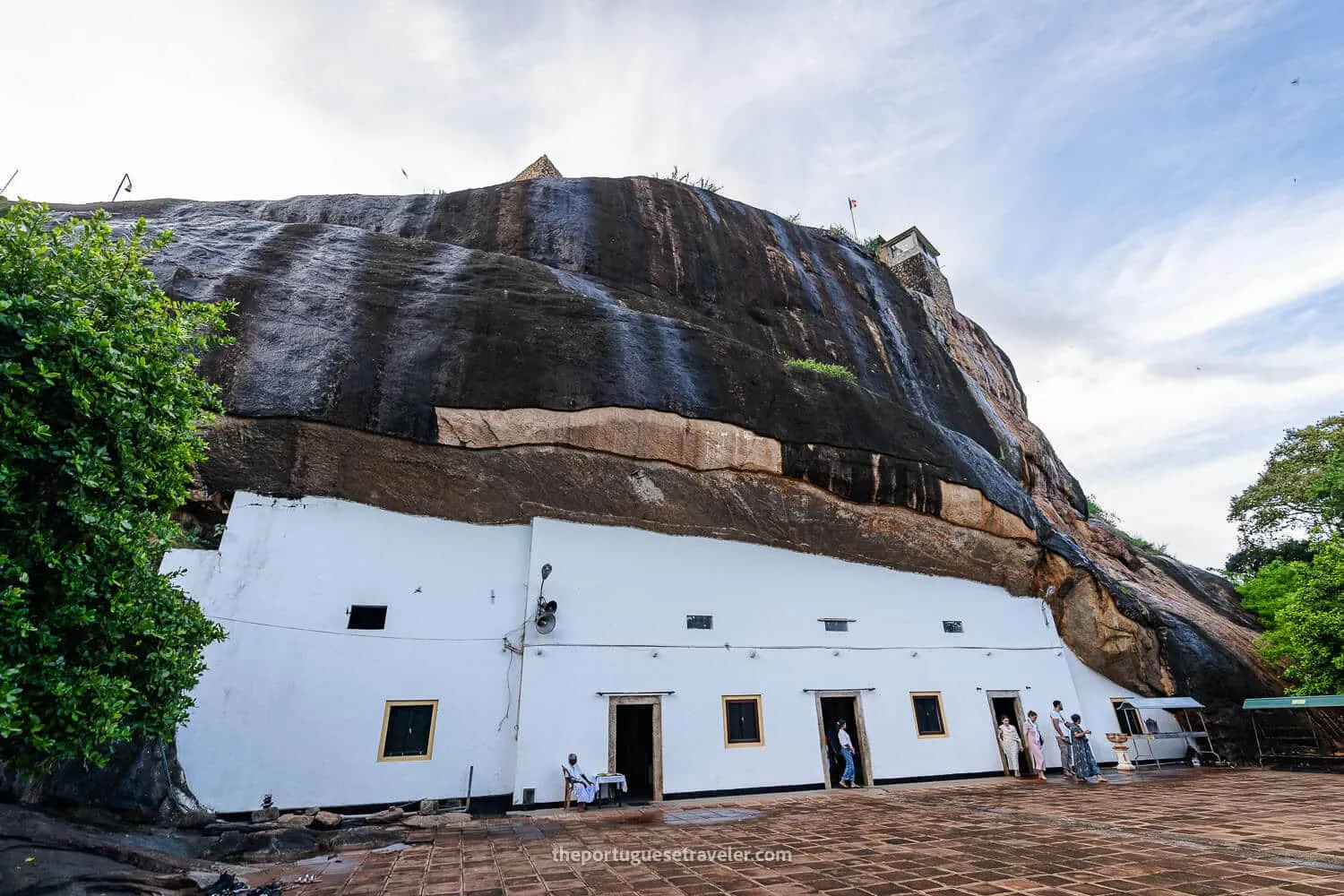
The Sithulpawwa under the rock hidden temple in Yala
Visiting the Sithulpawwa Rock Temple
A visit to Sithulpawwa Rock Temple is not just a journey to an ancient monastery but also an immersion into Sri Lanka’s deep spiritual heritage and stunning wilderness. Nestled within the buffer zone of Yala National Park, this sacred site offers a unique blend of Buddhist history, serene landscapes, and abundant wildlife. Whether you are a pilgrim, a history enthusiast, or a nature lover, exploring Sithulpawwa provides an unforgettable experience. Here’s everything you need to know before your visit.
Where is Sithulpawwa Rock Temple Located?
Sithulpawwa Rock Temple is situated in the Hambantota District of Southeastern Sri Lanka, within the Yala National Park. It lies approximately 18 km east of Kataragama, a major pilgrimage site, and is surrounded by lush forests and wildlife. The temple’s remote location enhances its spiritual and meditative atmosphere, making it a unique destination for both religious devotees and travelers seeking cultural and natural beauty.
How to Get to the Sithulpawwa Rock Temple?
To reach Sithulpawwa Rock Temple, you have several transportation options depending on your budget and preference. Private Car/Taxi:
- Time: Approximately 45–60 minutes from Kataragama
- Details: This is the most convenient and comfortable option, especially for those traveling with family or in a group. A private car or taxi provides a direct and hassle-free ride to the temple, allowing flexibility in your schedule. Roads leading to Sithulpawwa pass through Yala National Park, so you may spot wildlife along the way.
Tuk Tuk:
- Time: 60–75 minutes from Kataragama
- Details: A more adventurous and budget-friendly option, taking a tuk-tuk offers a chance to experience the scenic landscapes up close. The journey can be bumpy due to the gravel roads, but it adds to the excitement of visiting a temple deep in the wilderness.
Safari Jeep (Recommended for Wildlife Lovers):
- Time: 60–90 minutes, depending on wildlife encounters
- Details: Since the temple is inside Yala National Park, many visitors combine their trip with a safari. Booking a safari jeep allows you to enjoy stunning wildlife sightings on your way to the temple, including elephants, leopards, and enchanting birds. This is a great choice for those who want to experience both spiritual and natural wonders in one trip.
Public Bus:
- Time: Varies (no direct bus to Sithulpawwa)
- Details: While there is no direct public transport to the temple, you can take a bus to Kataragama and then hire a tuk-tuk or taxi for the remaining 18 km. This is the most affordable but least convenient option, as it requires multiple transfers.
What is the Best Time to Visit the Sithulpawwa Rock Temple?
The best time to visit Sithulpawwa Rock Temple depends on both weather conditions and spiritual significance:
- Early Morning (6:00-9:00 AM): The coolest and most peaceful time to visit. This is ideal for meditation, photography, and avoiding the midday heat.
- Late Afternoon (4:00-6:00 PM): Offers stunning sunset views over the rock temple and surrounding wilderness. The lighting is perfect for photos, and the atmosphere is tranquil.
- Avoid Midday (11:00 AM-3:00 PM): The heat can be intense, and there is minimal shade. If visiting during this time, bring sun protection and water.
- Pilgrimage Season (June/July - Kataragama Festival): The temple sees more devotees during the annual Kataragama Festival, making it a great time for cultural experiences but a busier visit.
What to Expect When Visiting the Sithulpawwa Rock Temple?
When visiting the Sithulpawwa Rock Temple, you’ll encounter an atmosphere of peace and history. The climb to the top can be a bit challenging, but the stunning 360-degree view from the summit is worth every step. From the top of the rock, you’ll see a main stupa surrounded by other massive rock formations, each crowned with stupas, all set within the dense Sri Lankan jungle. The view of the lush landscape and the surrounding wilderness makes for a truly breathtaking experience. As you explore the area, you’ll come across ancient ruins, including stone Buddha statues and inscriptions that offer insight into the temple’s rich past. The site remains a place of spiritual significance, and visitors are encouraged to respect the serene environment, keeping in mind the temple’s sacredness and its connection to Buddhism.
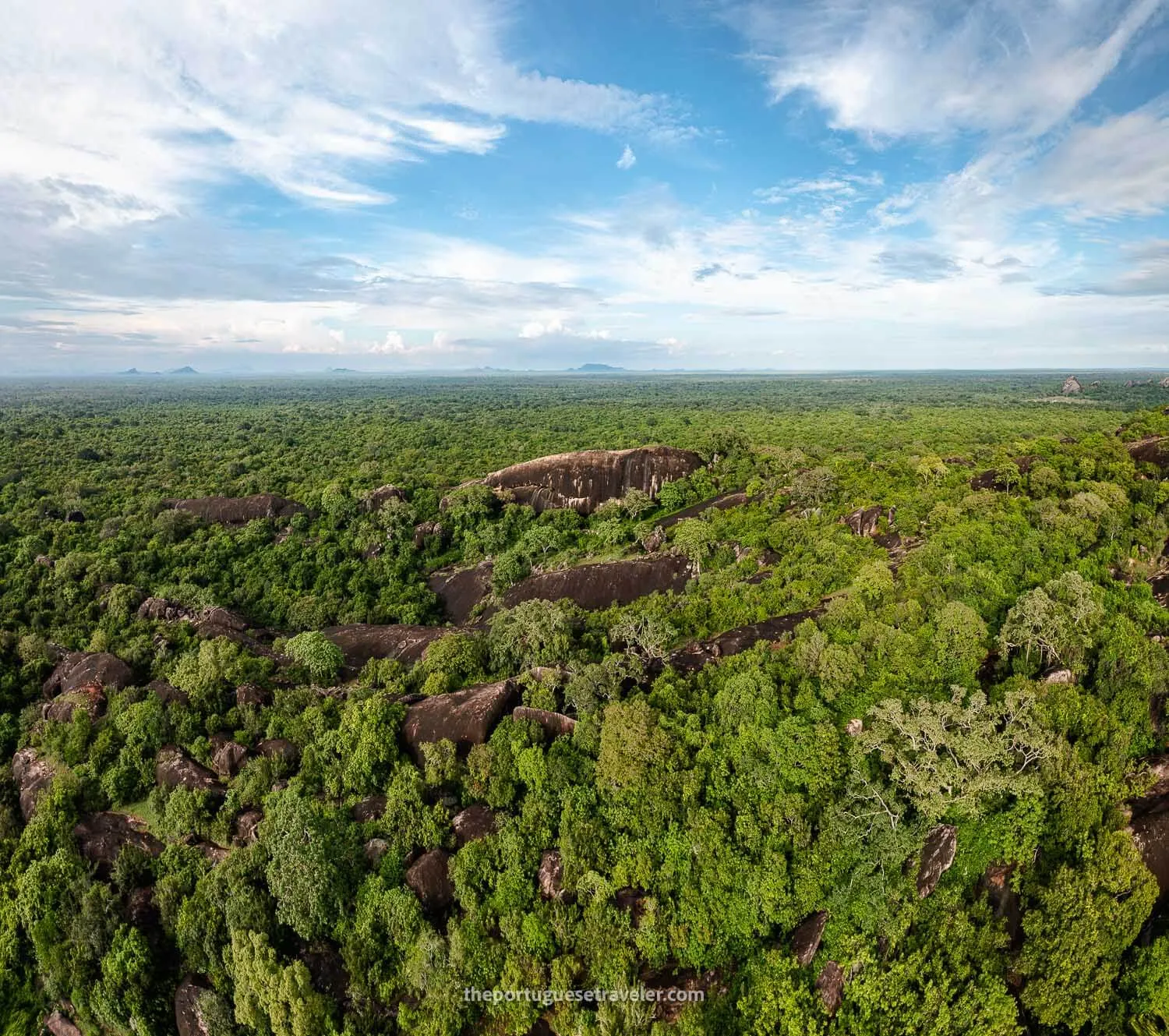
The Sithulpawwa under the rock hidden temple in Yala
Spirituality and History at the Sithulpawwa
Sithulpawwa Rock Temple is not just a historical site; it is a spiritual sanctuary that has long been a center of Buddhist learning and worship. The temple is deeply intertwined with the history and spirituality of the region, offering a glimpse into Sri Lanka’s rich Buddhist heritage. Its tranquil atmosphere, surrounded by ancient ruins and lush jungle, makes it an ideal place for meditation and reflection, attracting visitors who seek peace and spiritual growth.
The Role of Arhats at the Sithulpawwa Rock Temple
Sithulpawwa has been home to countless monks and arhats over the centuries, playing a significant role in preserving the teachings of the Buddha. The temple was a prominent center for Buddhist education, where monks would gather to study the scriptures and practice meditation. The presence of arhats, enlightened beings who have attained Nirvana, adds to the sacredness of the site. These revered figures contributed to the spiritual atmosphere at Sithulpawwa, and their influence continues to be felt by those who visit today.
Ancient Paintings, Statues, and Inscriptions
The walls of Sithulpawwa Rock Temple are adorned with ancient paintings that date back to the Anuradhapura era, showcasing intricate depictions of Buddhist motifs and scenes from the life of the Buddha. Along with these, you’ll find stone statues of Buddha and Bodhisattvas that add to the temple’s spiritual significance. The stone inscriptions placed by King Gajabahu also reveal historical details, such as tax collections that were allocated to the monks, providing a glimpse into the temple’s importance during that period. These ancient works of art are a testament to the long-standing cultural and religious legacy of Sithulpawwa.
Exploring the Cave Temples
The cave temples at Sithulpawwa offer a sense of the deep connection between Buddhism and nature. These caves, once used by monks for meditation and study, are filled with relics and inscriptions that date back over two millennia. Exploring these cool, quiet spaces provides a tangible link to the past, offering a unique experience of both history and spirituality. As you wander through these sacred caves, you’ll encounter the ancient images of Buddha and the remnants of Buddhist practices that have endured through the centuries.
Meditative Atmosphere at the Temple
Sithulpawwa Rock Temple exudes a profound sense of peace and solitude, making it an ideal spot for meditation. The meditative atmosphere of the temple, combined with its natural surroundings, offers visitors the opportunity to reconnect with themselves and the teachings of Buddhism. Whether you’re walking through the jungle paths, sitting by the stupa, or exploring the caves, the serenity of the place encourages mindfulness and reflection. This tranquil environment has attracted spiritual seekers for centuries and remains a significant place for meditation and prayer.
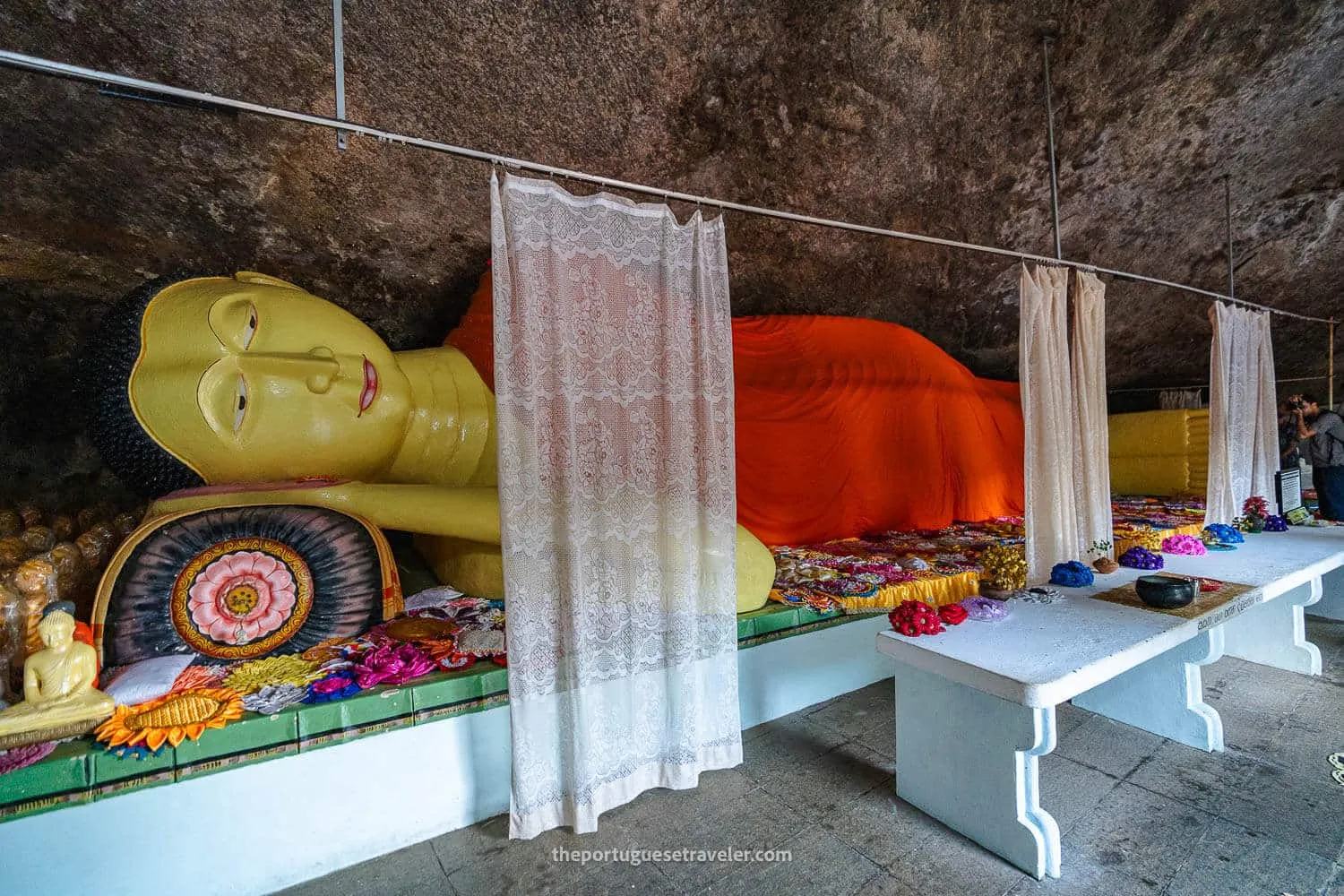
The reclining Buddha inside the hidden temple at Sithulpawwa
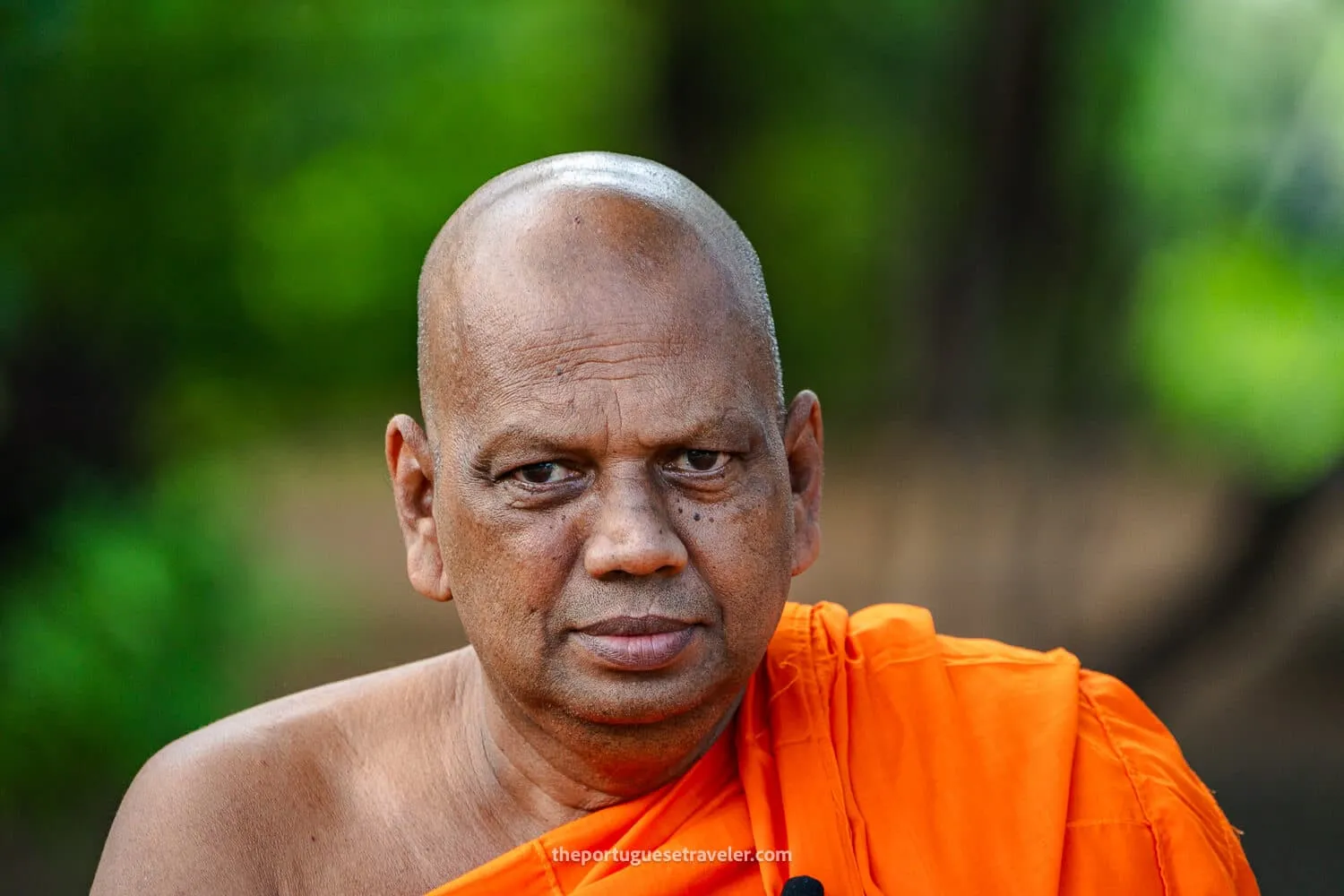
A resident monk of the Sithulpawwa Rock Temple
Nature and Wildlife Around the Temple
The Sithulpawwa Rock Temple is situated in a region that offers both natural beauty and a rich variety of wildlife. It is surrounded by diverse ecosystems, including dense jungle, wetlands, and rocky landscapes, which make it an ideal destination for nature lovers and those interested in wildlife.
Wildlife Around the Sithulpawwa Rock Temple
The area surrounding Sithulpawwa is home to a variety of wildlife. Visitors may spot Sri Lankan elephants, as well as Sri Lankan wild boars moving through the jungle. Smaller animals such as monitor lizards, mongoose, and the Sri Lankan black-necked hare are also commonly seen. Bird enthusiasts can observe barn swallows and Malabar pied hornbills flying through the area. Sri Lankan axis deer are frequently seen grazing nearby, while the Northern plains gray langur can be spotted among the trees. The region is rich in biodiversity, making it a fascinating place for wildlife observation.
Spirituality and Nature at the Temple
The connection between nature and spirituality at Sithulpawwa is evident in the peaceful environment that surrounds the temple. The natural beauty of the area contributes to the temple’s serene atmosphere, which makes it a quiet place for meditation and reflection. The diverse wildlife and tranquil landscapes offer an ideal setting for those seeking a spiritual experience, as the sounds of the jungle complement the spiritual ambiance of the temple.
Rock Formations at Yala National Park
The landscape around Sithulpawwa is dominated by dramatic and ancient rock formations. These rocks are remnants of the island’s geological history, primarily formed from ancient metamorphic rock dating back to the Precambrian era. The volcanic lava that was once molten has since been subjected to extreme pressure and heat, transforming into dense rock that now stands tall against the forces of erosion. The hardest of these rocks have resisted wear and tear, remaining as solitary structures that rise above the surrounding jungle. The most famous of these formations is the large rock known as “Elephant Rock,” so named because its shape resembles a bull elephant walking through the bush. These impressive rock formations not only add to the stunning landscape but also provide a natural refuge for wildlife and an incredible backdrop for your visit to the Sithulpawwa Rock Temple.
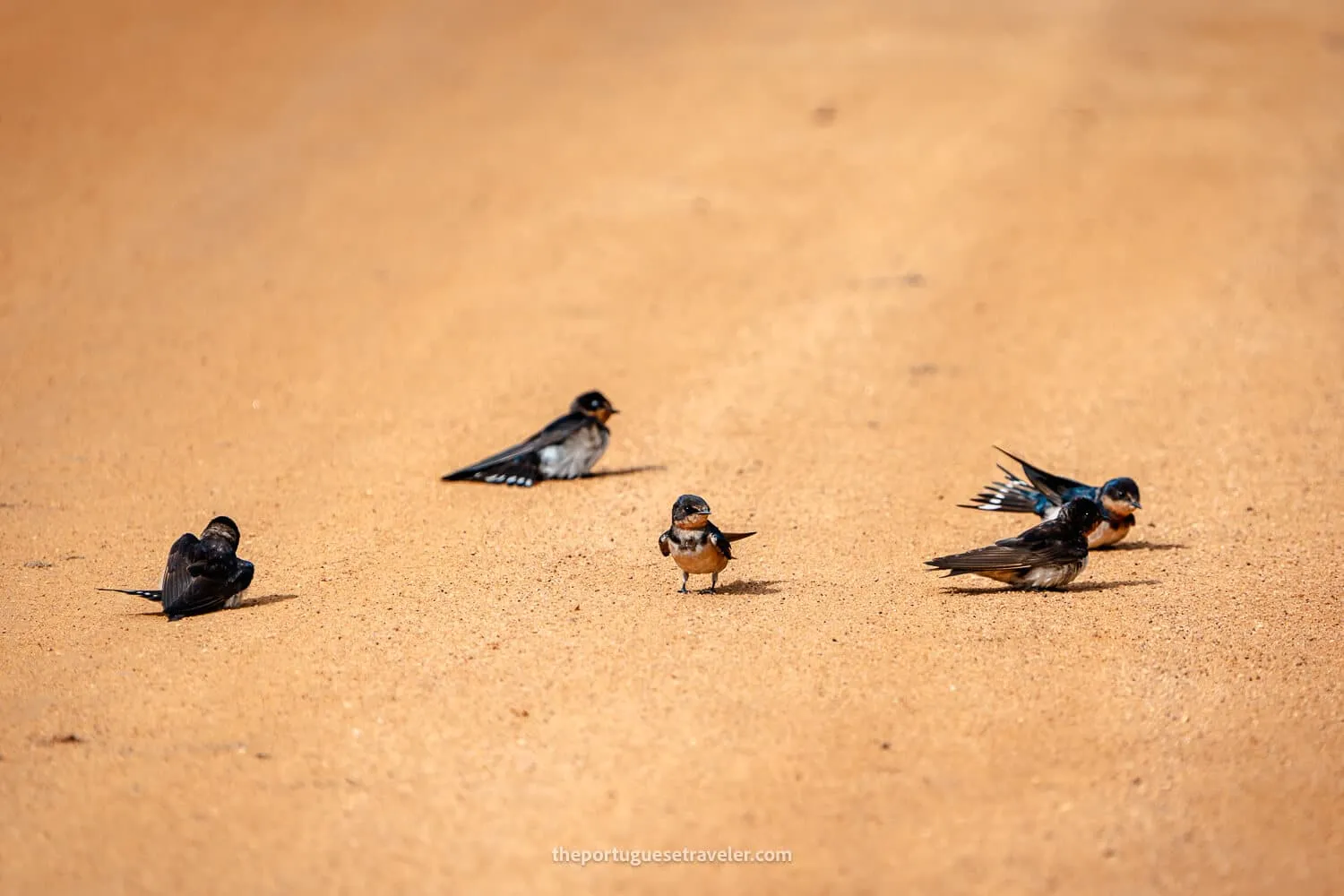
The Swallows on the way to the temple
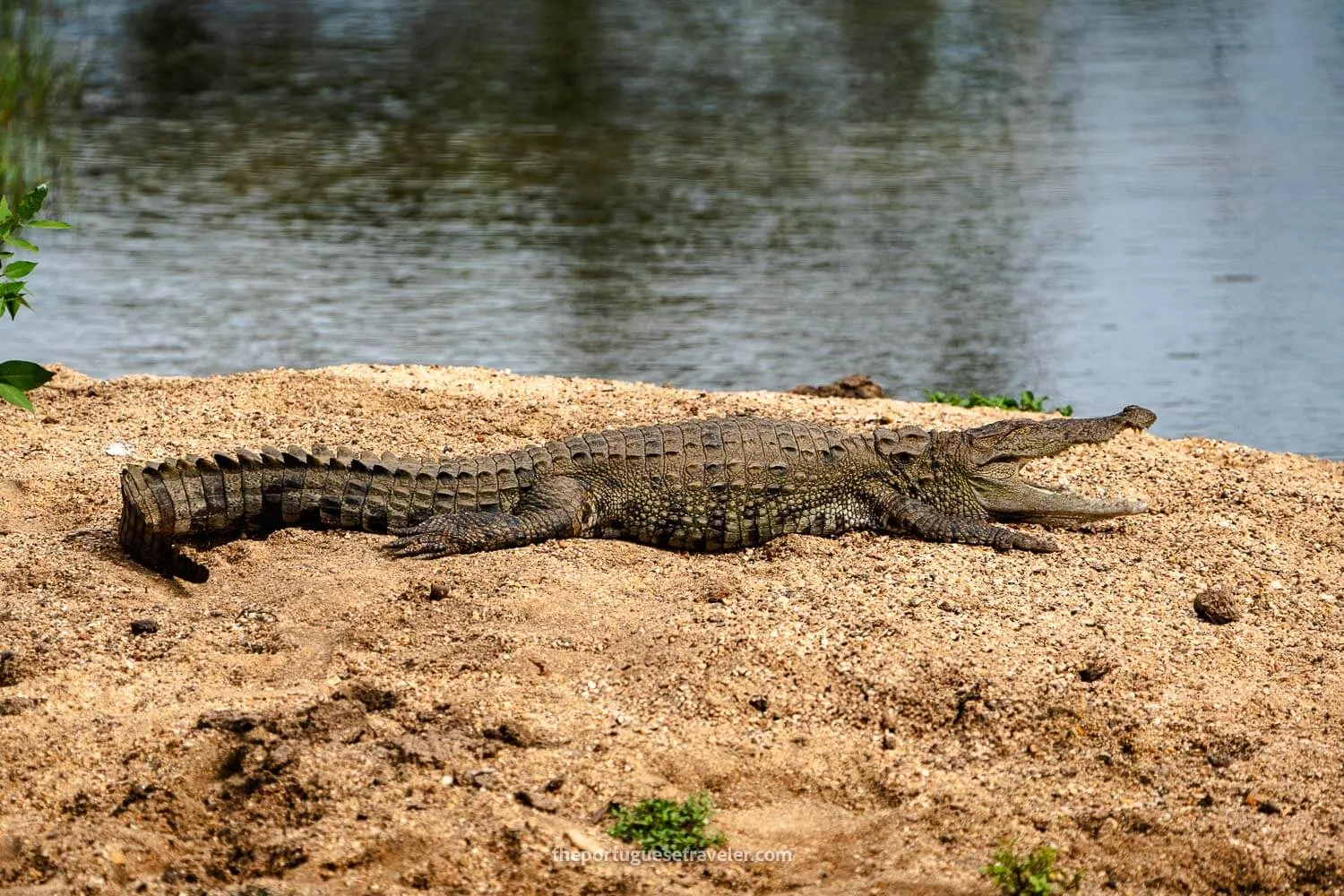
A crocodile on the way to the temple
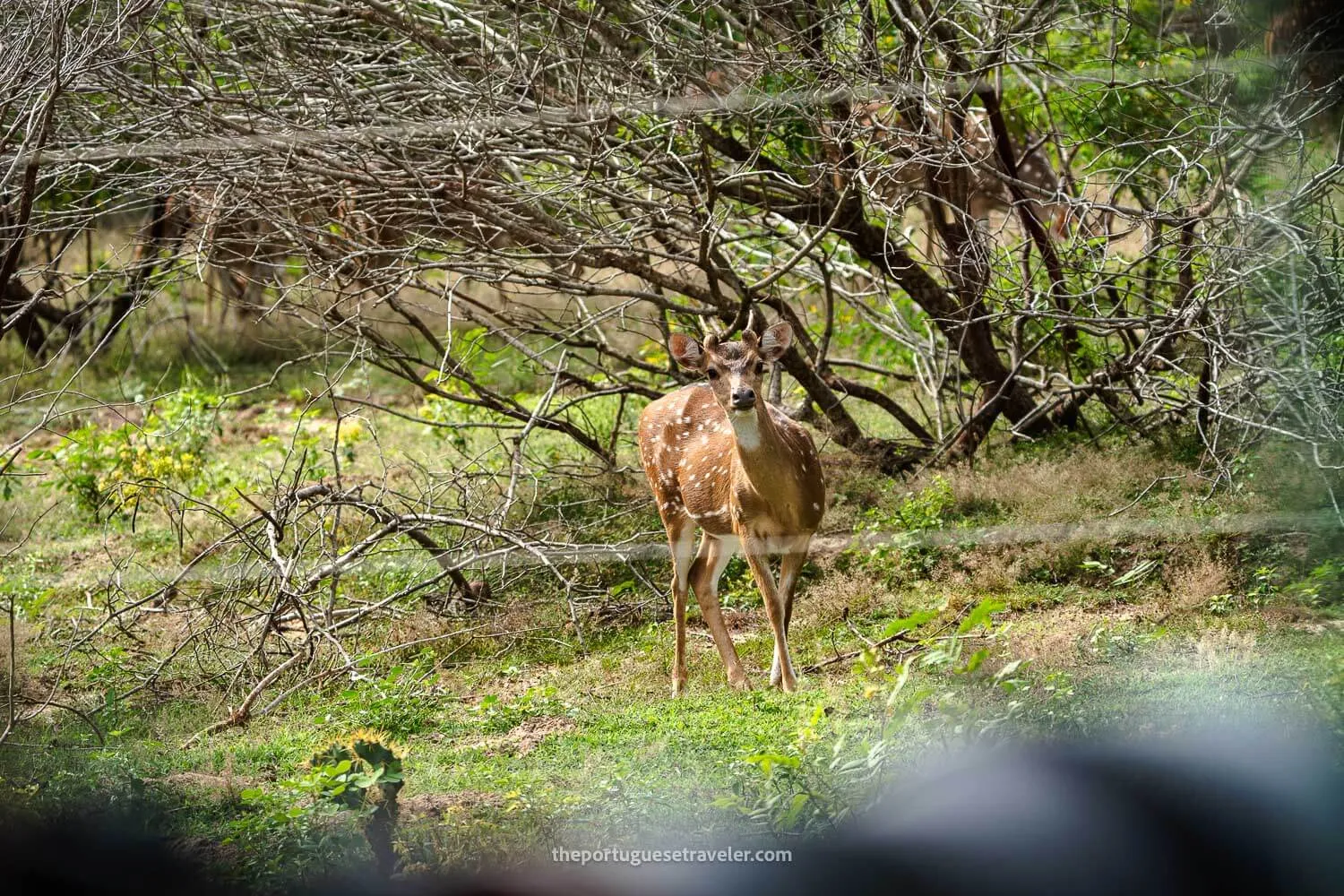
A deer on the road to the Sithulpawwa Temple
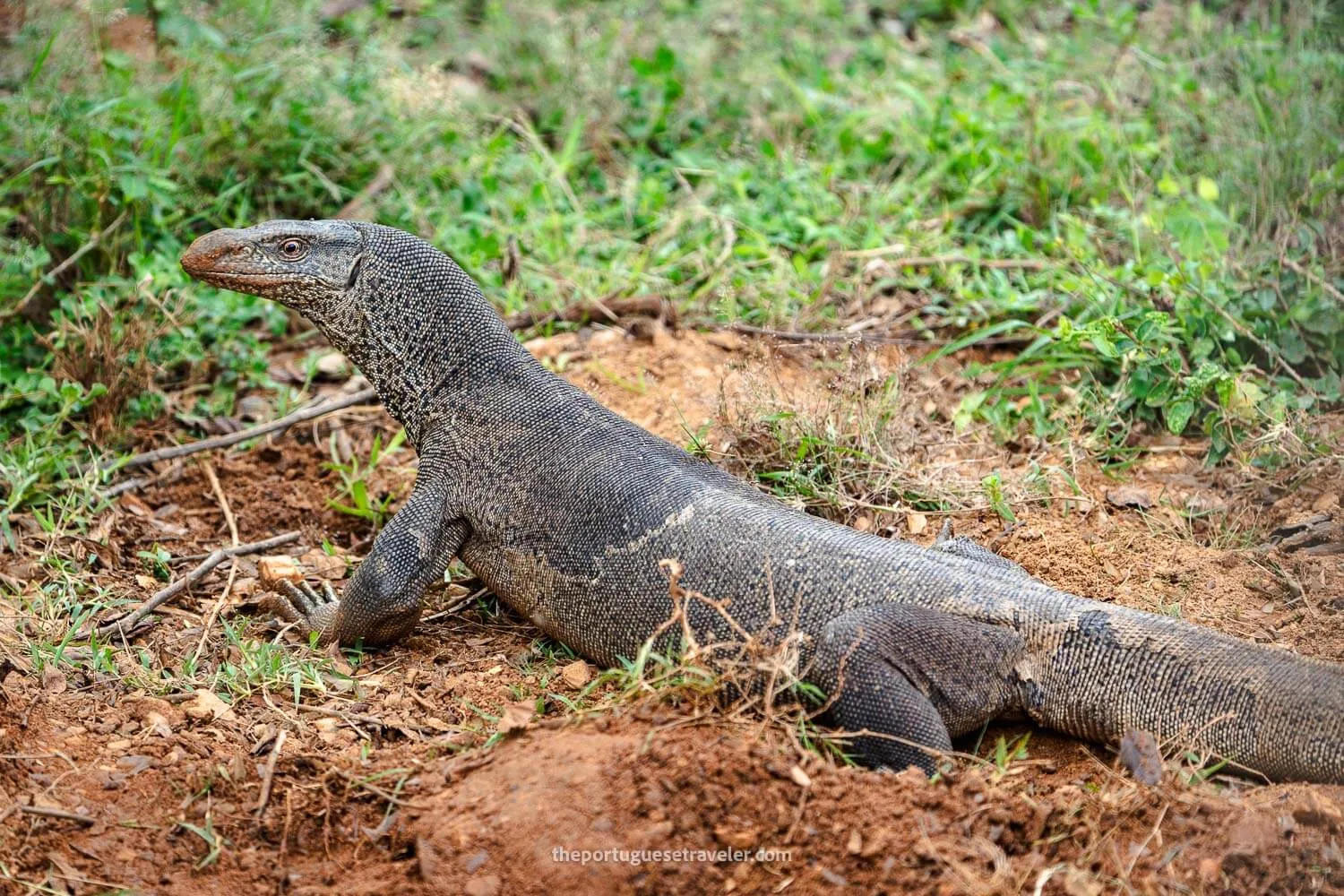
A Monitor Lizard on the road through Block 1 of Yala National Park to the Sithulpawa Rock Temple
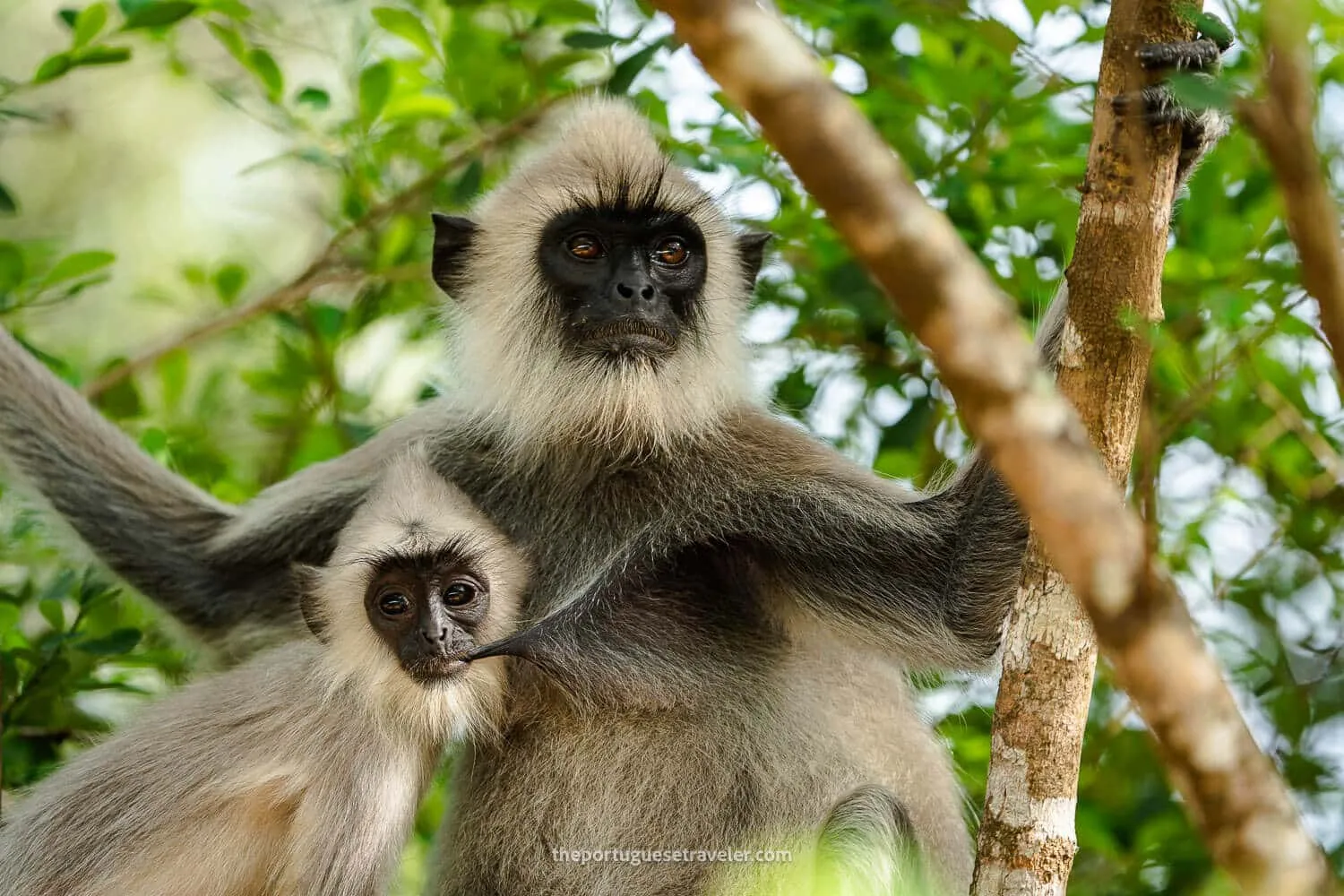
A Grey Langur family at the Yala National Park
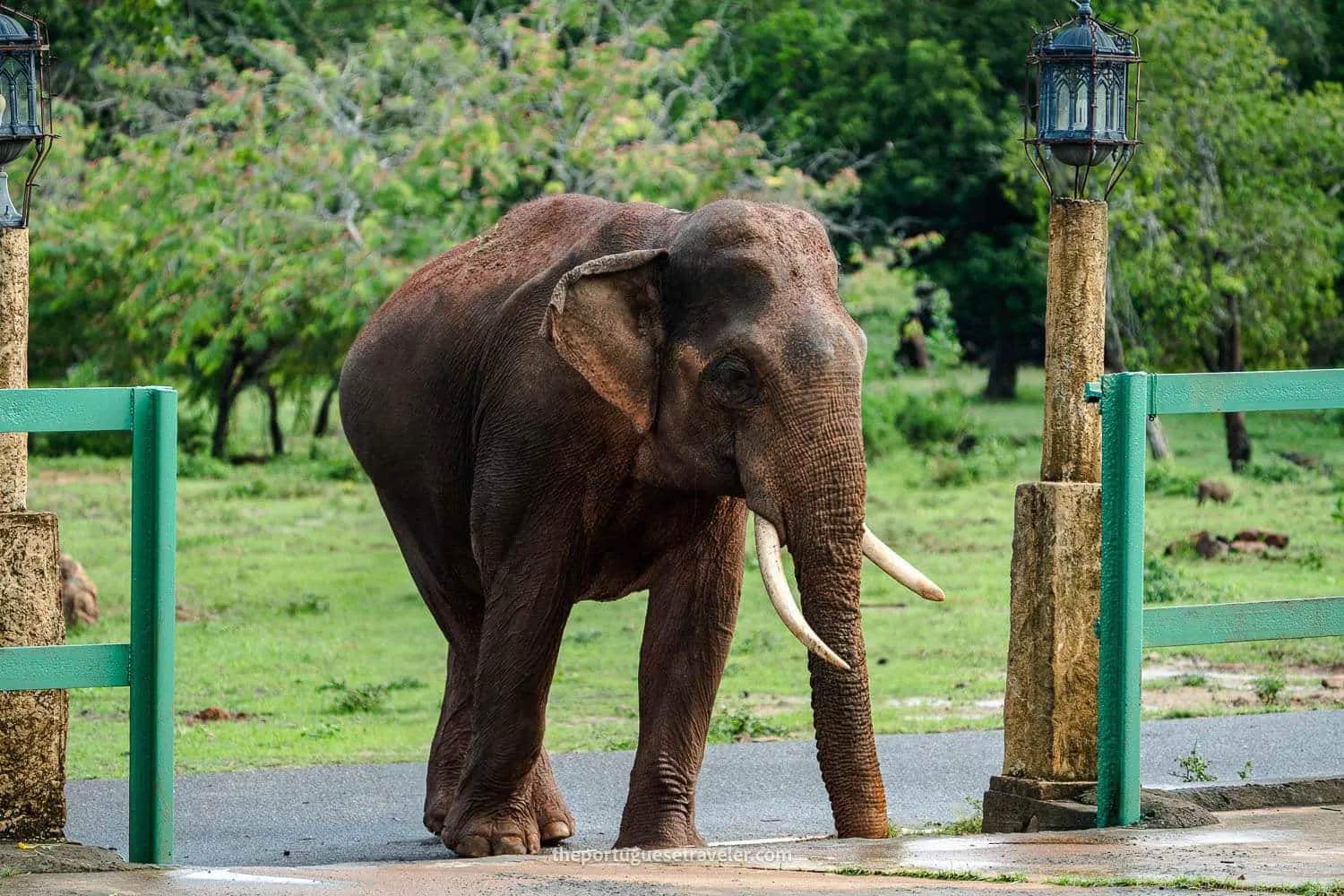
An elephant at the Sithulpawwa Rock Temple (it might have had a bit of PS to remove the gate in front)
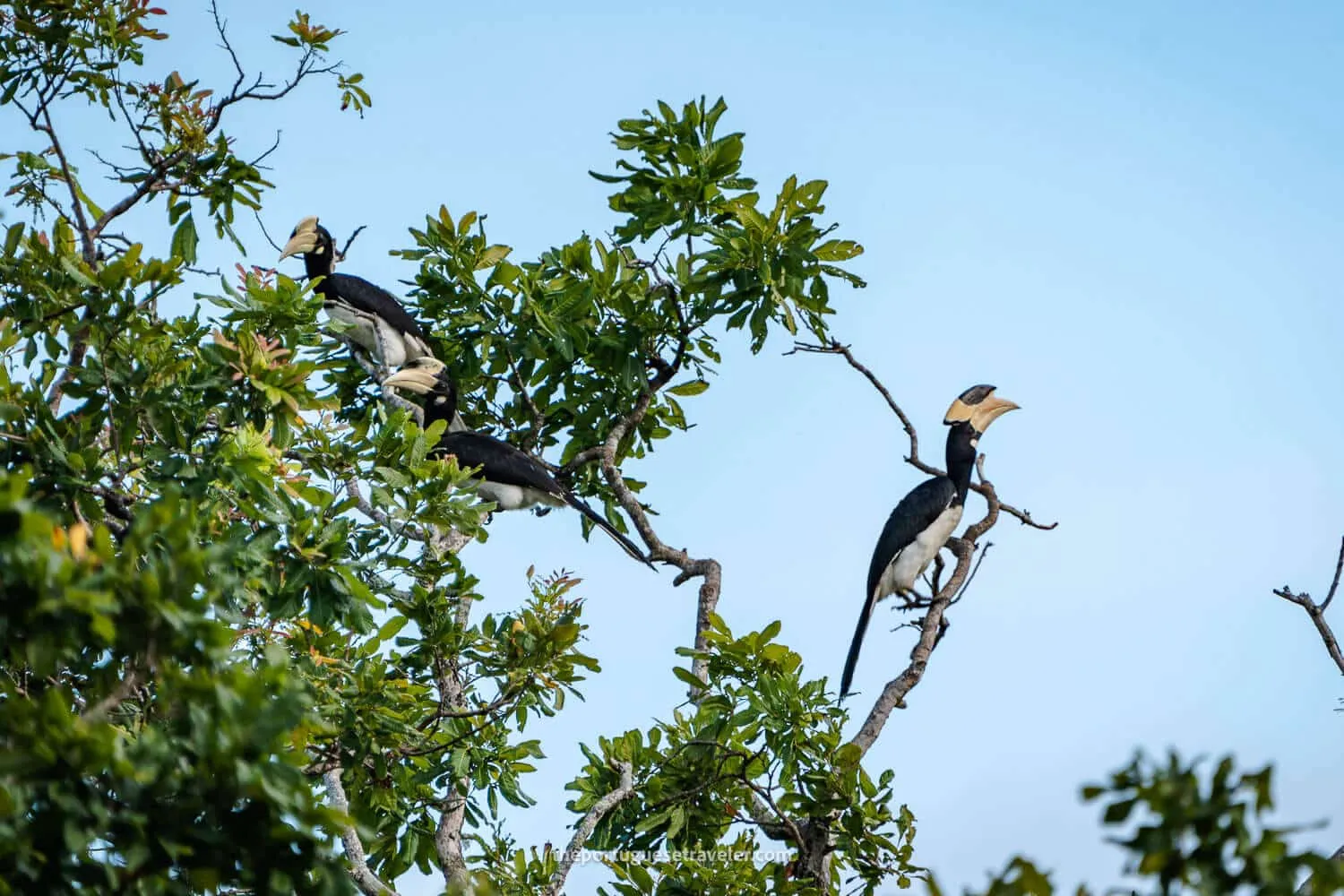
Malabar Pied Hornbill perched on a tree at the temple
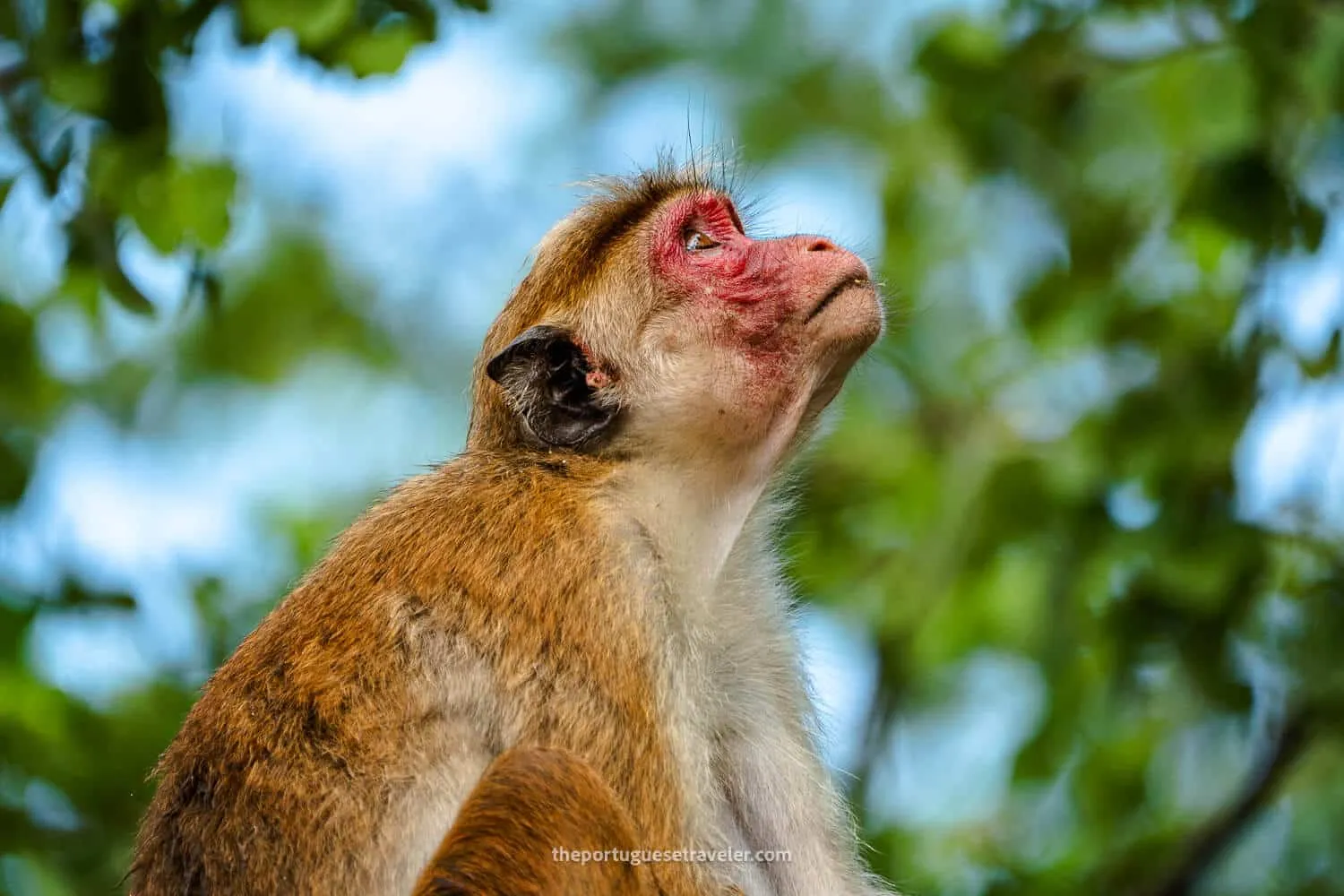
A Toque Macaque at the temple
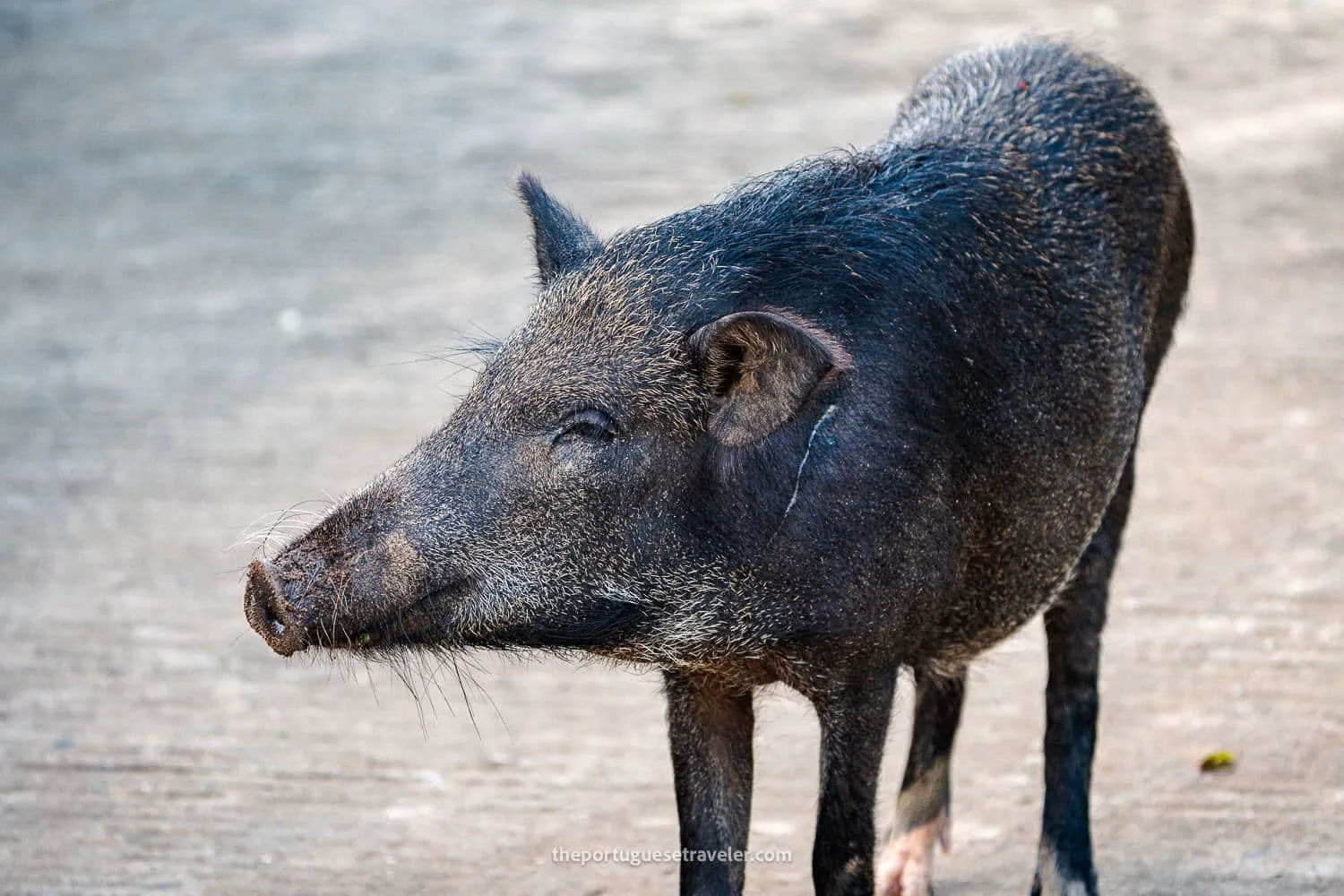
A wild boar near the shuttle
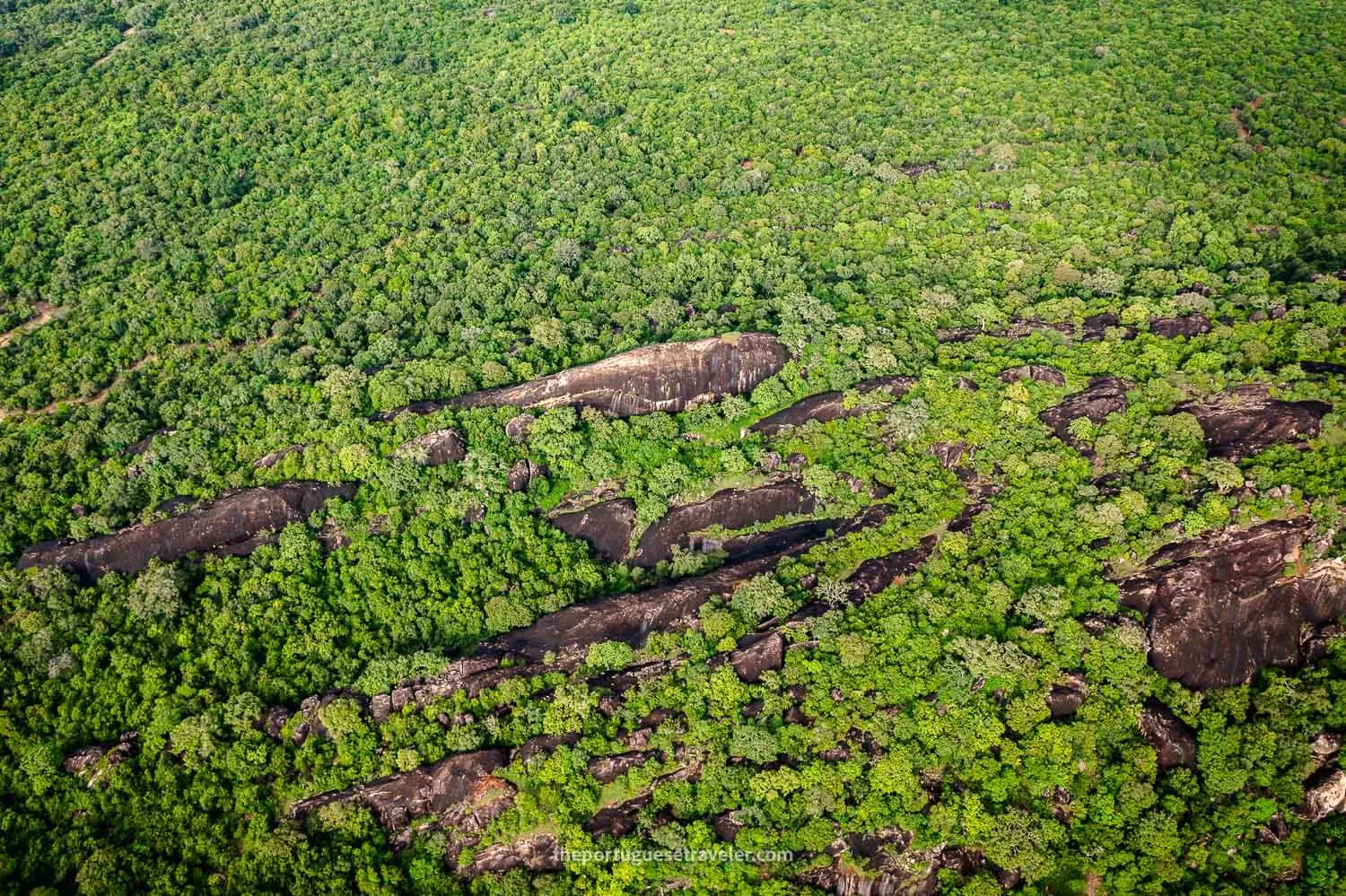
A Top-Down drone photo of the rocky landscape around the Sithulpawwa Temple
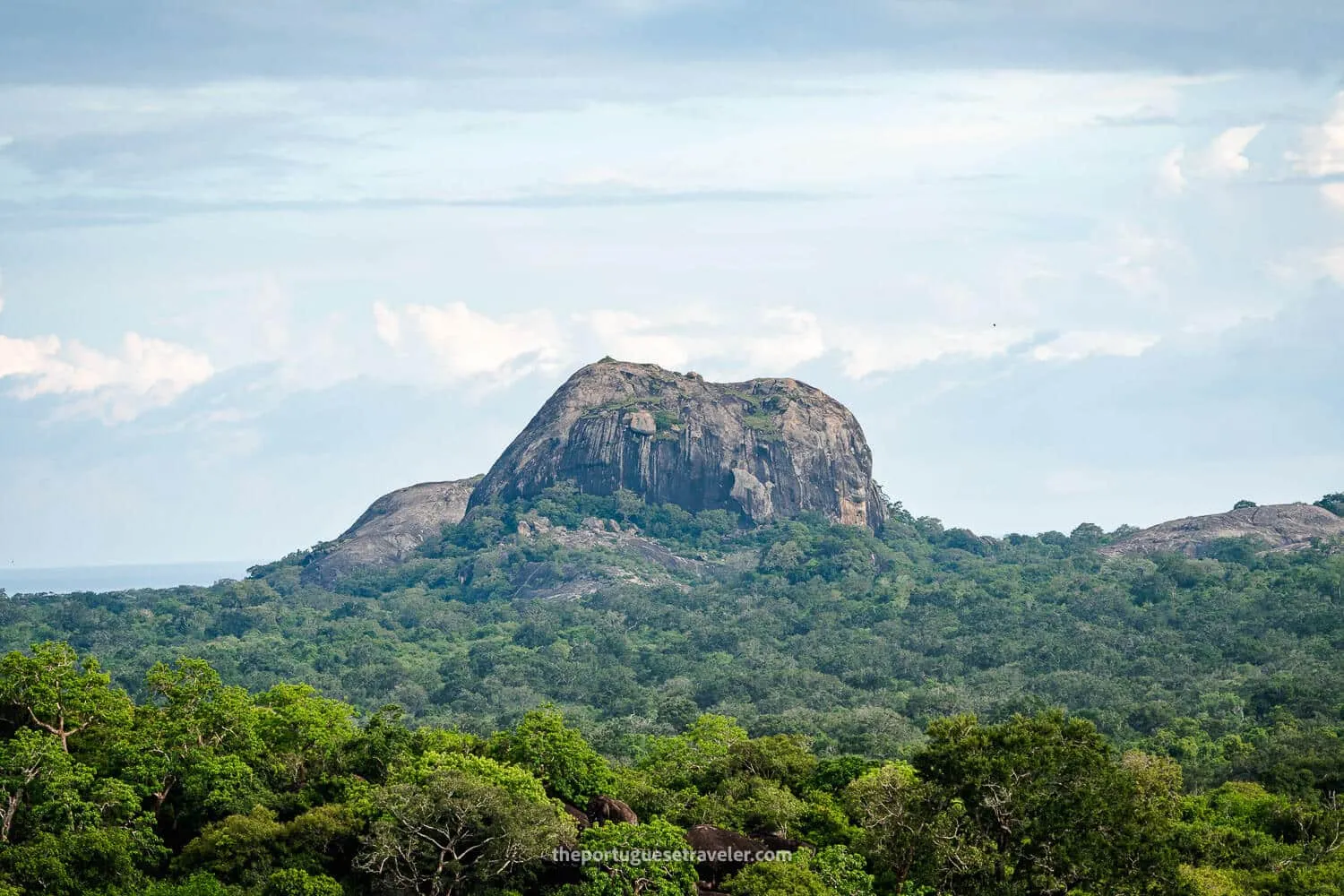
The Elephant Rock at the Yala National Park
Visitor Tips and Recommendations
Here are some essential tips to make the most of your experience. From nearby accommodations to dining options and key things to know before you go, this section will help you prepare for a smooth and enjoyable trip.
Where to Stay Near the Sithulpawwa Rock Temple
If you’re planning to visit the Sithulpawwa Rock Temple, staying nearby in Yala or Tissamaharama is highly recommended. These areas offer a range of accommodations that cater to different needs, from high-end safari resorts to more nature-focused retreats. Whether you’re after a luxurious getaway or a peaceful escape surrounded by nature, you’ll find a place to unwind after your temple visit and wildlife exploration.
-
- Uga Chena Huts Nestled on the edge of Yala National Park, Chena Huts offers an unforgettable experience. These spacious, climate-controlled huts feature private pools and stunning views of the coastal jungle, making it a top choice for those looking to indulge in nature while maintaining comfort. Enjoy the luxury of an exclusive stay with the bonus of proximity to wildlife-rich surroundings.
- Wild Coast Tented Lodge Situated just outside the park, Wild Coast Tented Lodge combines the thrill of a safari with the elegance of a luxury retreat. Its unique Cocoon-style rooms, some with private pools, are perfect for those wanting a taste of adventure without sacrificing comfort. The lodge offers a stylish atmosphere, complete with a restaurant and bar with ocean views, making it a fantastic base for exploring Yala National Park and nearby attractions.
- Cinnamon Wild Yala Nestled at the edge of Yala National Park, Cinnamon Wild Yala offers an immersive nature experience with its Jungle Chalets and Beach Chalets. Wake up to the sounds of wildlife, including elephants and birds. The hotel combines adventure with comfort, providing a relaxing retreat while keeping you close to the park’s wildlife, including wild boars and peacocks. Perfect for nature lovers seeking both excitement and relaxation.
- Jetwing Yala For a resort-like experience near the Palatupana entrance of Yala, Jetwing Yala is an excellent option. Offering extensive amenities, including a 75-meter pool and beach access, this resort is designed for those seeking a combination of relaxation and easy access to wildlife safaris. Its sustainability efforts and commitment to environmental conservation make it a perfect choice for eco-conscious travelers.
- Kithala Resort Situated in Tissamaharama, Kithala Resort offers a serene stay amidst paddy fields and a large pond. Known for its peaceful atmosphere, this boutique hotel is perfect for nature lovers and birdwatching enthusiasts. The scenic surroundings allow you to fully immerse yourself in the natural beauty of the area while enjoying modern comforts.
- EKHO Safari If you’re looking for a tranquil retreat with stunning views of Tissa Lake, EKHO Safari in Tissamaharama is a great option. Recently renovated, the hotel offers spacious rooms with modern amenities and picturesque lake views. It’s a wonderful place to relax after a day spent exploring the Sithulpawwa Rock Temple and surrounding natural wonders.
For more accommodation options across Sri Lanka, check out my articles on The 20 Best Hotels in Sri Lanka, The 10 Best Luxury Hotels in Sri Lanka, and The 10 Best Hostels in Sri Lanka.
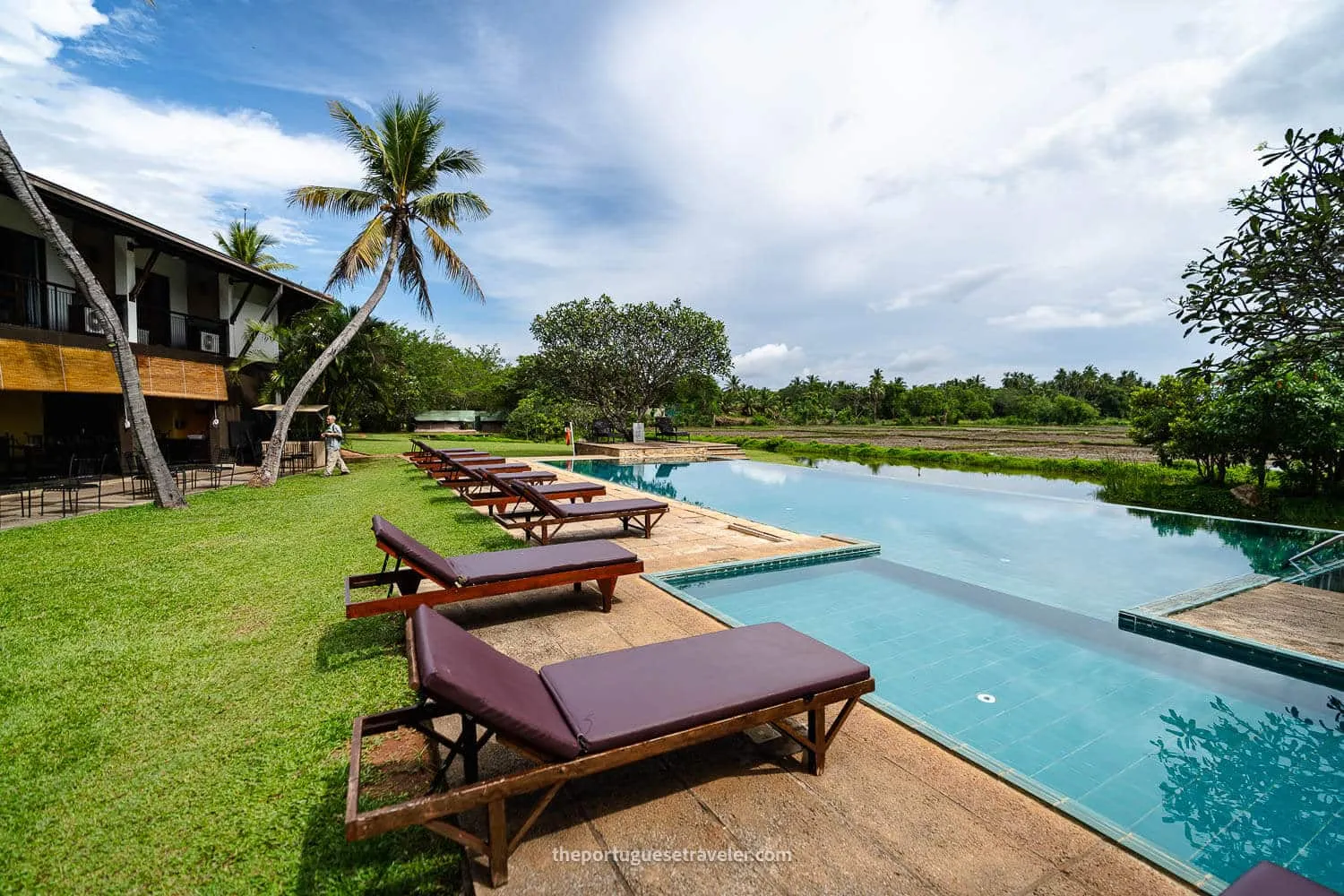
The Kithala Resort Tissa-Yala Hotel, in Sri Lanka
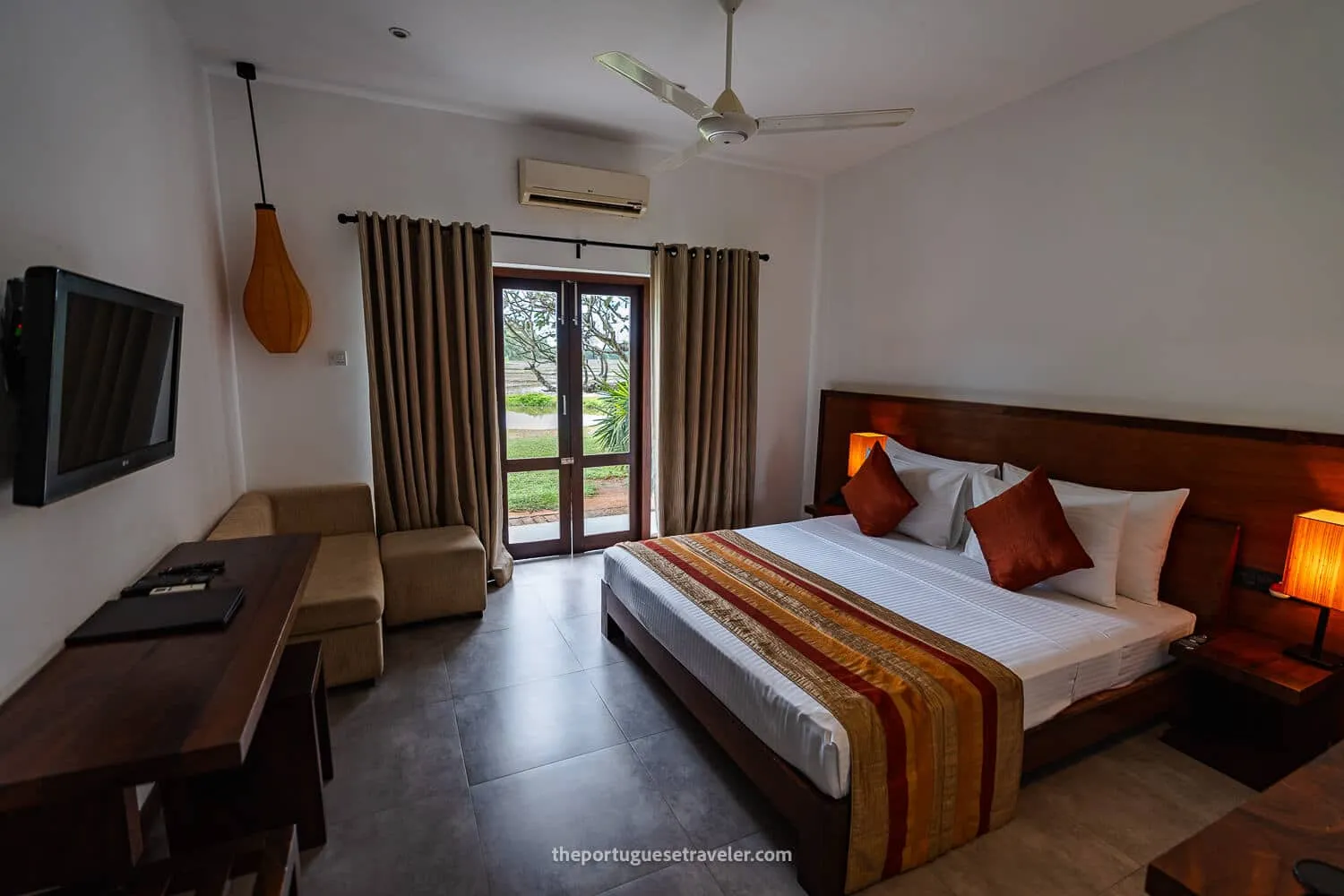
My room at the Kithala Tissa-Yala Resort
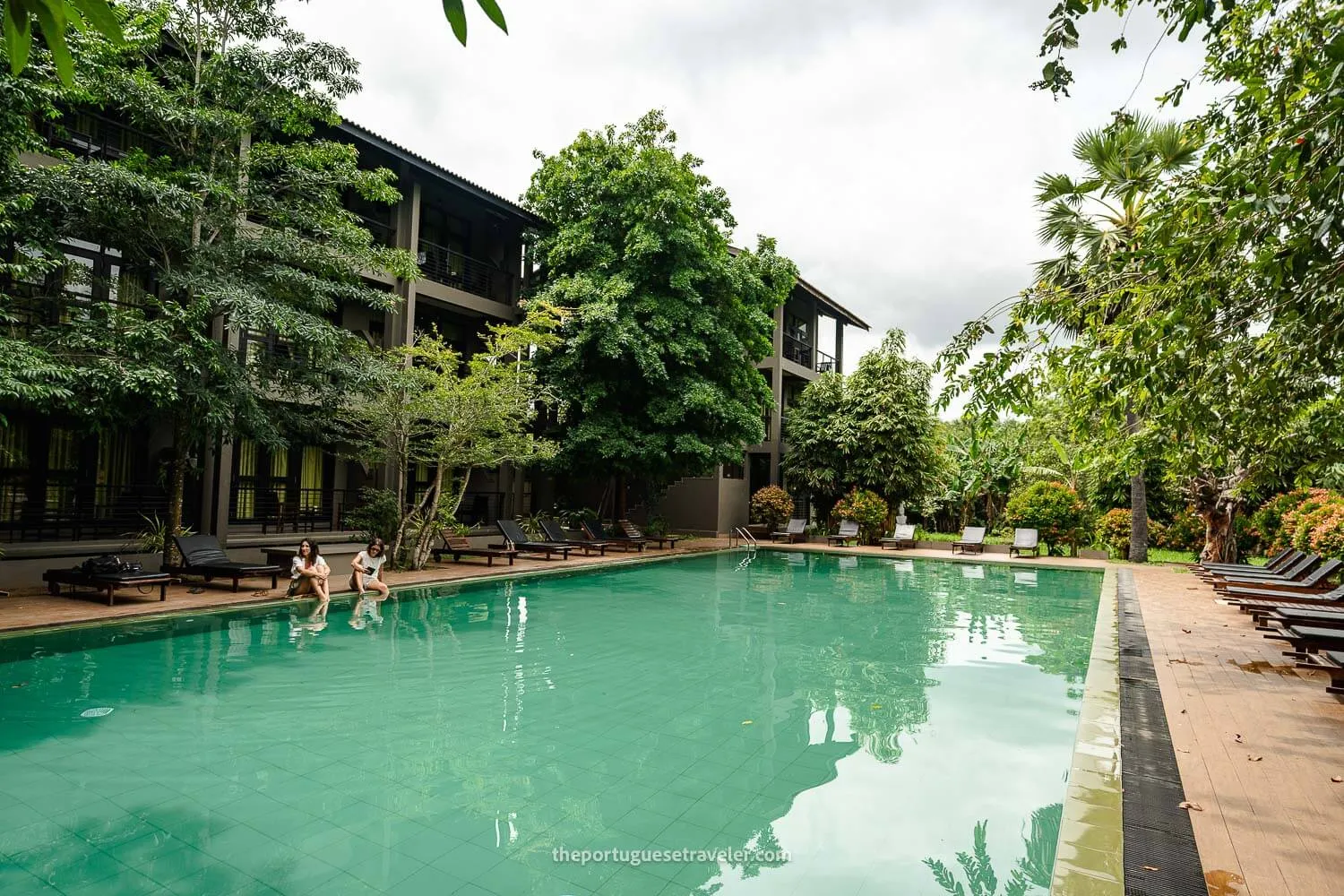
The Oak Ray Wild Yala Hotel
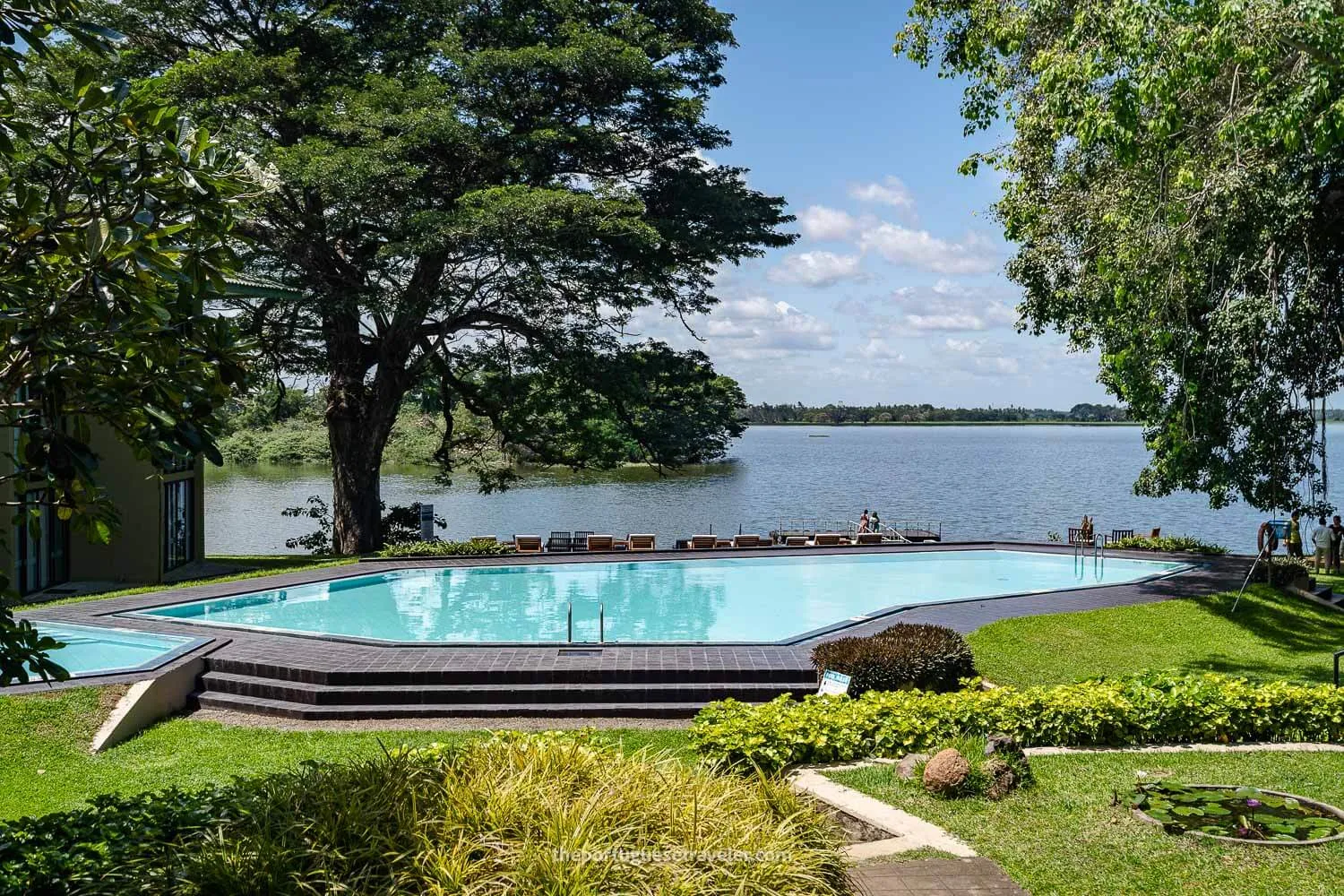
The Ekho Safari Tissa-Yala Hotel’s pool
Best Restaurants and Food Options Near the Temple
There are a variety of great dining options near the Sithulpawwa Rock Temple, offering everything from local Sri Lankan flavors to fresh juices and seafood. Many of the nearby hotels also feature excellent restaurants, often with buffet-style dining that showcases the best of Sri Lankan cuisine.
- Kithala Resort: Known for its serene lakeside setting, Kithala Resort offers a buffet featuring a variety of local and international dishes. The restaurant focuses on fresh ingredients, providing a relaxing atmosphere where you can enjoy meals while overlooking the peaceful surroundings.
- Ekho Safari Tissamaharama: This resort offers both a buffet and a la carte options, serving delicious local dishes. You can savor freshly prepared meals while enjoying beautiful lake views, perfect for unwinding after a day of exploration.
- Smoky Kitchen: If you’re in Tissamaharama, don’t miss Smoky Kitchen for the best rice and curry in the area. The open clay kitchen provides a unique experience as all the food is freshly prepared in large pots, allowing you to enjoy authentic Sri Lankan flavors in a cozy setting.
- Chef Lady Restaurant: Located in Tissamaharama, this restaurant specializes in seafood and offers an extensive menu with a focus on fresh fish dishes. It’s a great place to enjoy a relaxed meal after your visit to the temple.
- The Flavors Restaurant: This family-run gem offers delicious home-style Sri Lankan food, with an emphasis on local flavors and fresh ingredients. It’s a cozy spot to enjoy traditional dishes prepared with care.
- Natural Fresh Juice Bar: For something lighter, stop by the Natural Fresh Juice Bar for a refreshing drink made from fresh, local fruits. It’s a great way to hydrate and enjoy a burst of natural flavor.
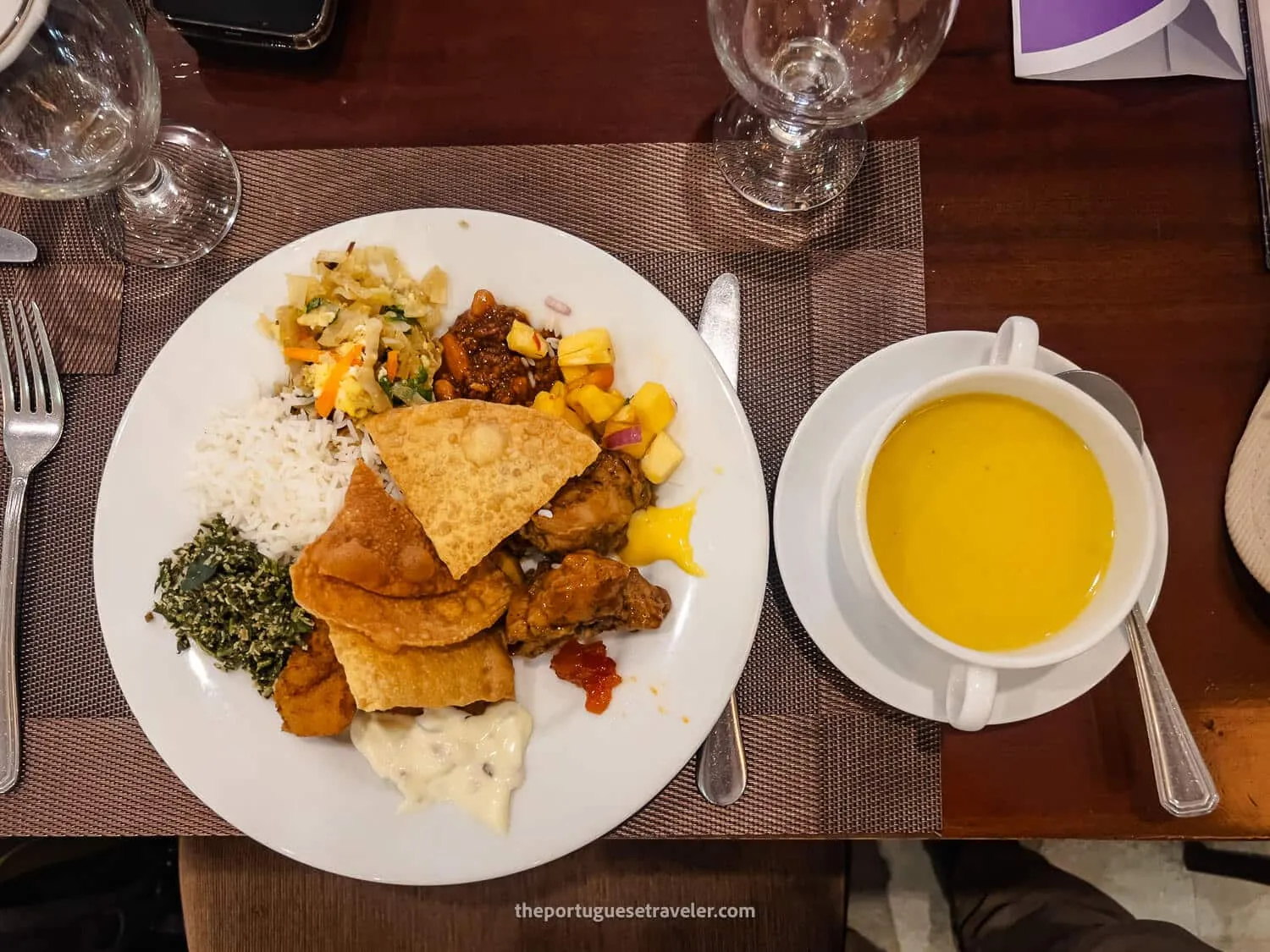
The delicious buffet at the Kithala Hotel
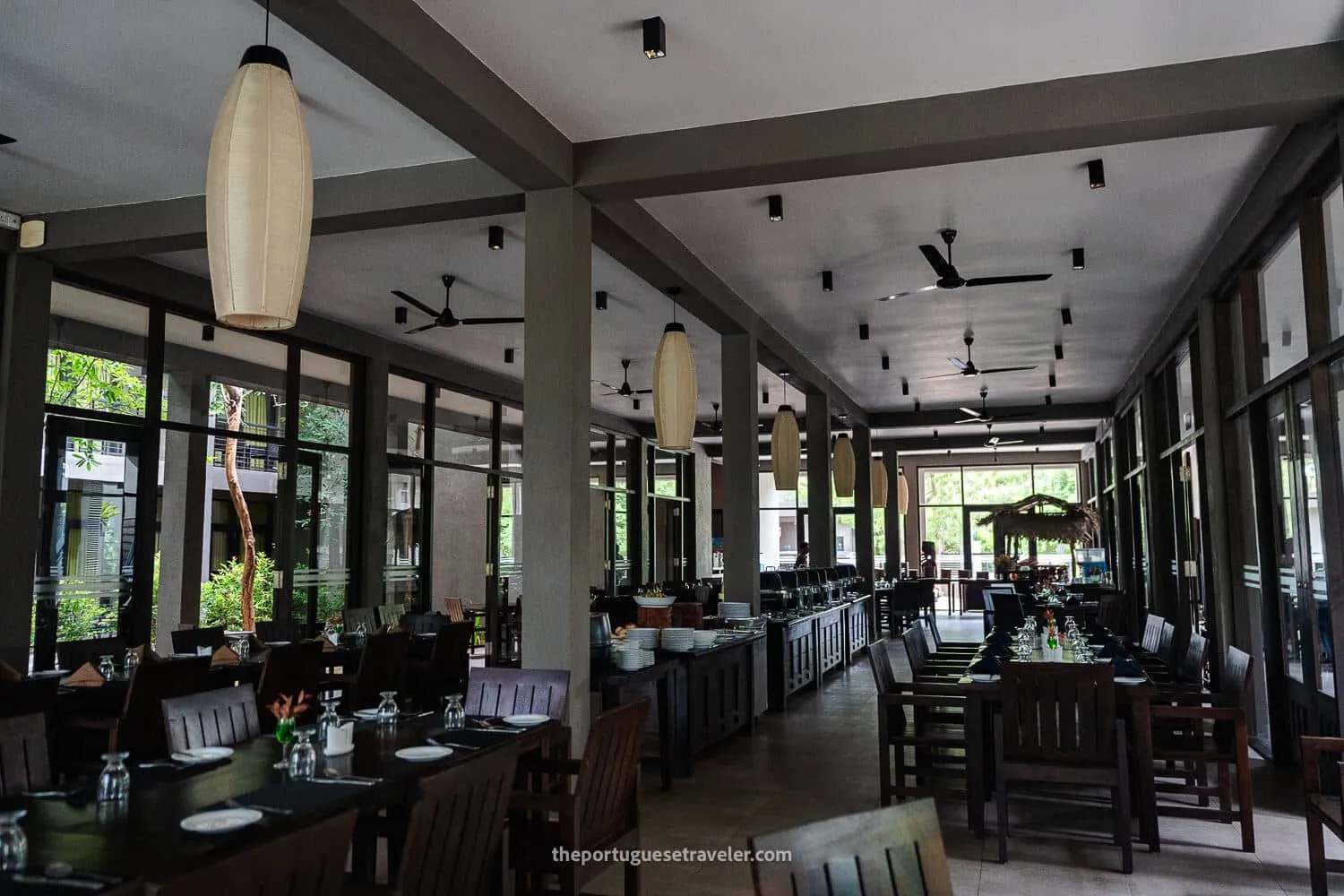
The Oak Ray Wild Yala Hotel’s Restaurant
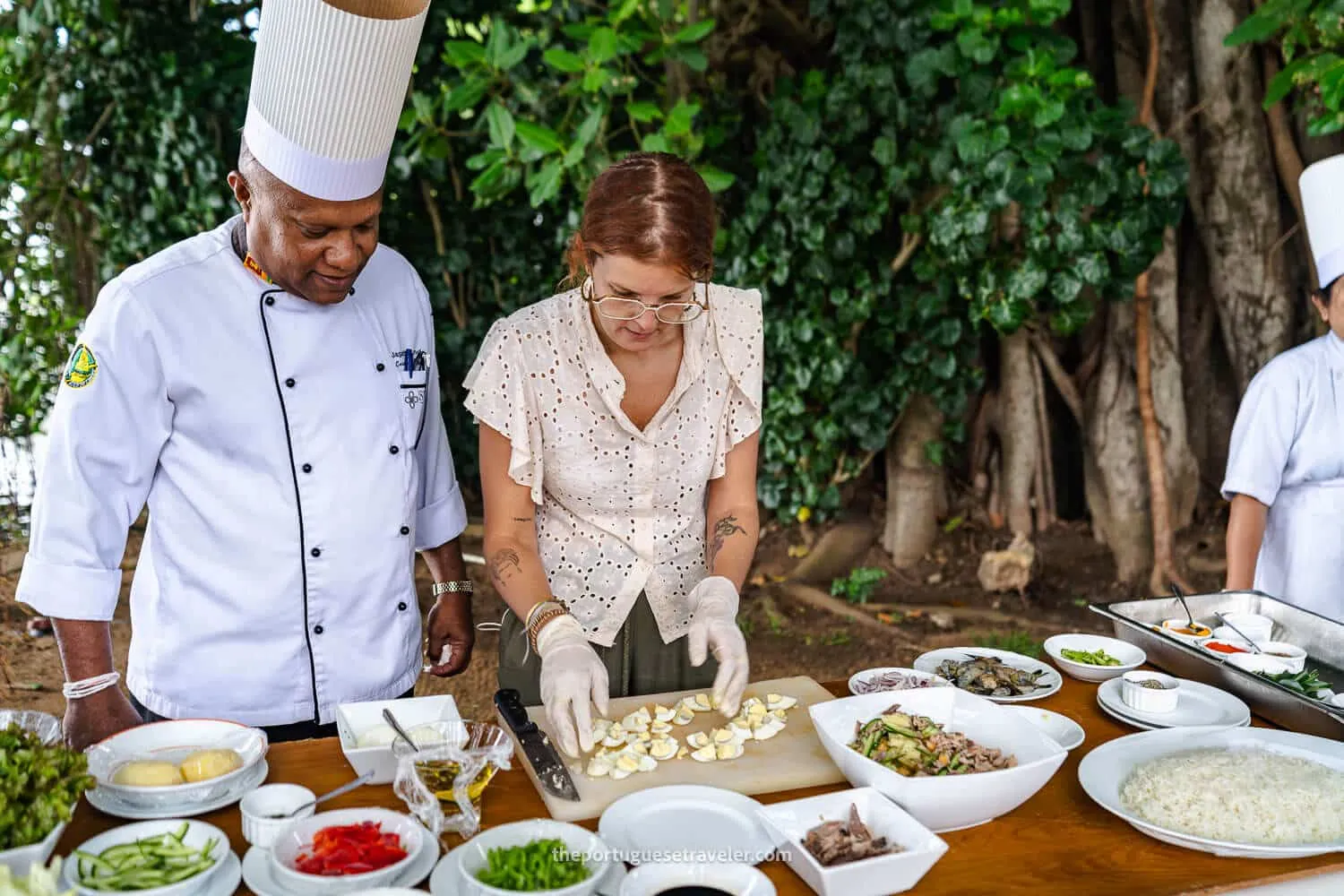
Ligia helping to do a “Portuguese Salad” at the Cooking Class
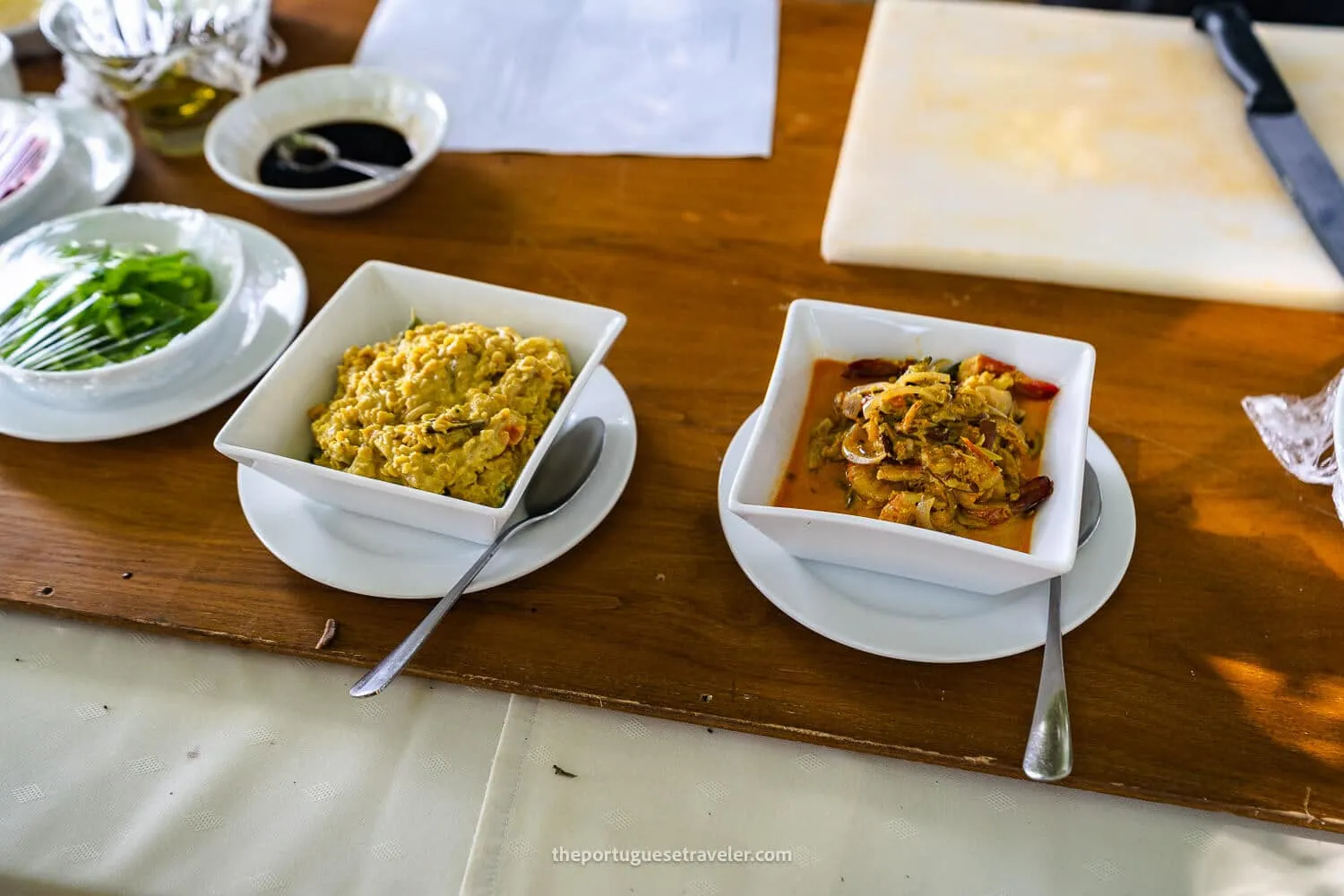
The cooking class at the Ekho Resort Hotel
What Clothing and Equipment Should I Bring to the Sithulpawwa Rock Temple?
Visiting the Sithulpawwa Rock Temple can be a deeply peaceful and spiritual experience, and preparing properly will help you make the most of your time there. While the monastery’s tranquil atmosphere calls for respectful clothing, you should also be prepared for the surroundings and conditions. Here’s what you should bring: Essentials:
- Modest Clothing (covering shoulders, arms, and knees—think lightweight long sleeves and pants)
- Comfortable Shoes (you’ll likely be walking around the grounds and on uneven paths, so sturdy footwear is ideal)
- Hat (for sun protection)
- Water Bottle (to stay hydrated during your visit)
- Sunscreen (for protection from the sun)
- Small Backpack (for carrying essentials)
- Light Waterproof Jacket (for cooler evenings or early mornings)
- Insect Repellent (if you plan to walk through outdoor areas)
Make sure to dress respectfully, as the monastery is a sacred place, and bring what you need for a peaceful visit while keeping the surroundings in mind.
Can You Fly Drones at the Sithulpawwa Rock Temple?
In Sri Lanka, drone usage is regulated by the Civil Aviation Authority of Sri Lanka (CAASL), and it’s crucial to adhere to their guidelines when flying near the Sithulpawwa Rock Temple. While flying a drone at the top of the temple is usually not permitted, we were fortunate to have the proper permits as we were with the Ministry of Tourism. The monk at the temple kindly allowed us to fly the drone for a couple of minutes, ensuring that everything was cleared beforehand. Here are some key regulations to keep in mind:
- Drones must not exceed 100 feet (30 meters) above ground level.
- Operators must maintain a visual line of sight with their drone.
- Drones are prohibited near airports, military zones, and no-fly zones.
- Flying drones at night requires prior authorization.
- Insurance is mandatory for drones in certain weight categories.
The Sithulpawwa Rock Temple offers a stunning landscape with dramatic rock formations, stupas, and lush jungle, making it an excellent subject for photography. If you’re planning to take aerial photos, it’s important to check the latest drone regulations with the Civil Aviation Authority of Sri Lanka (CAASL) and ensure you have the necessary permits. Additionally, you must seek permission from the resident monks, as the temple is a sacred site. By being informed and respectful of both local rules and the monks’ wishes, you can capture the beauty of the temple and its surroundings while honoring the area’s spiritual significance.
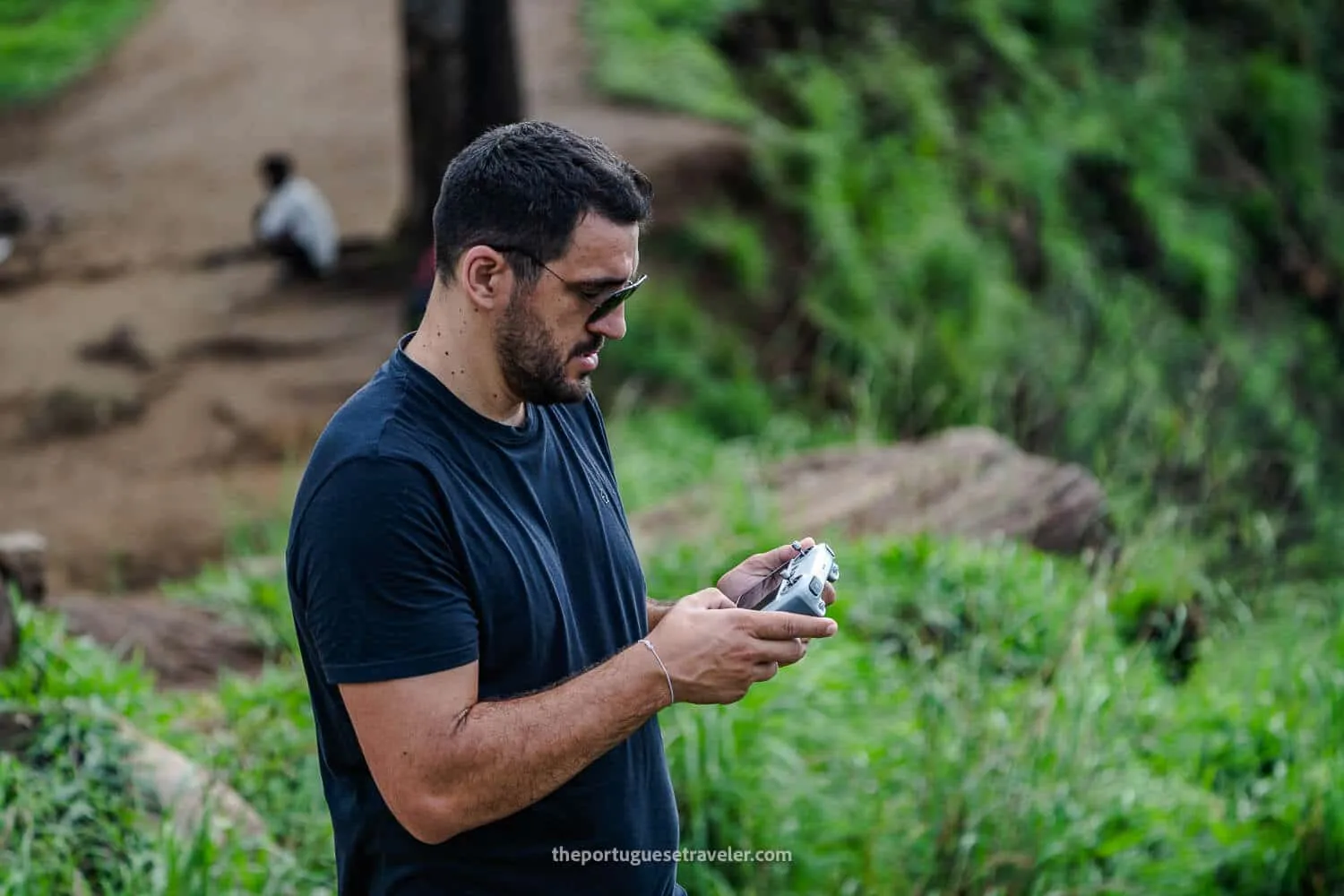
Ricardo flying his Mavic Mini 4 Pro
How to travel from Colombo to Yala
If you’re traveling from Colombo to Yala, there are several options to consider, each with its own set of pros and cons. Here’s a breakdown of the available transportation options and estimated travel times: Private Car/Taxi:
- Time: 4 to 5 hours
- Details: The most convenient and comfortable option for reaching Tissamaharama and the Yala National Park. You’ll travel along the Southern Expressway, passing by Galle for a scenic and quick journey. Perfect for those who want flexibility, comfort, and a direct route.
- Time: 6 to 7 hours
- Details: Take a train from Colombo Fort to Galle, which offers a scenic route along the coast. The train journey will take around 2.5 to 3 hours. The journey from Galle is quicker. You can board the 32 bus directly from Galle Bus Stand to Tissamaharama for the most straightforward option. Alternatively, for a change of scenery, you could take a bus to Matara and transfer to the 331 bus to reach Tissamaharama.
- Time: 4 to 5 hours
- Details: If you’re part of a guided tour, your transport to Tissamaharama will usually be included. This option lets you relax while someone else handles the driving, making it a hassle-free way to reach Yala National Park.
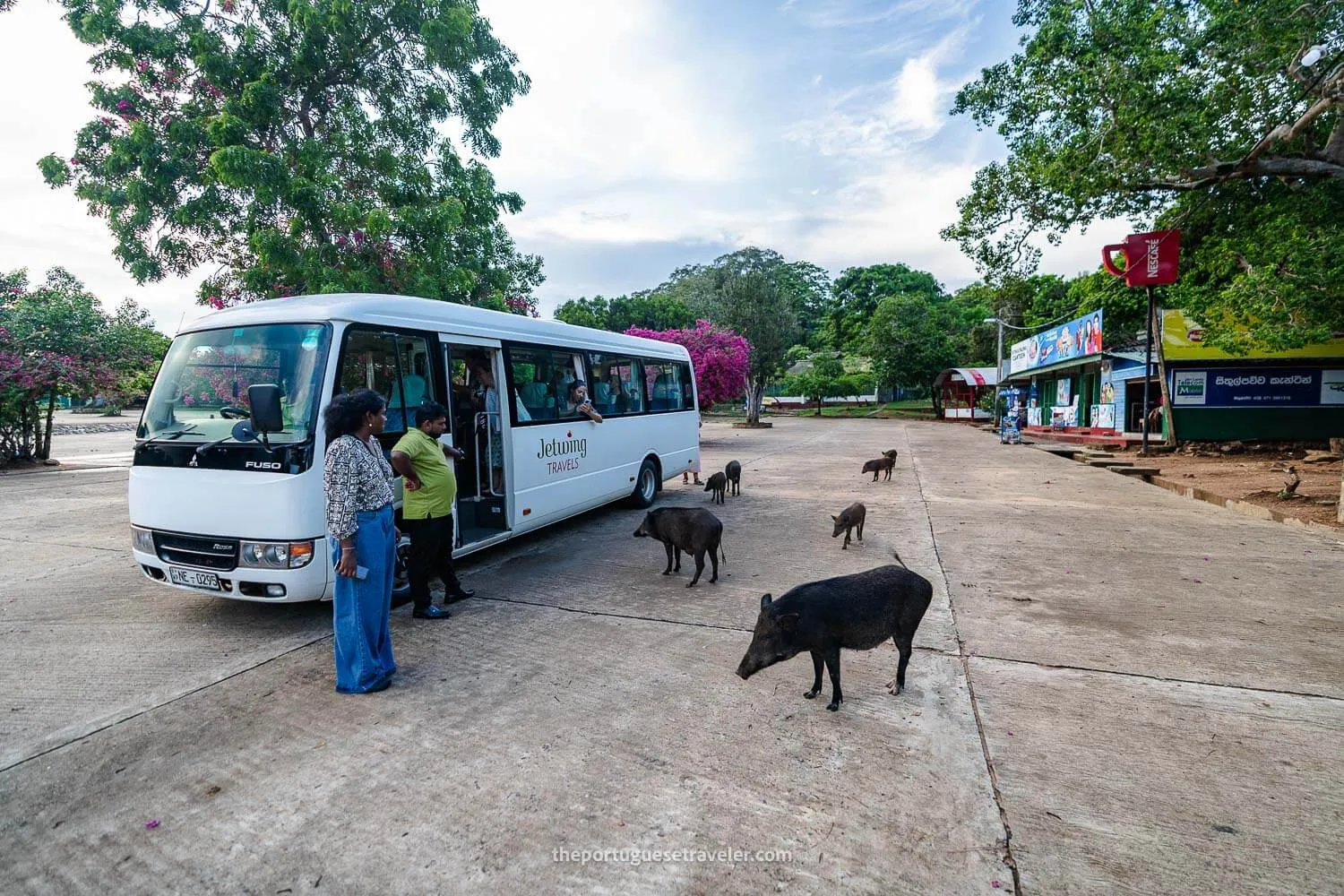
Our shuttle on the entire trip and the wild boars that tried to attack me
Best Things To Do near the Sithulpawwa Rock Temple
The Sithulpawwa Rock Temple, with its tranquil atmosphere, is surrounded by a rich array of attractions that offer something for everyone, from nature lovers to those seeking cultural immersion. Yala National Park Safaris: A visit to Yala National Park is a must for wildlife enthusiasts. Known for its incredible biodiversity, it’s one of the best places to spot Sri Lanka’s iconic leopards, elephants, and a variety of bird species. Embark on a thrilling jeep safari to explore the park’s diverse landscapes and wildlife. Kataragama Sacred City: Just a short distance from the temple, Kataragama is a unique sacred city where multiple religions intertwine. It’s a place of pilgrimage for Buddhists, Hindus, and Muslims, all of whom come together in harmony to worship. The temples, shrines, and sacred sites offer a fascinating glimpse into the coexistence of different faiths in Sri Lanka. Tissamaharama Raja Maha Vihara Temple: For a deeper dive into Sri Lanka’s Buddhist heritage, visit the Tissamaharama Raja Maha Vihara Temple. As one of the oldest and most important temples in the area, it offers a serene atmosphere and a rich history of Buddhist tradition. Kirinda Beach: If you’re seeking a peaceful seaside retreat, head to Kirinda Beach. This tranquil spot offers stunning views of the ocean, perfect for a relaxing day by the water. Don’t miss the nearby Kirinda Temple, perched on a rock with panoramic views of the surrounding landscape. Cooking Class at Ekho Safari Hotel: For a hands-on cultural experience, take part in a cooking class at Ekho Safari Hotel, where you’ll learn to prepare traditional Sri Lankan dishes like prawn curry and dhal. It’s a fun way to immerse yourself in the local culinary culture.
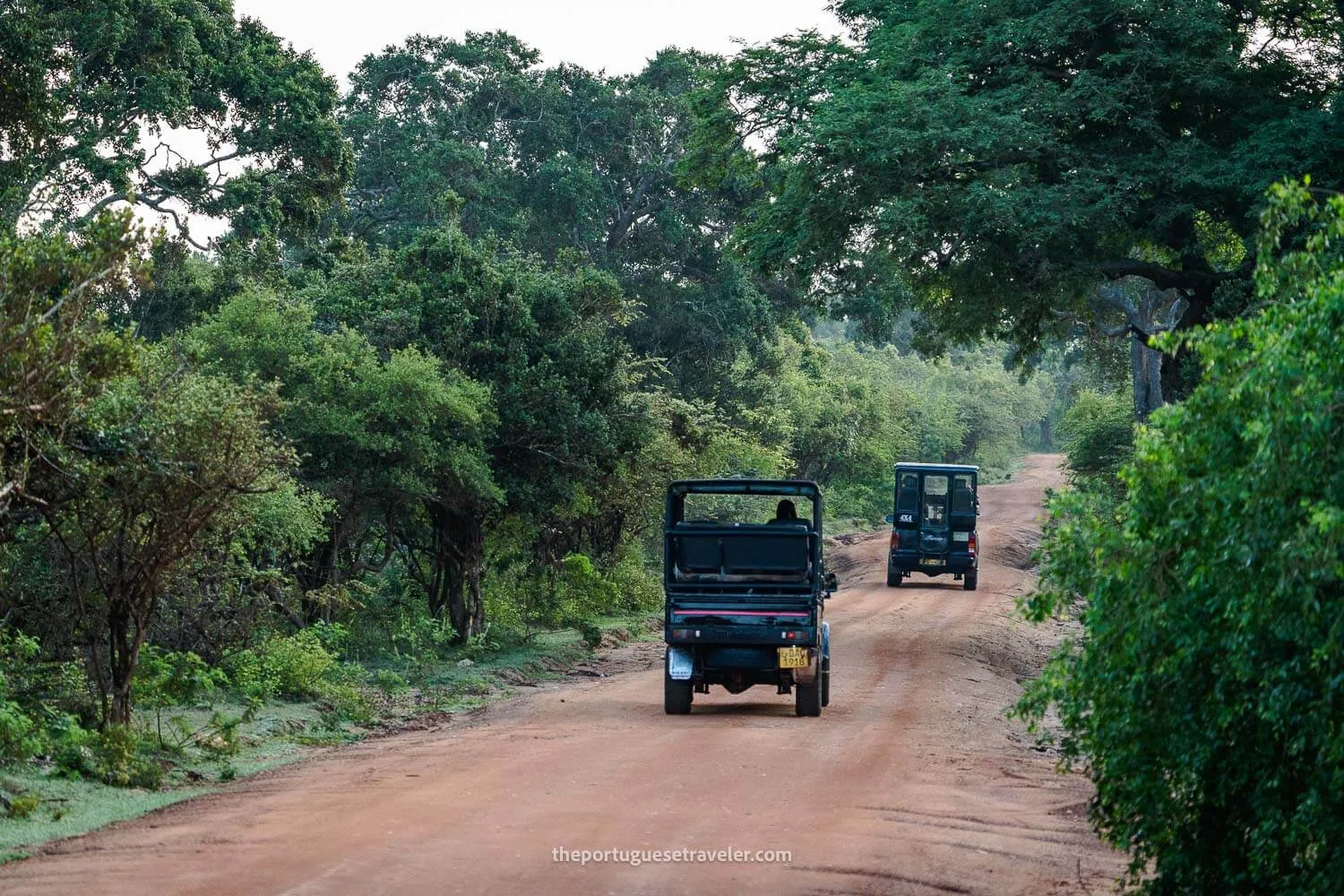
The Yala National Park Safari jeeps
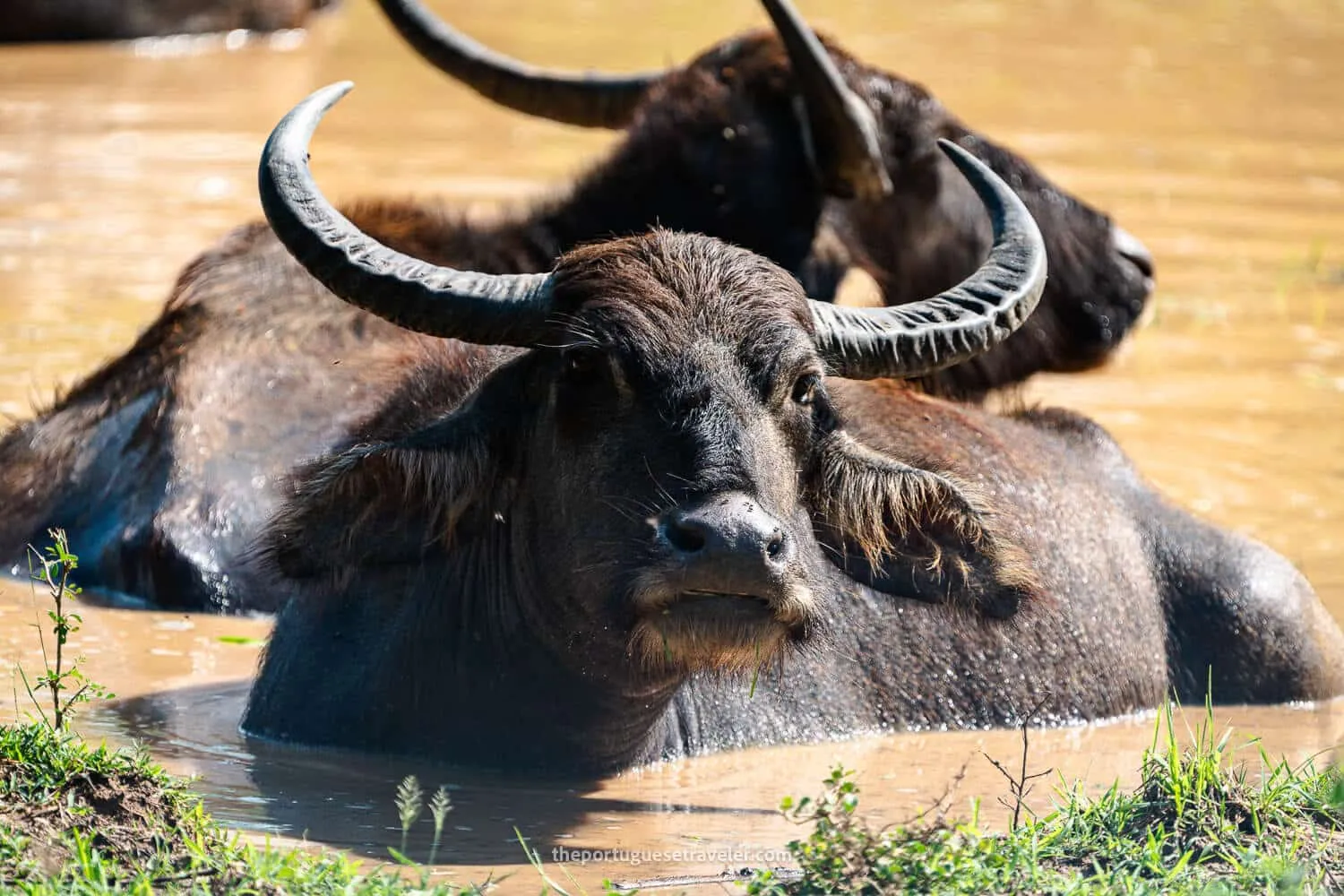
A Water Buffalo at the Yala National Park
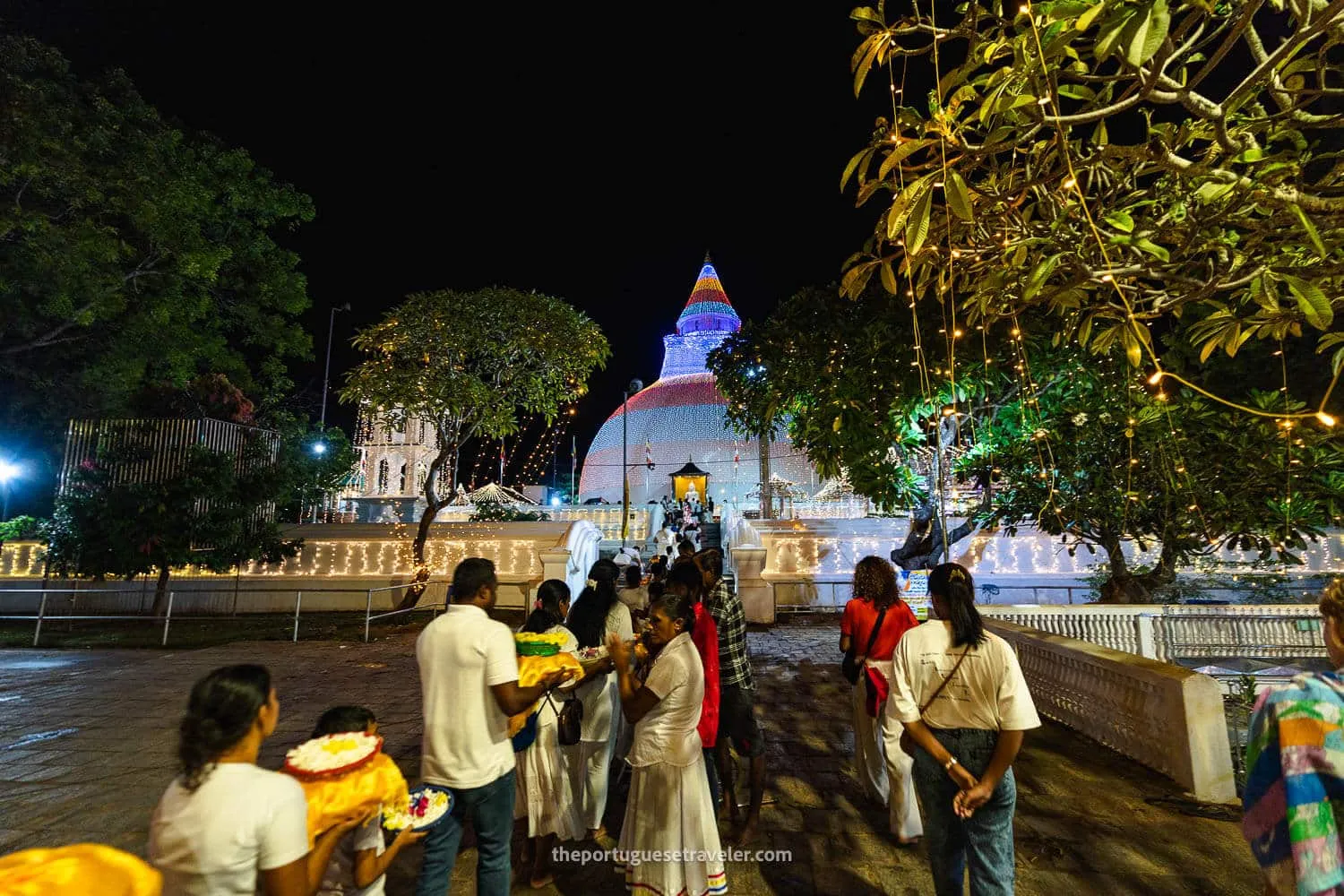
A Pooja Ceremony at The Sacred City of Kataragama
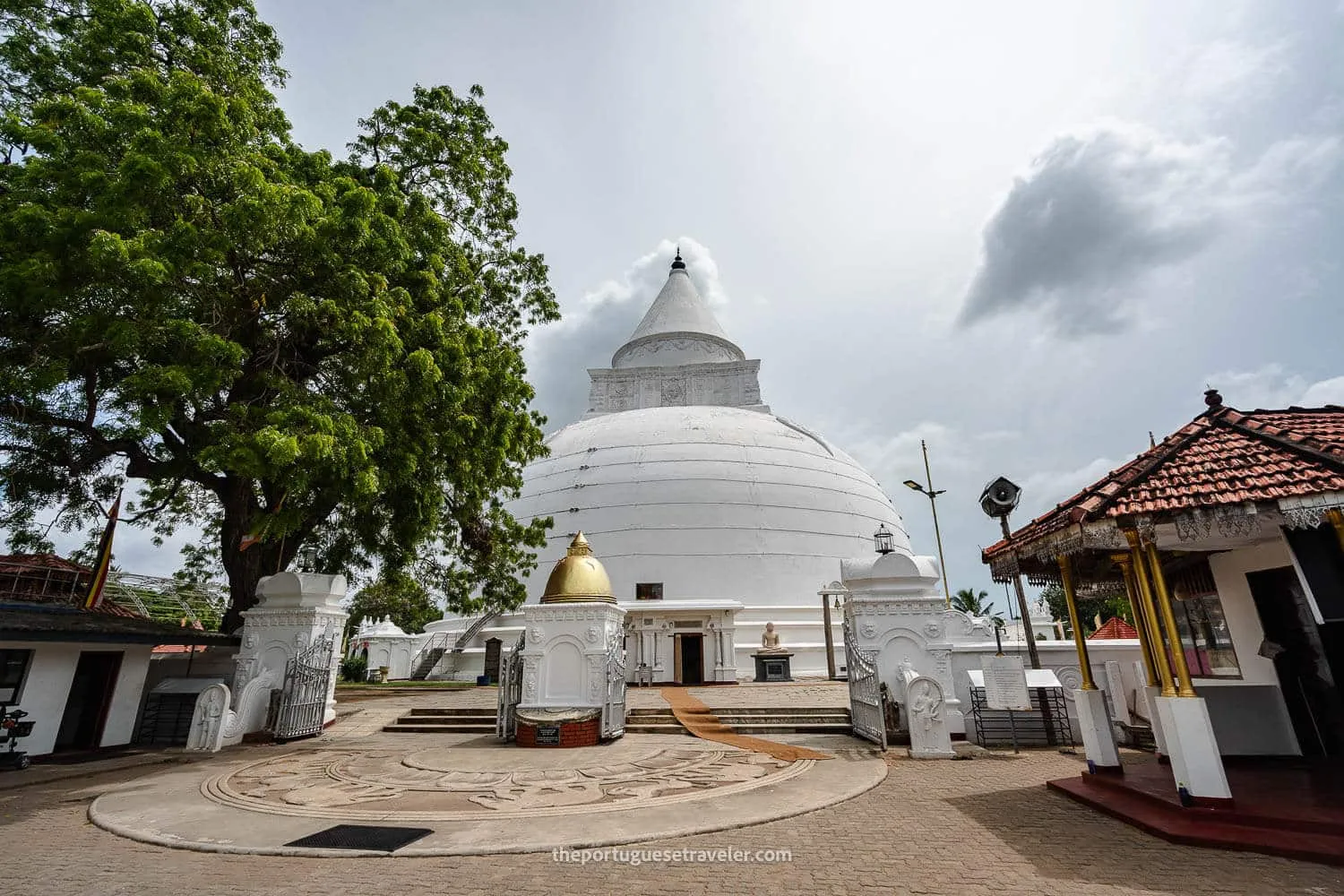
The Tissamaharama Raja Maha Vihara Buddhist Temple in Sri Lanka
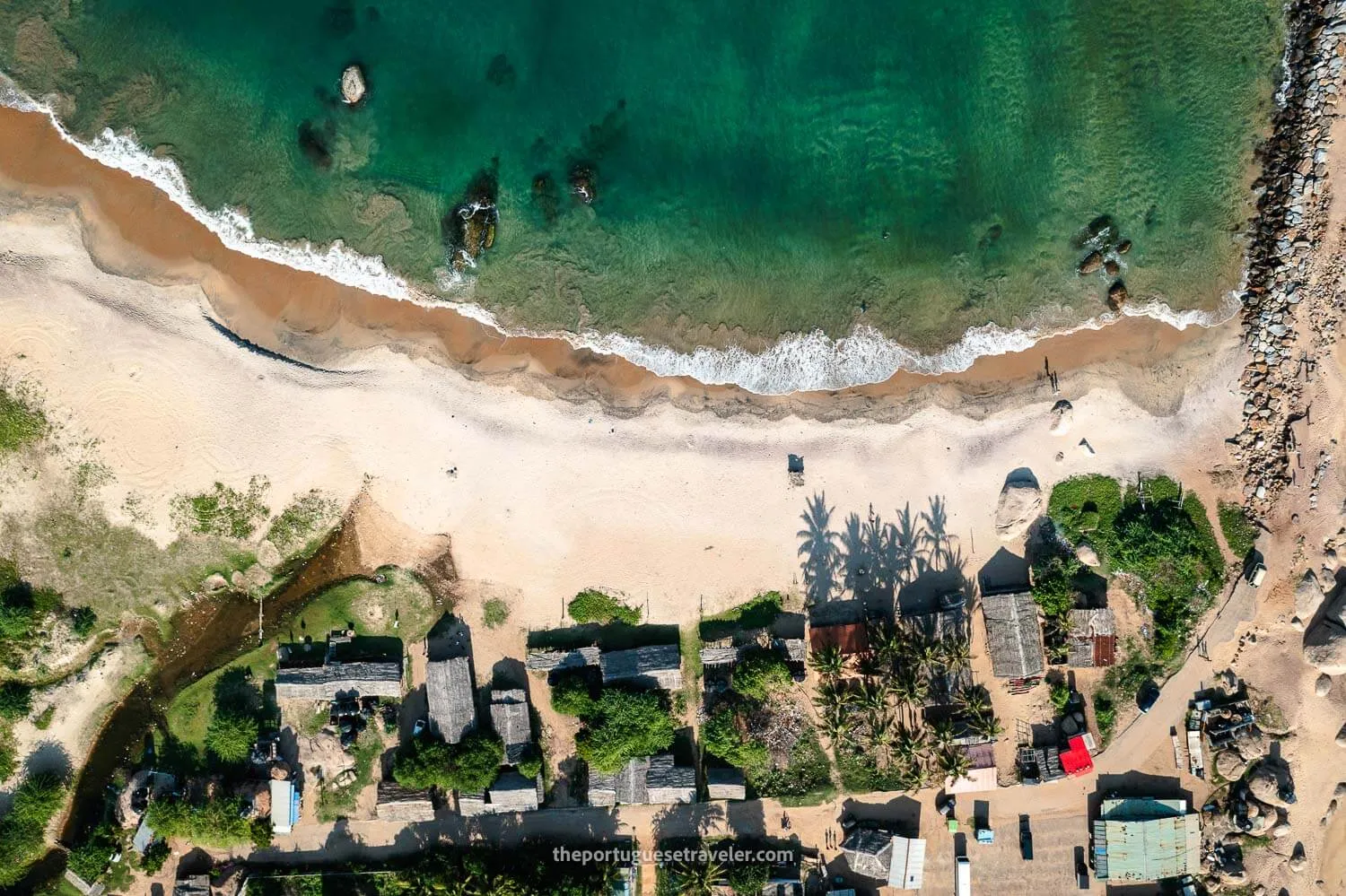
The Kirinda Beach near Yala National Park
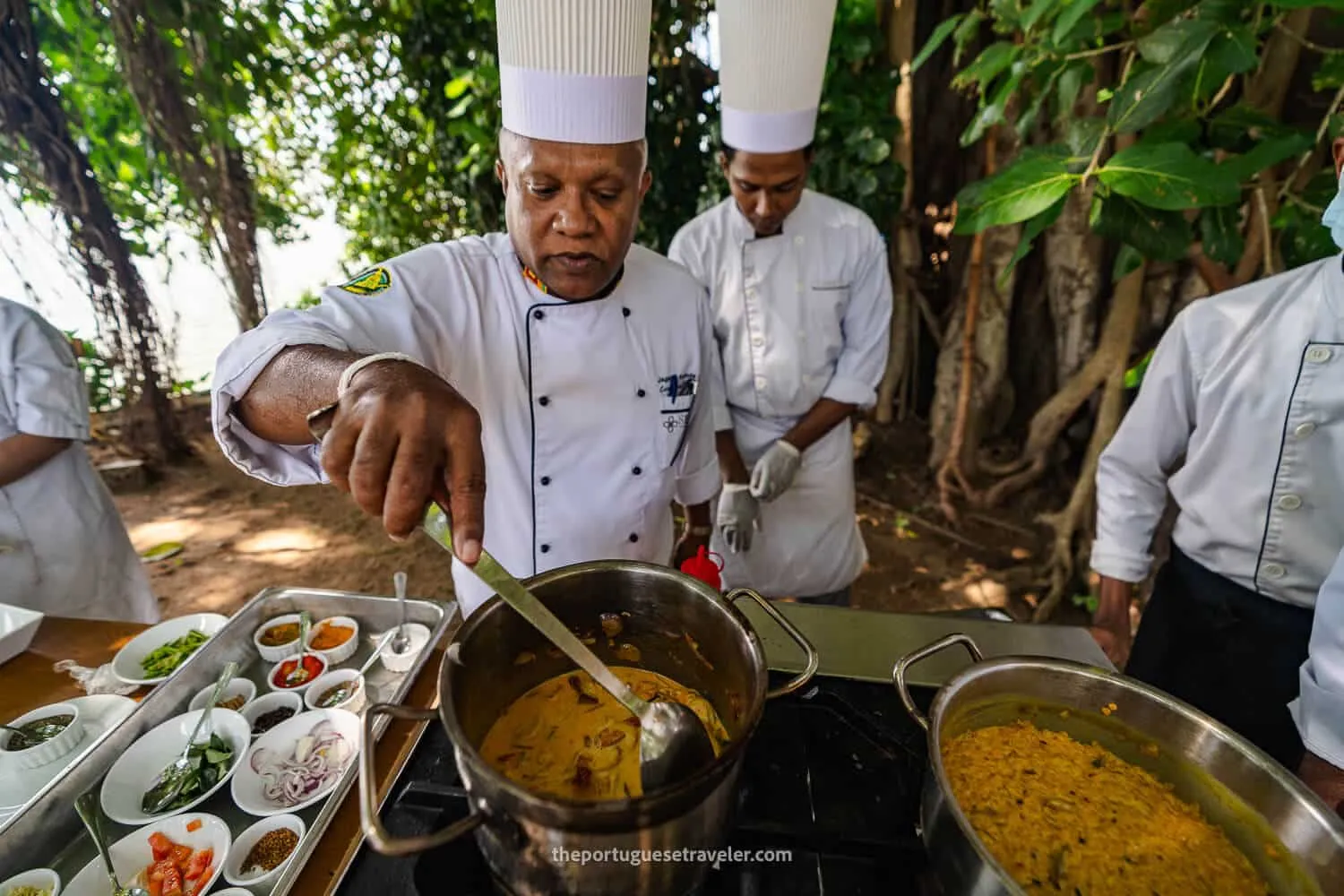
The cooking class at the Ekho Safari Tissa-Yala Resort
Best Tours in Yalla, Sri Lanka
If you’re planning to explore Yala and its surrounding areas, several highly-rated tours offer unforgettable experiences that will immerse you in the region’s natural beauty and culture:
-
Safari Adventure in Yala National Park Ideal for wildlife enthusiasts, this half-day or full-day jeep safari will take you through the stunning Yala National Park, where you can spot leopards, elephants, sloth bears, and a variety of bird species. With a knowledgeable guide, you’ll learn about the park’s unique flora and fauna while enjoying incredible wildlife encounters.
-
Explore the South Coast of Sri Lanka with Mr. Tuk Tuk For a unique coastal experience, hop on a tuk-tuk and explore the southern coast of Sri Lanka. Visit the iconic Galle Dutch Fort, the peaceful Japanese Peace Pagoda in Rumassala, and several stunning natural sites, including Coconut Tree Hill, Parrot Rock Bridge, and the Sea Turtle Farm. This tour offers a perfect blend of cultural exploration and breathtaking natural beauty.
-
Galle Fort Walking Tour A fascinating walk through the historic Galle Fort, where you’ll visit key sites such as the Star Bastion, the Dutch Reformed Church, the Old Dutch Warehouse, and the Flag Rock Bastion. As you stroll through the cobblestone streets, your guide will share the rich history of this UNESCO World Heritage Site, offering insights into its colonial past and architectural charm.
-
Day Trip from Hikkaduwa, Galle, Weligama, and Mirissa to Ella Highlands If you want to experience the breathtaking landscapes of Ella, this full-day tour is a must. Visit the ancient Buduruwagala Temple, marvel at Ravana Falls, and hike to the famous Nine Arches Bridge. The tour also includes a visit to Ella Rock and a thrilling zip line experience with Flying Ravana, followed by a stop at the Halpewaththa Tea Factory, where you can enjoy a cup of freshly brewed Ceylon tea while taking in the picturesque views.
-
Traditional Jewelry Making Workshop in Galle For a hands-on cultural experience, this jewelry-making workshop in Galle allows you to create your own custom silver jewelry. Learn traditional techniques such as metal fusion, gemstone setting, and polishing, and leave with a unique piece of jewelry you crafted yourself. You’ll also get to examine local gemstones and purchase custom pieces at reasonable prices.
Whether you’re seeking adventure, cultural insights, or a unique hands-on experience, these tours near Yala offer something special for every type of traveler.
My Experience at the Sithulpawwa Rock Temple
Sithulpawwa Rock Temple was, without a doubt, the most mind-blowing place I visited during my 12-day journey through Sri Lanka. Having seen the itinerary beforehand, I expected another Buddhist temple with a stupa or pagoda, much like the temples at the base of the Ravana Cave or the Buduruwagala Temple near Ella. But nothing could have prepared me for what awaited at the top of Sithulpawwa Rock.
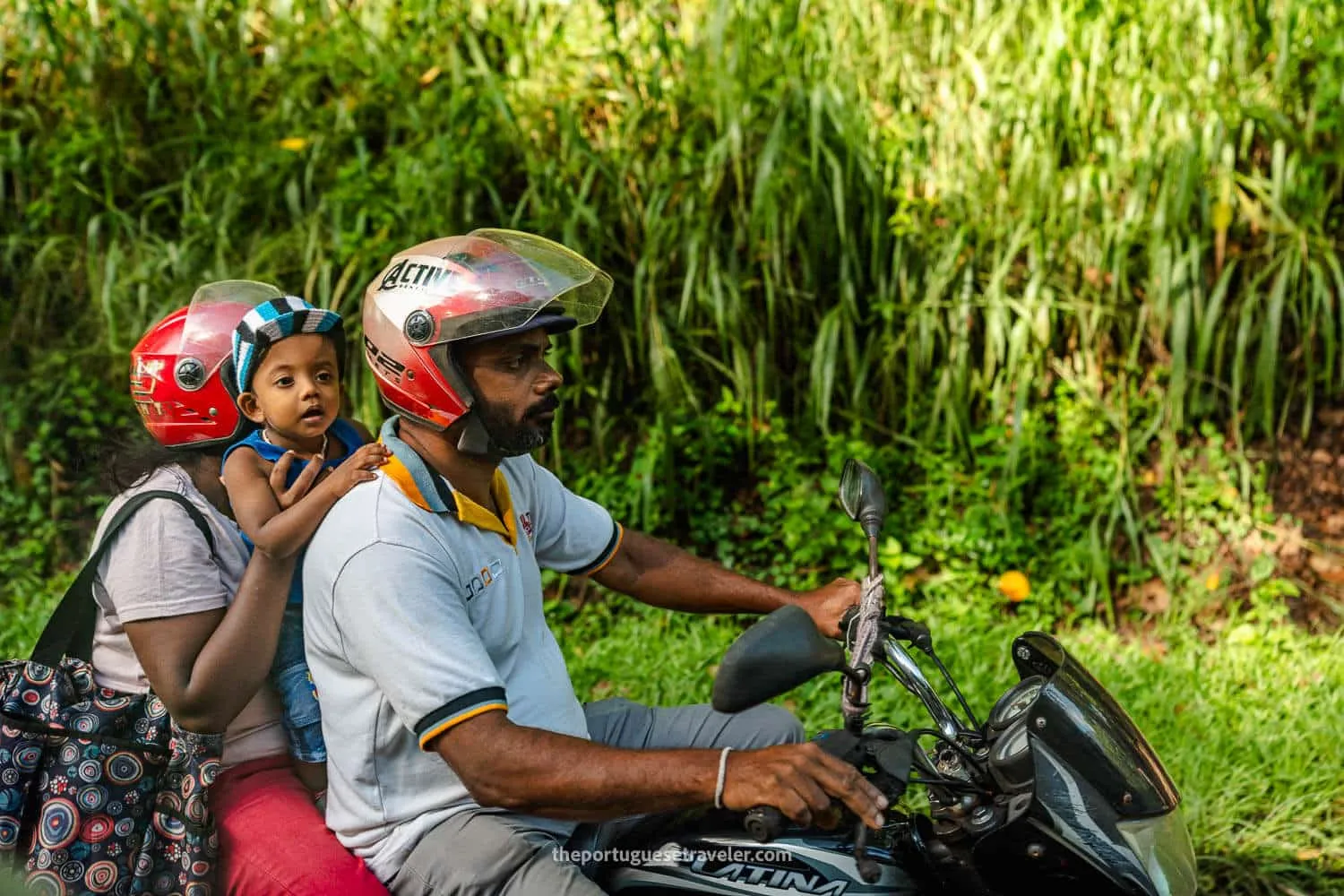
A family on a scooter on the road to the Sithulpawwa Rock Temple
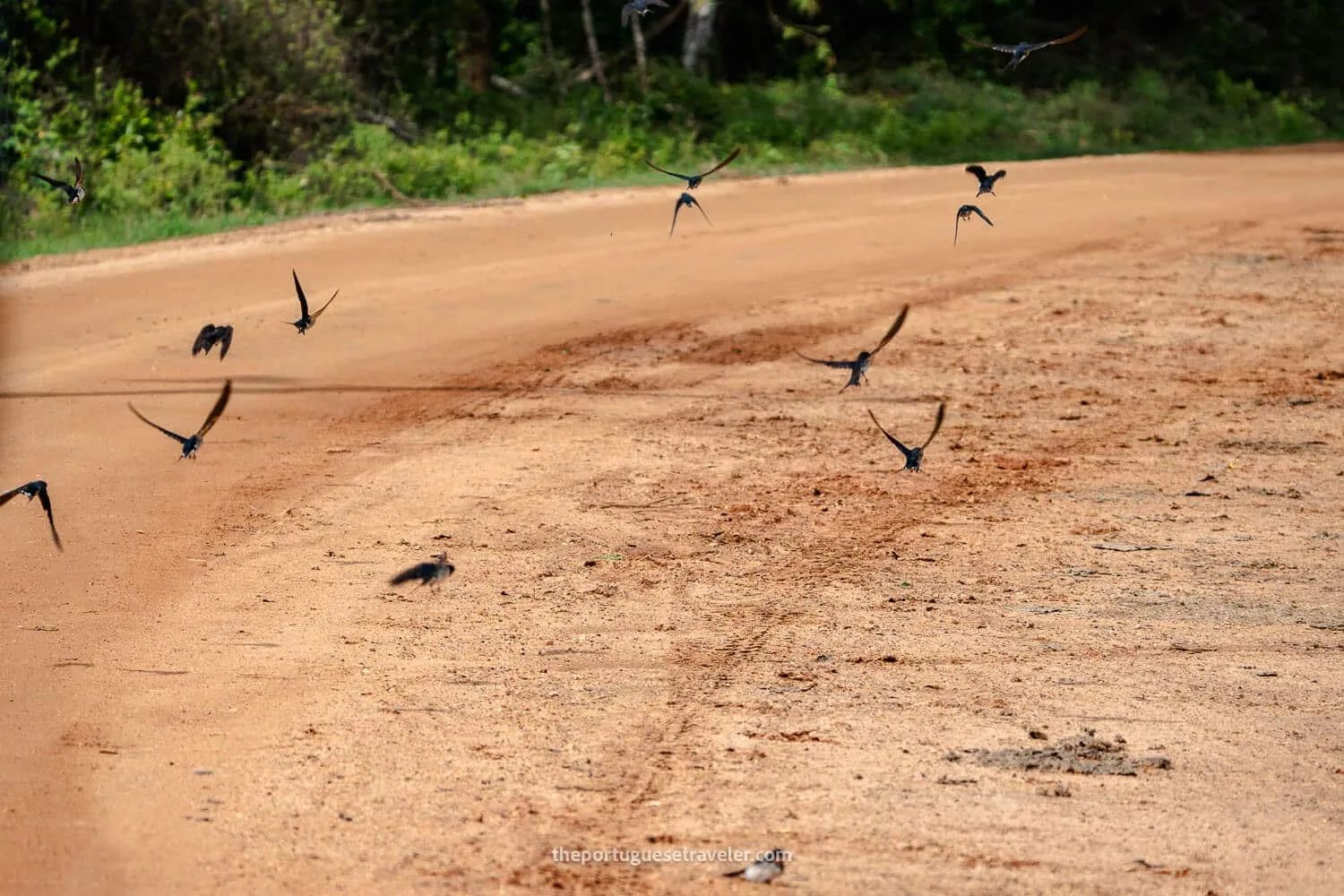
The swallows on the road to the temple
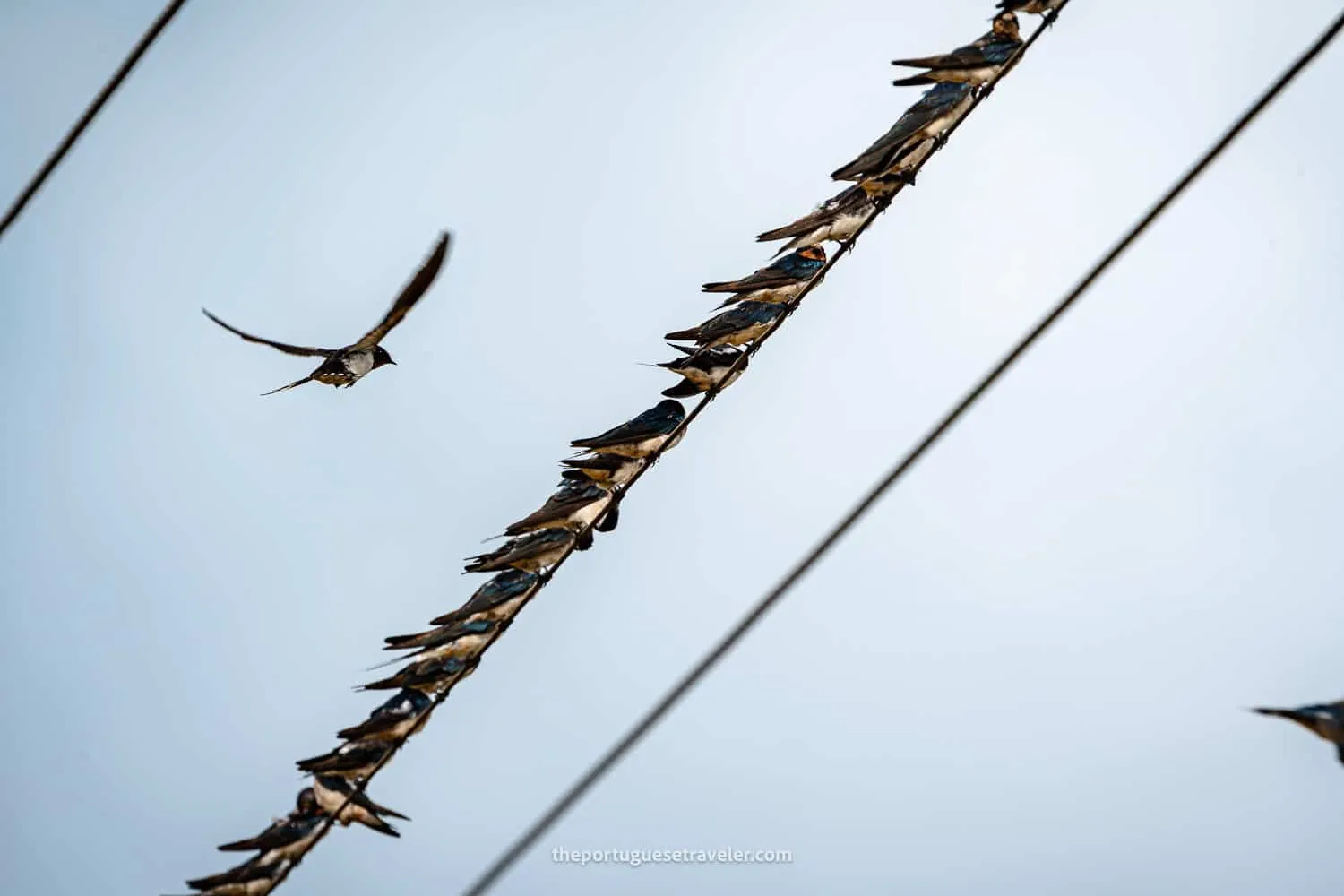
A flock of swallows on a cable on the road to the temple
Wildlife Encounters and Jungle Rock Formations
To begin with, we took a shuttle through Block 1 of Yala National Park, passing right through the park itself, almost like a mini safari preview. On the way to the temple, we encountered a plethora of wildlife. Even if the temple had turned out to be just another stupa, the experience would have been worth it for the animal sightings alone. We spotted monitor lizards, Sri Lankan wild boars, barn swallows, crocodiles, Sri Lankan axis deer, mongooses, Northern plains gray langurs, toque macaques, Malabar pied hornbills, and Sri Lankan black-necked hares. Honestly, if a leopard had appeared, we could have skipped the safari the next day! It was a wildlife lover’s dream come true. After a 30-minute ride, we reached the Sithulpawwa complex and were greeted by the sight of a Sri Lankan elephant near the perimeter. We were then guided up the rock formation, shoes in hand, to reach what we had seen from a distance: a stupa perched atop the hill. As we slowly climbed the stairs, we reached a plateau, and that’s when it hit us. The view was jaw-dropping. It wasn’t just a view of the jungle; it was a panorama of surreal rock formations reminiscent of Sigiriya or Elephant Rock, stretching out in all directions. The landscape felt like something out of Venezuela’s Amazon or Colombia’s Chiribiquete National Park. It was a sight I never expected, and one I won’t forget. We snapped hundreds of photos, trying to capture the beauty before continuing our ascent.
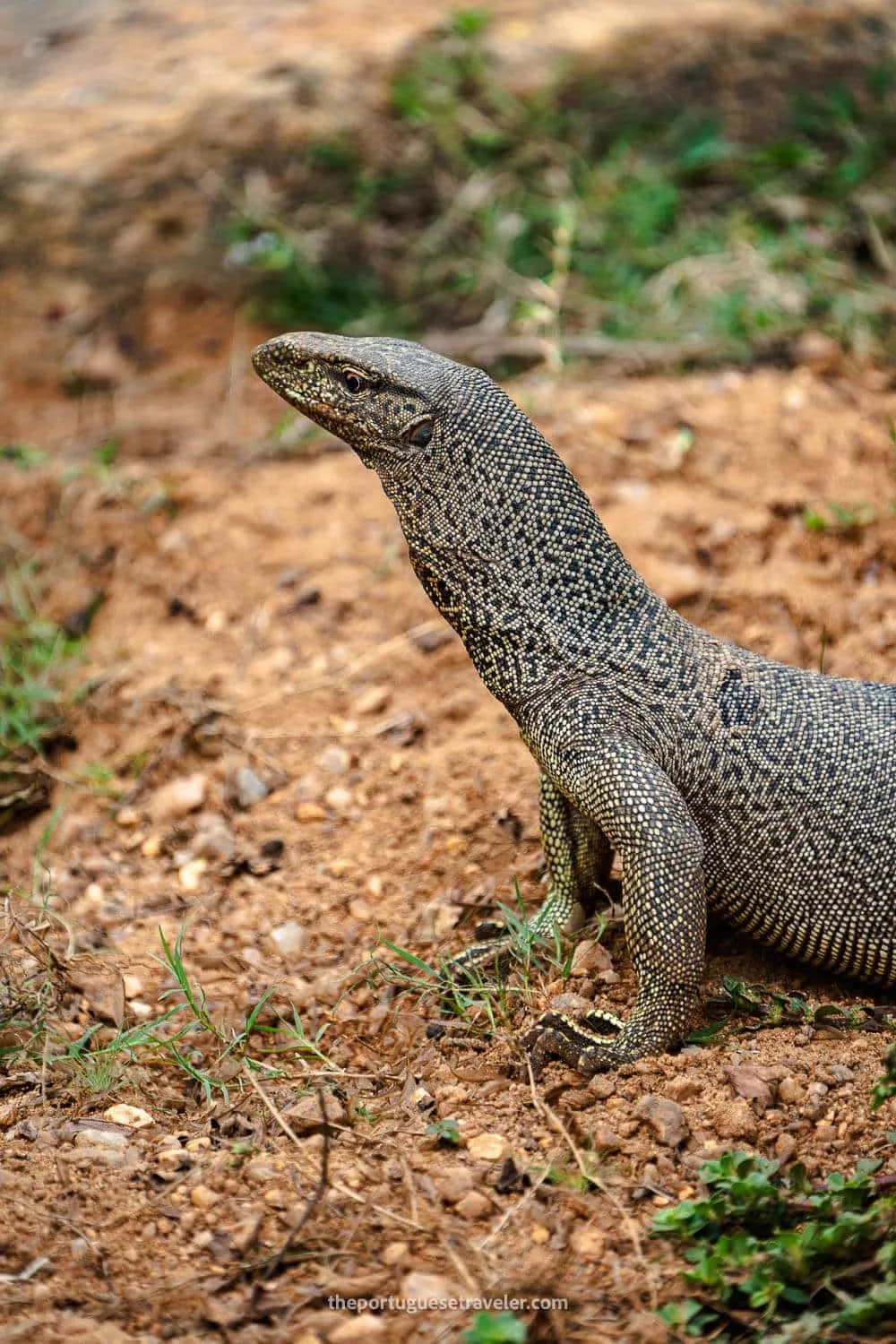
A monitor lizard on the road to the Sithulpawwa Rock Temple
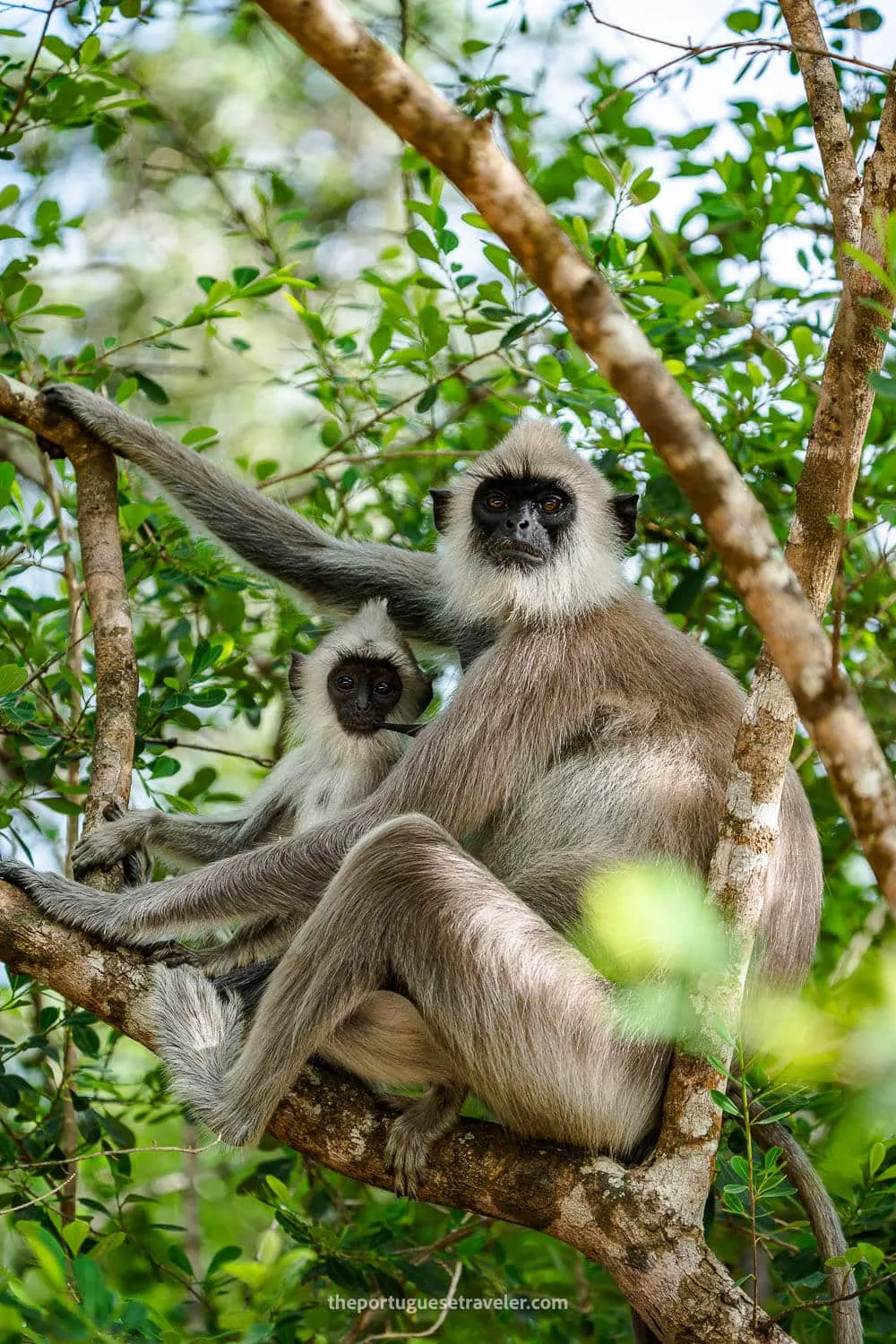
A family of Grey Langurs at the Yala National Park, on the road to the Sithulpawwa Temple
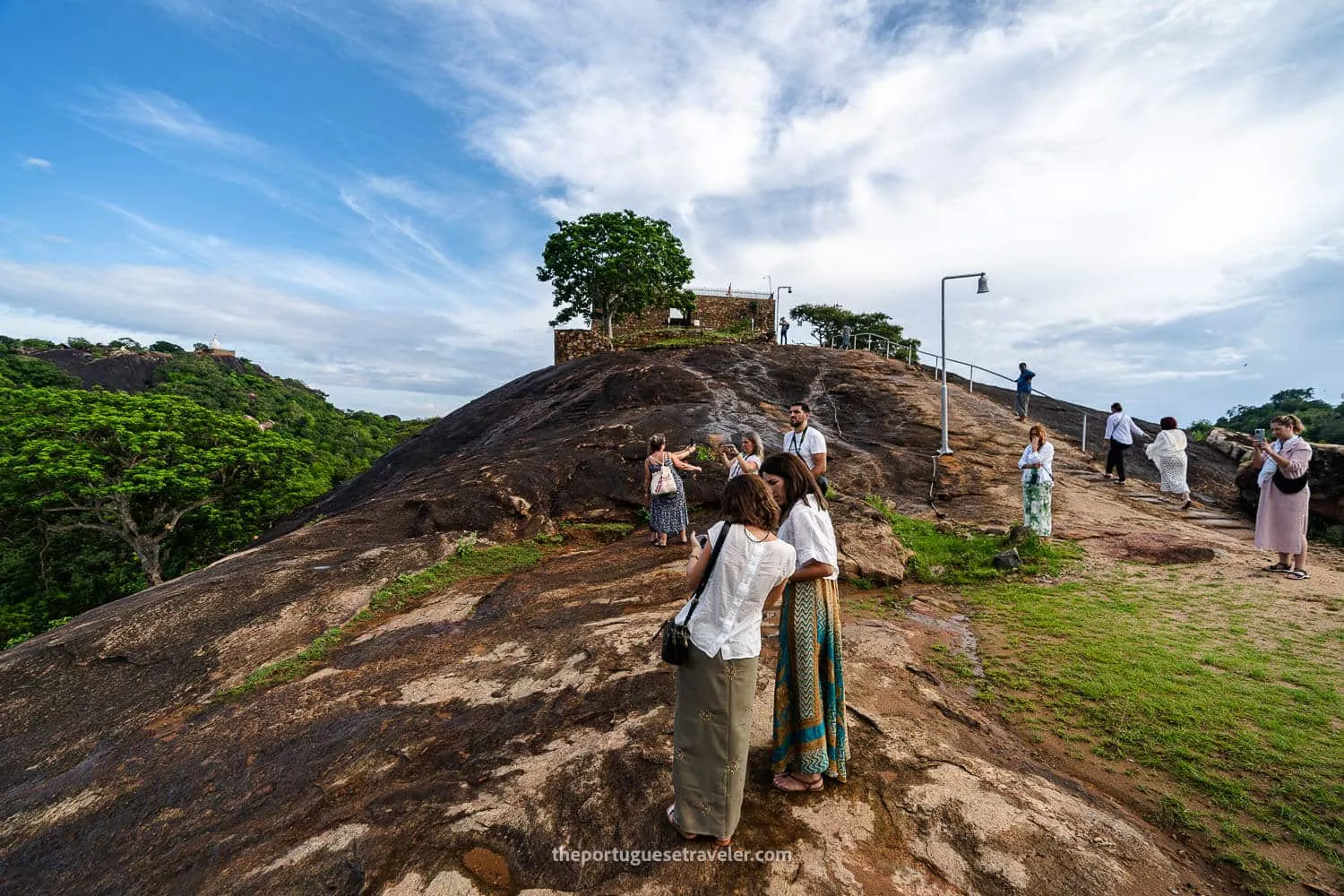
The climb to the top of the Sithulpawwa Rock Temple
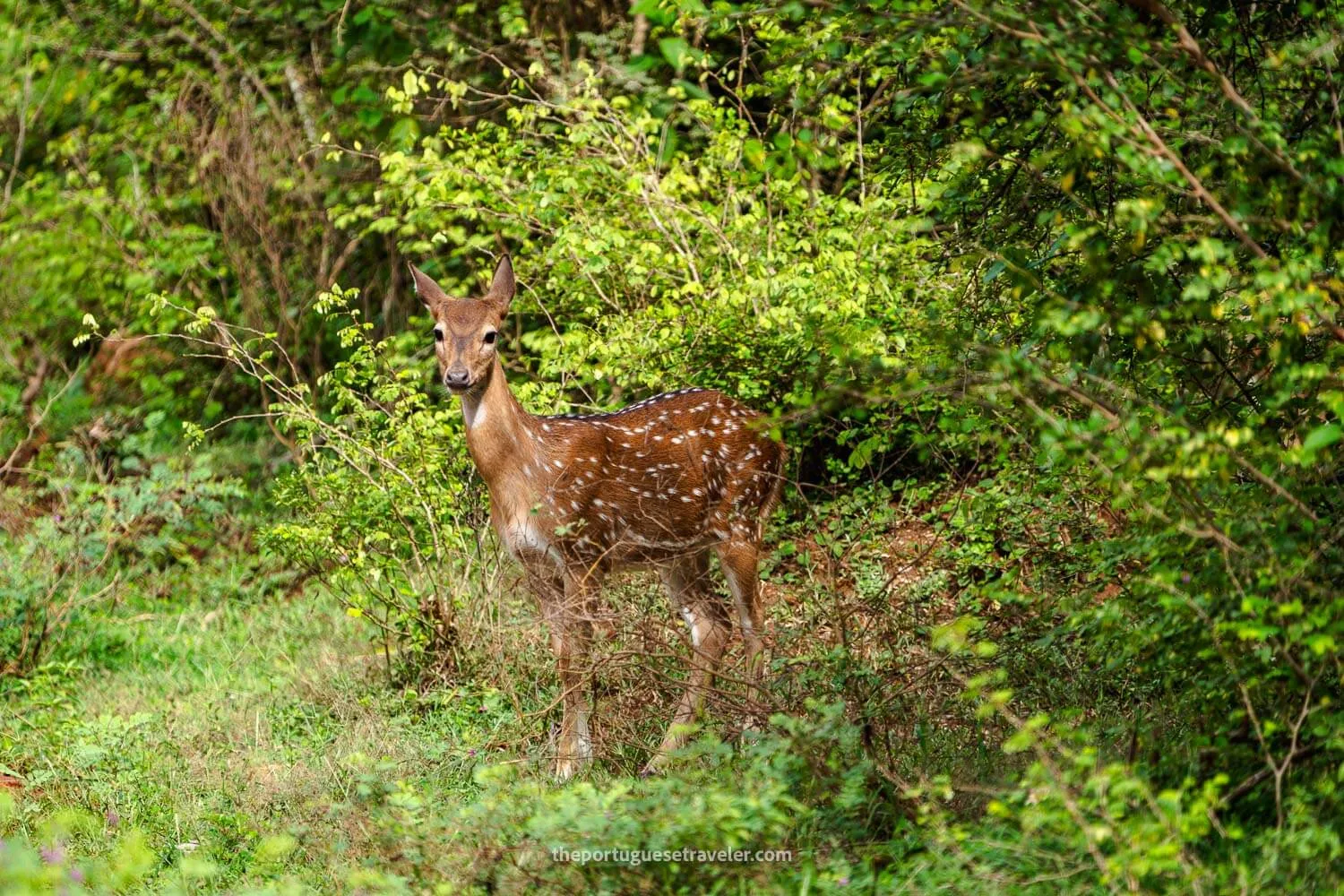
A deer on the road to Sithulpawwa
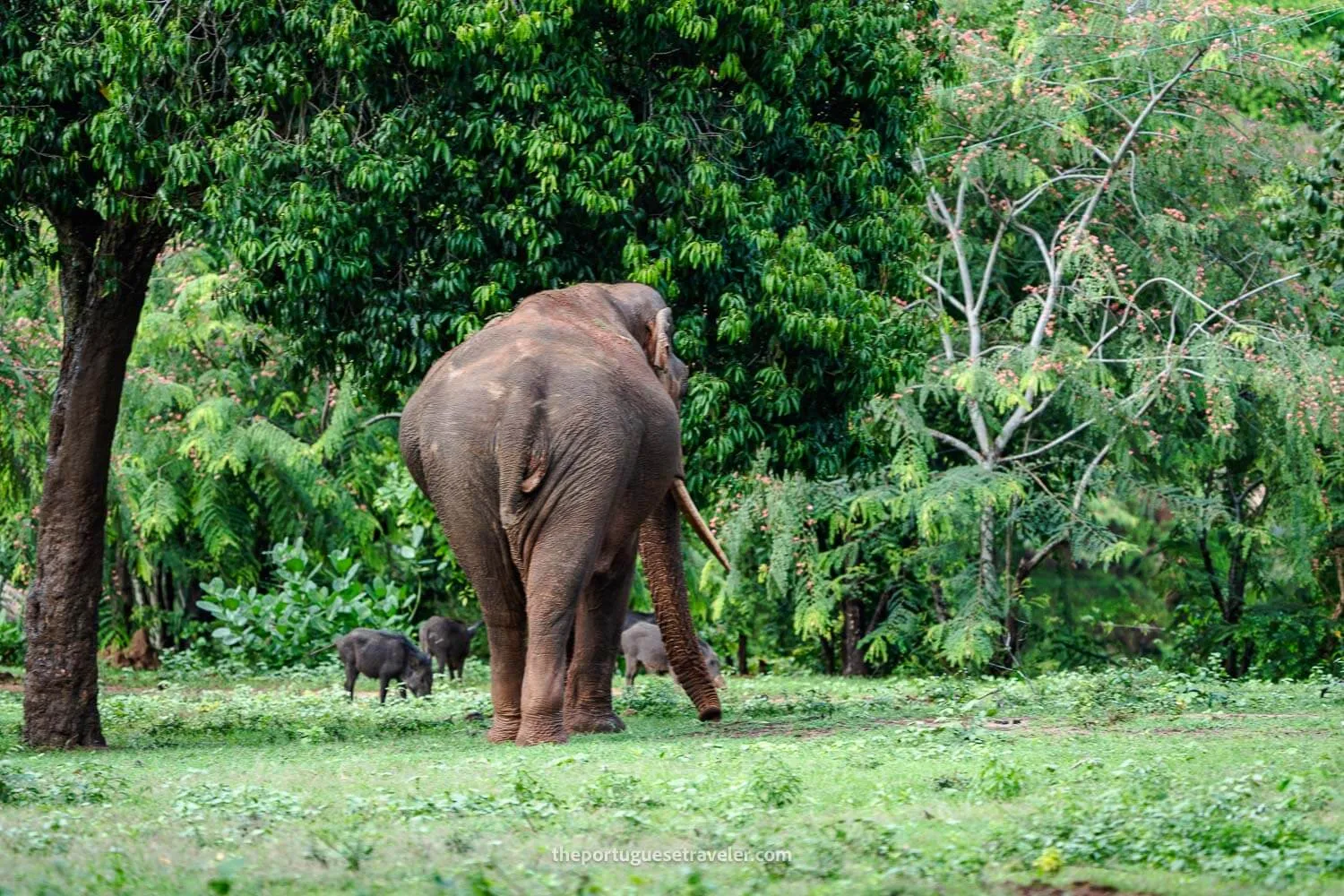
An elephant at the Sithulpawwa Temple
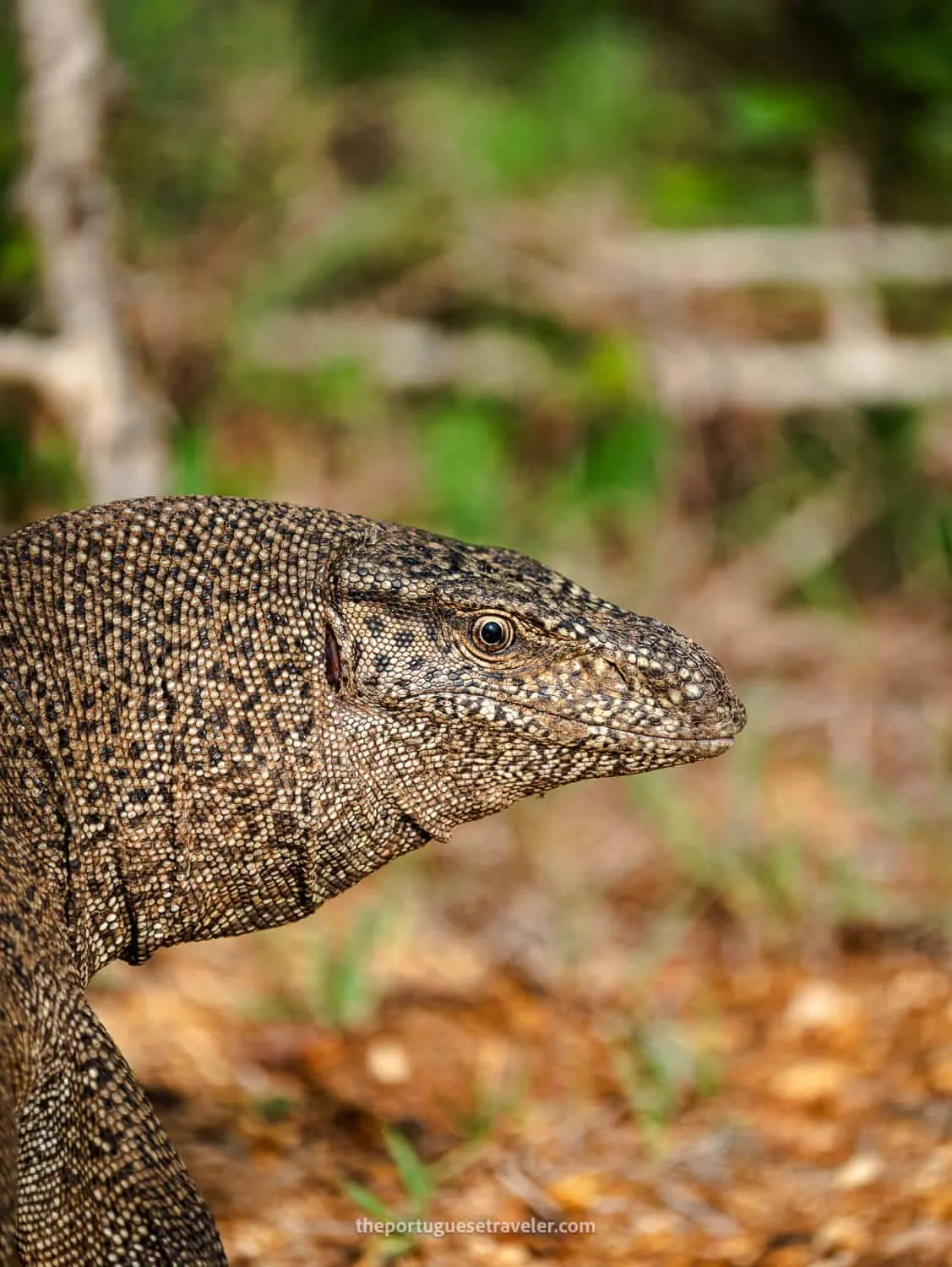
A Monitor Lizard at the Yala National Park
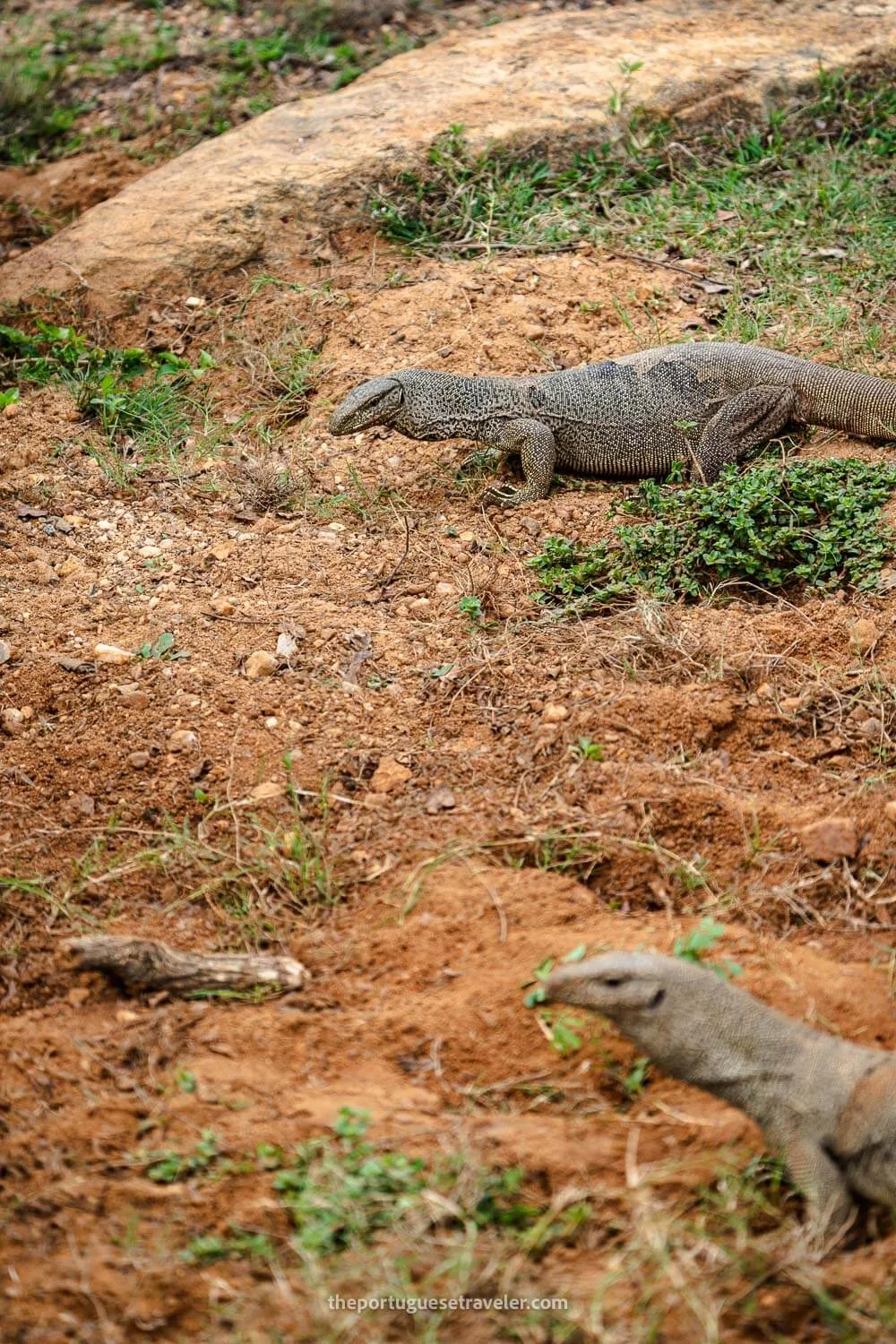
Two monitor lizards on the way to the temple
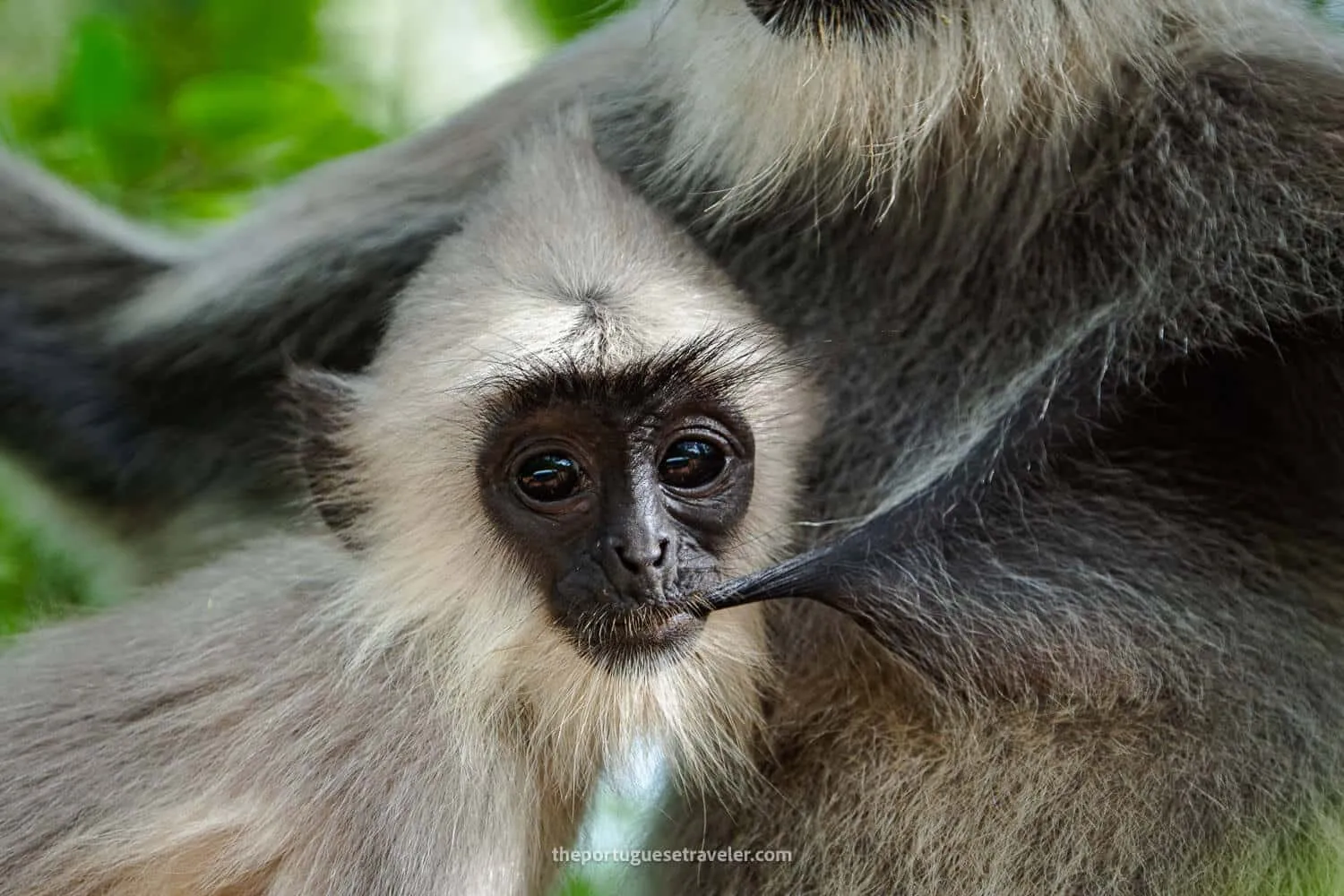
A Grey Langur having lunch
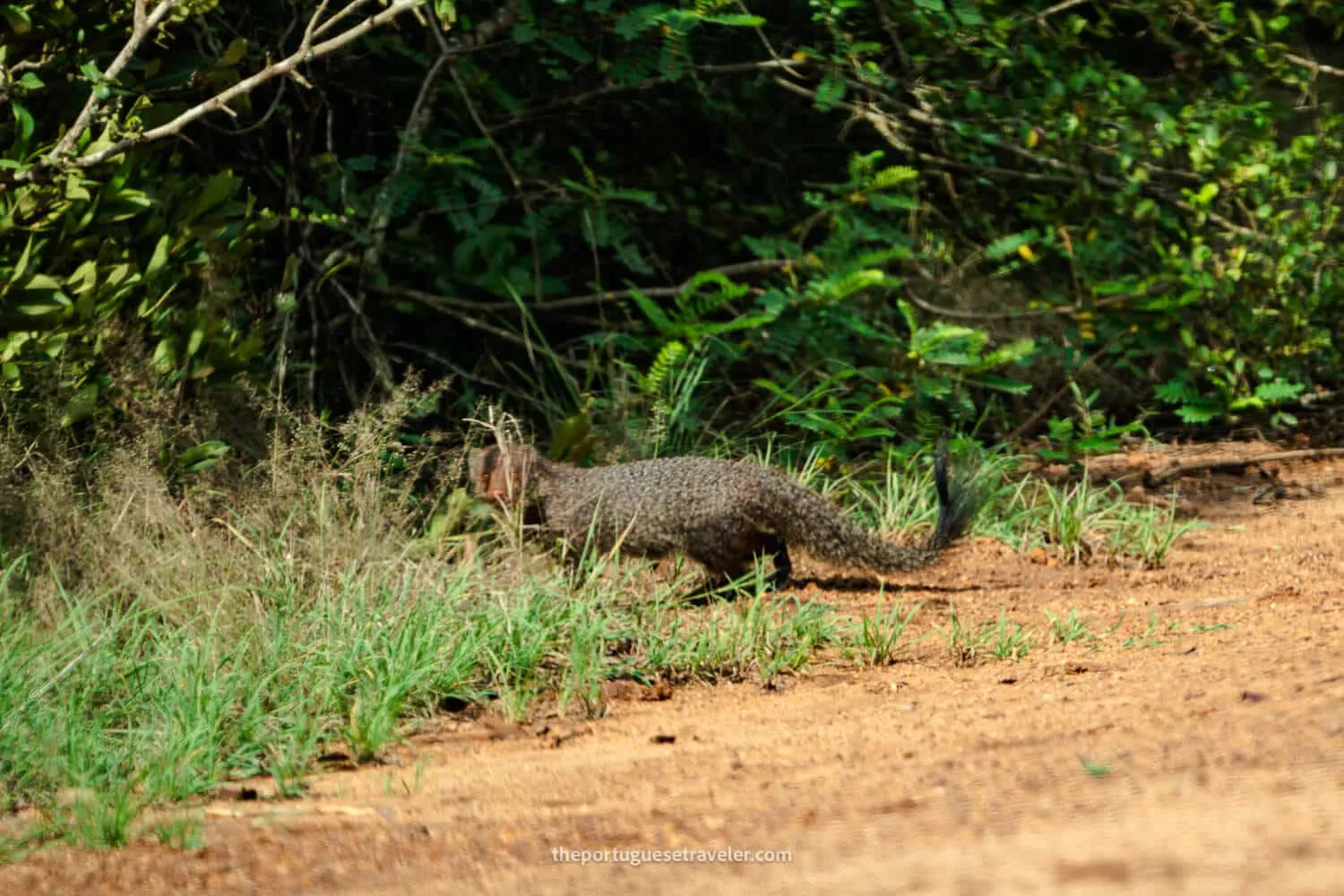
A mongoose at the Yala National Park
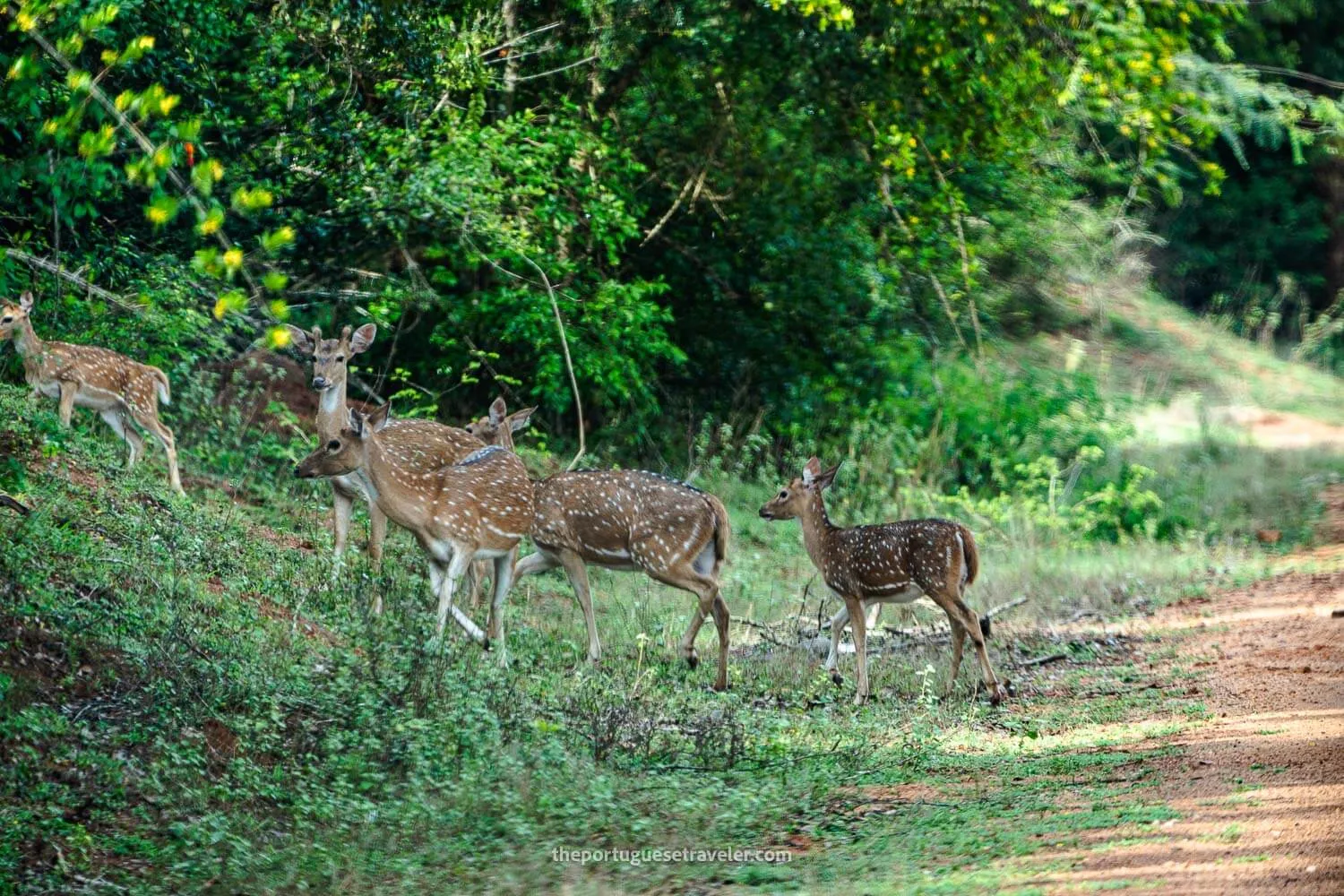
A pack of deers near the road to Sithulpawwa
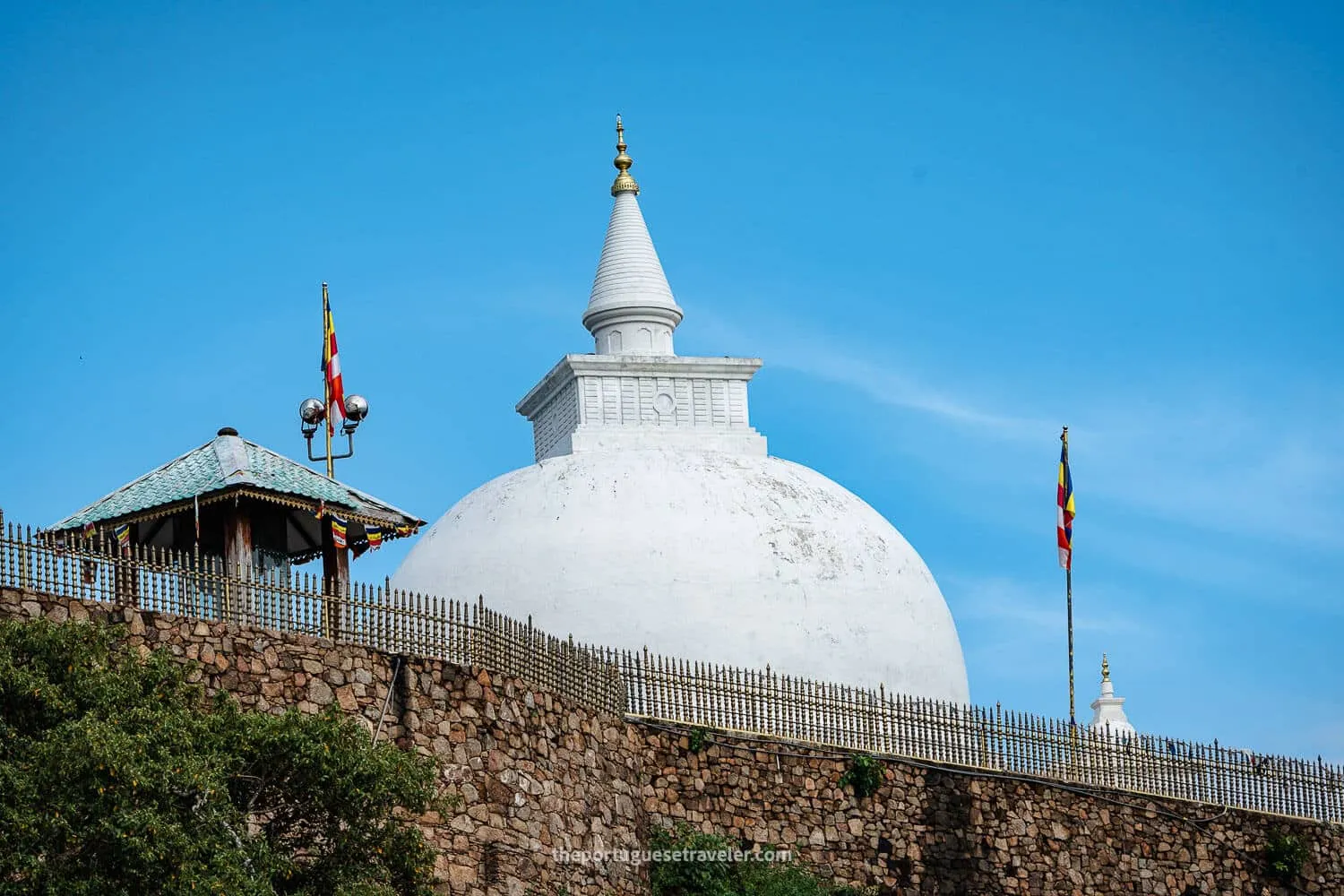
The Sithulpawwa Rock Temple seen from its base
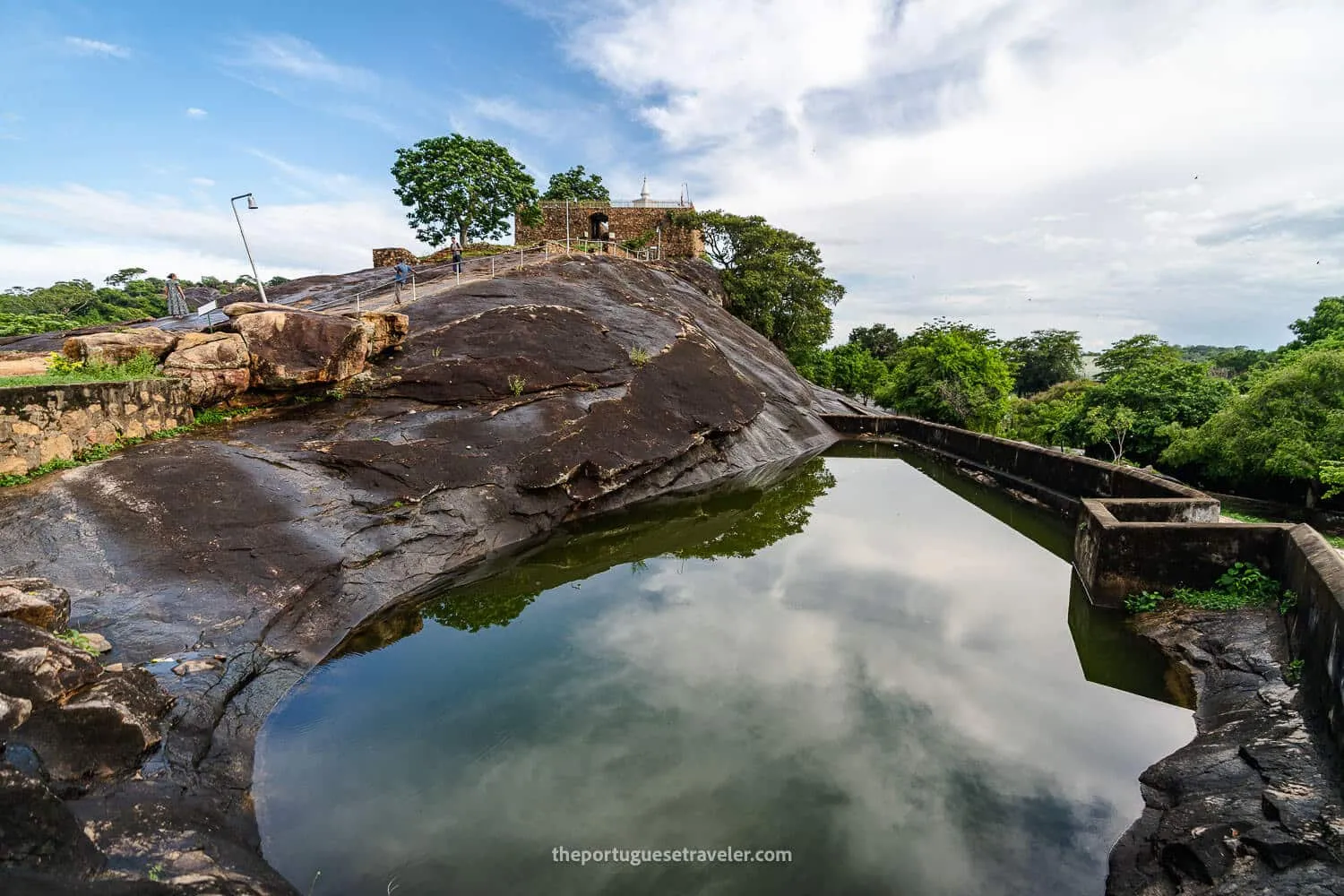
The Sithulpawwa Rock Temple seen from its base
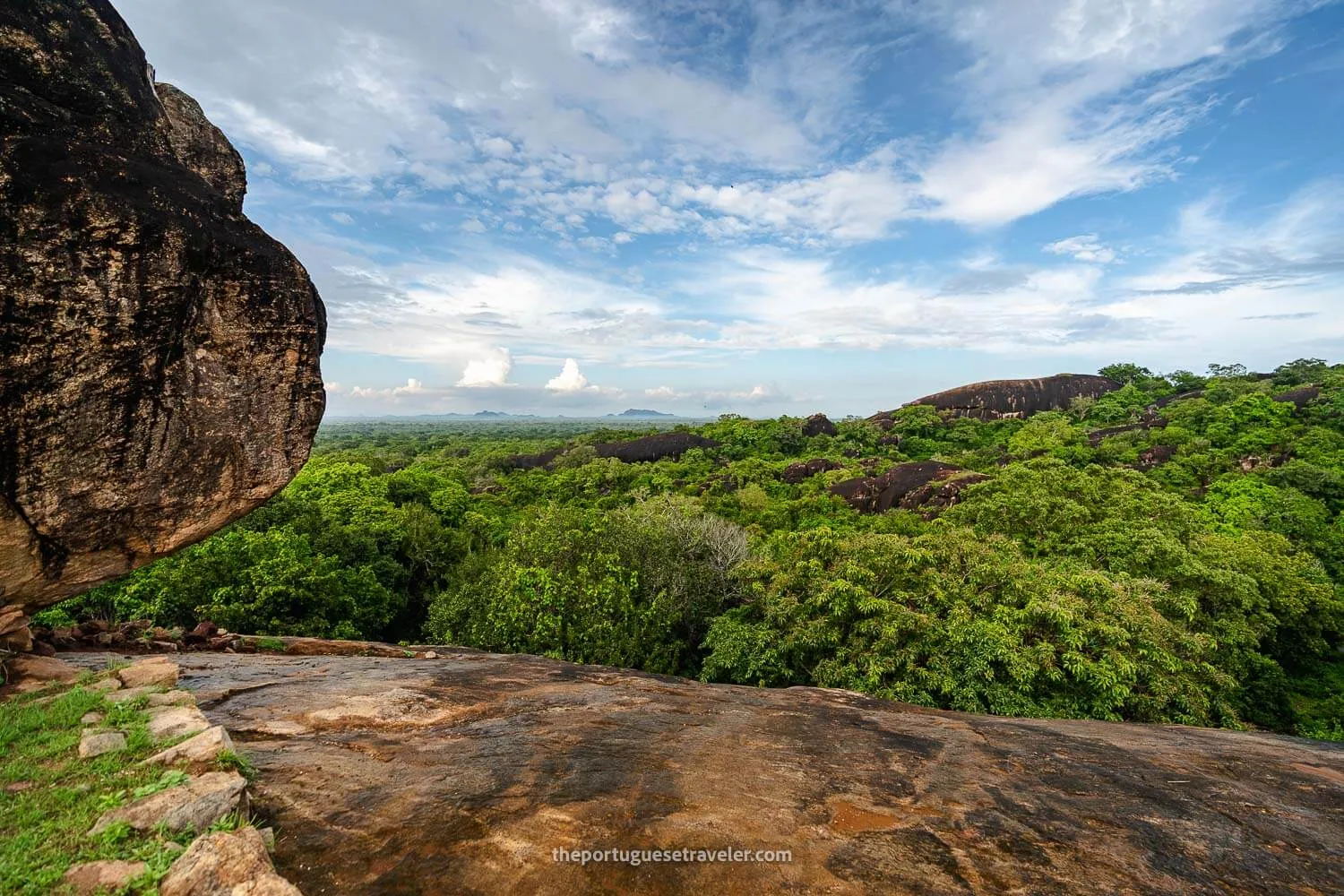
The absolutely mind-blowing view at the first plateau of the Sithulpawwa Rock Temple
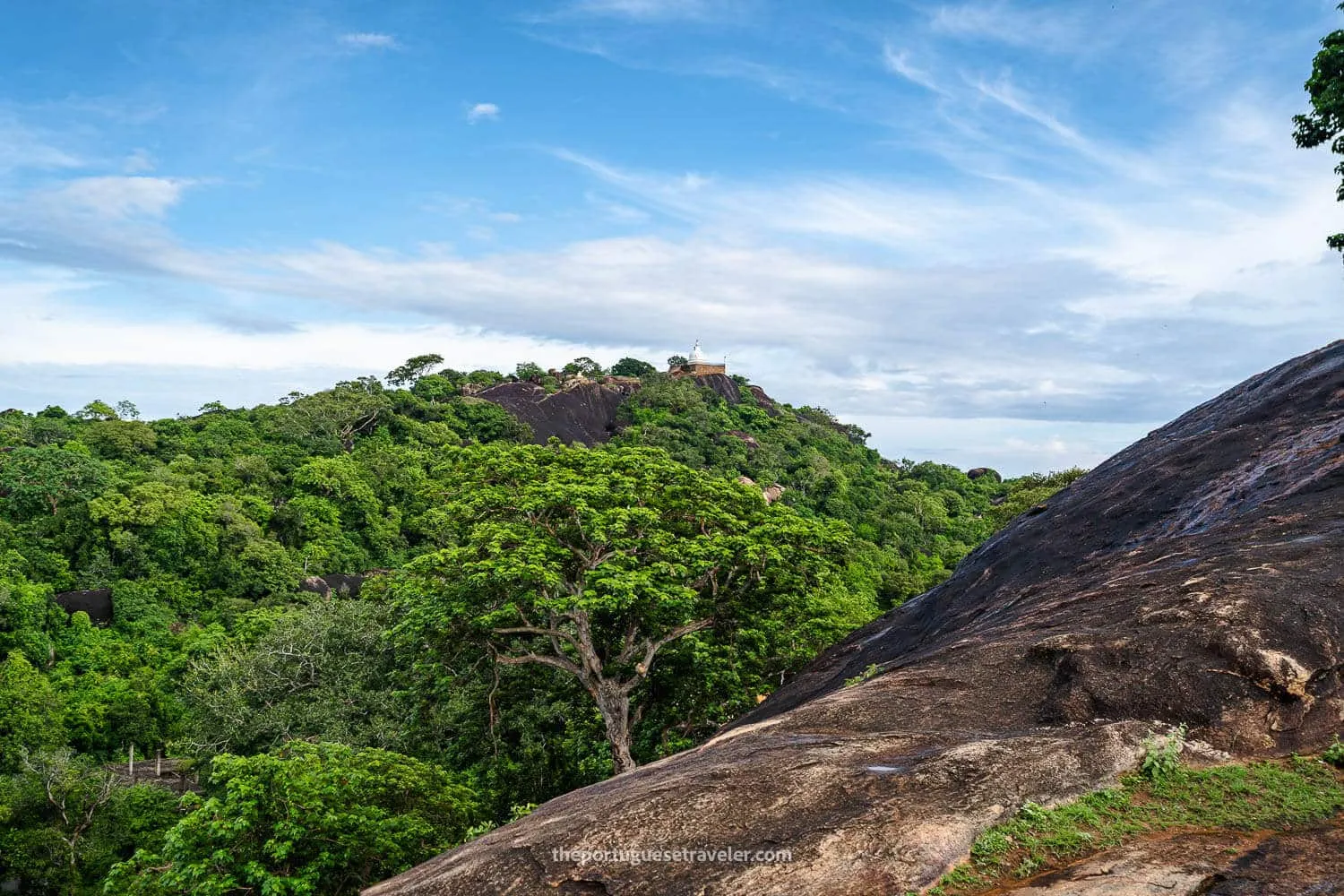
The following rock formation with a temple on its peak
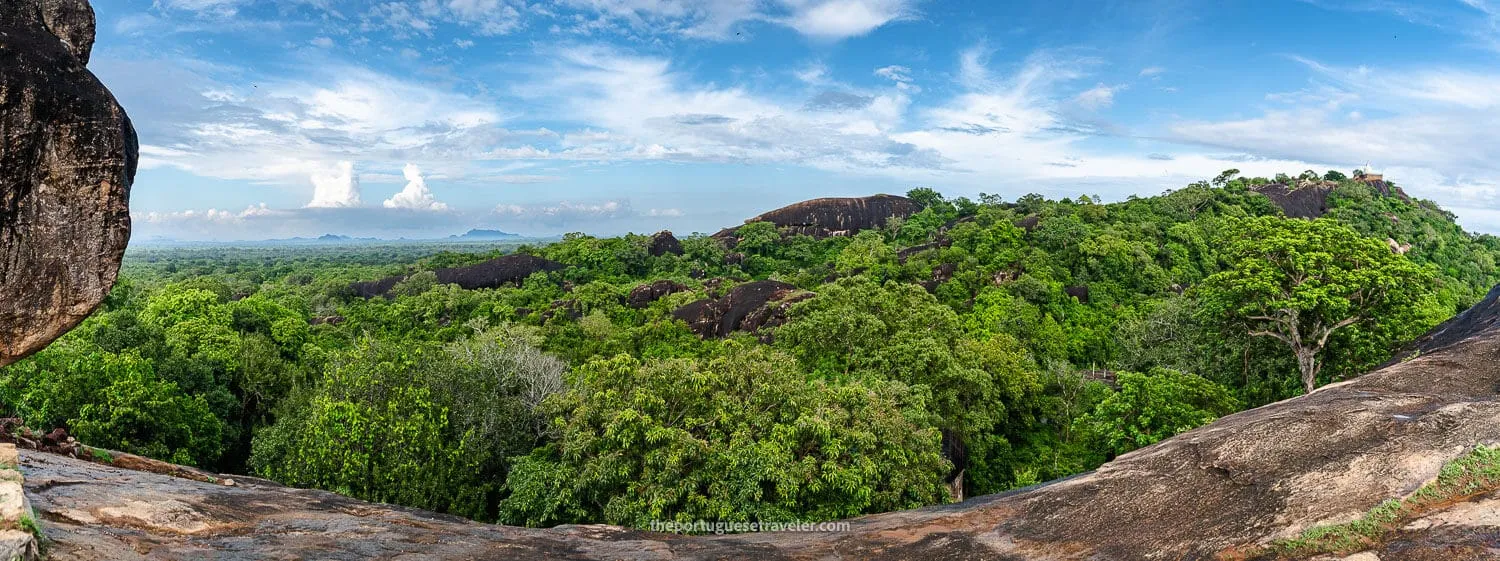
A panorama of the view at the Sithulpawwa Rock Temple
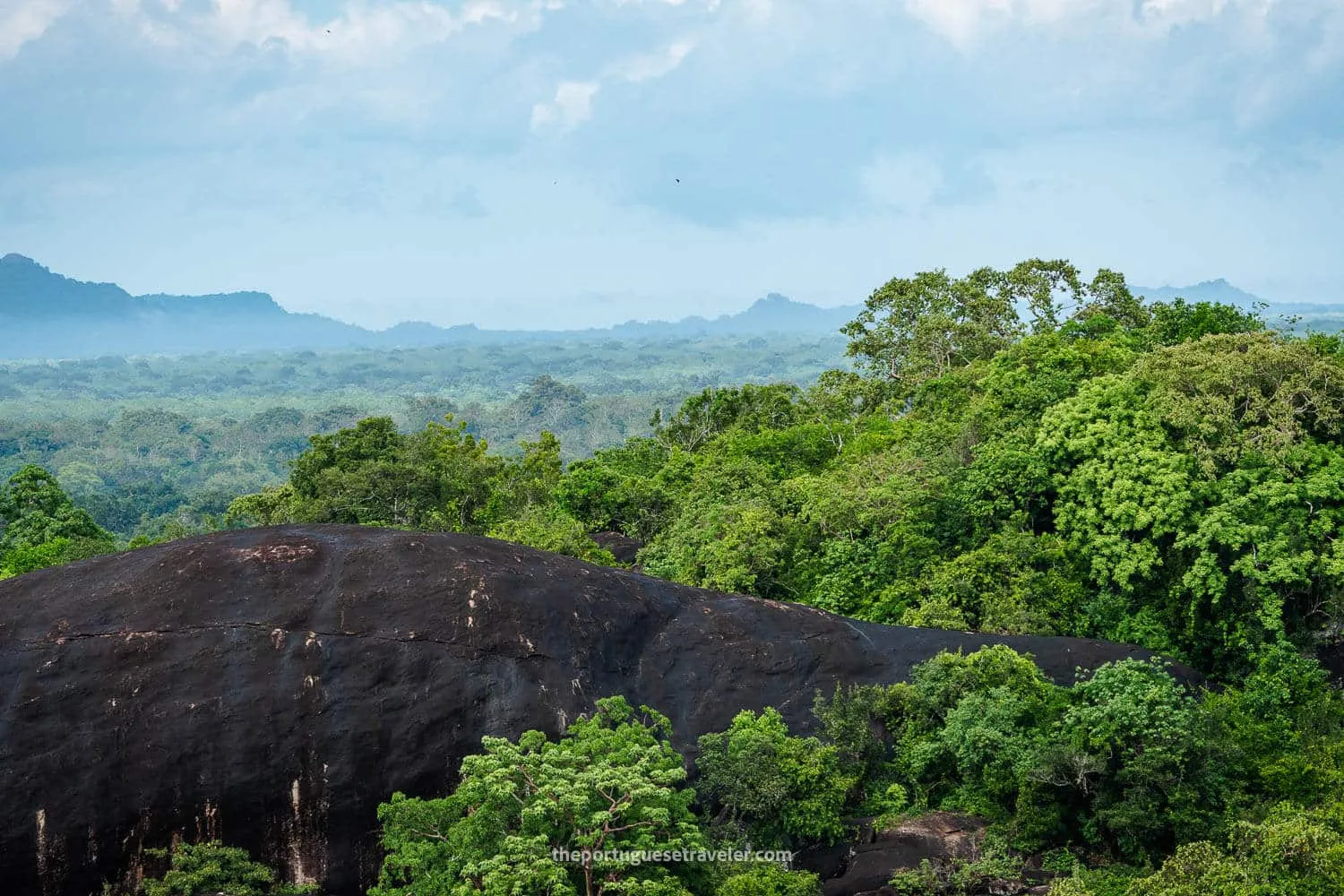
The rock formations around the Sithulpawwa Rock Temple
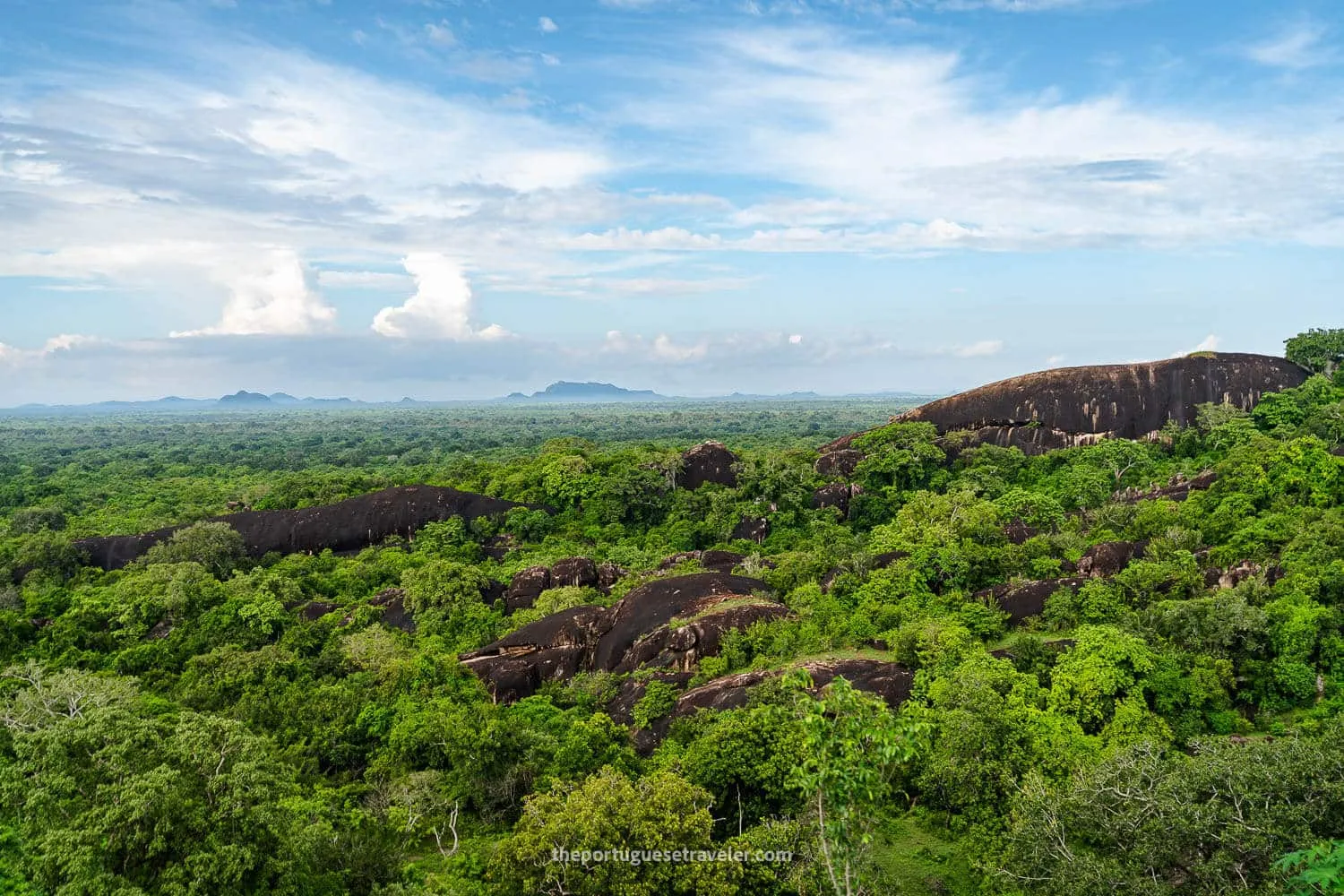
Probably one of the coolest views i’ve seen in my life at the Sithulpawwa Rock Temple
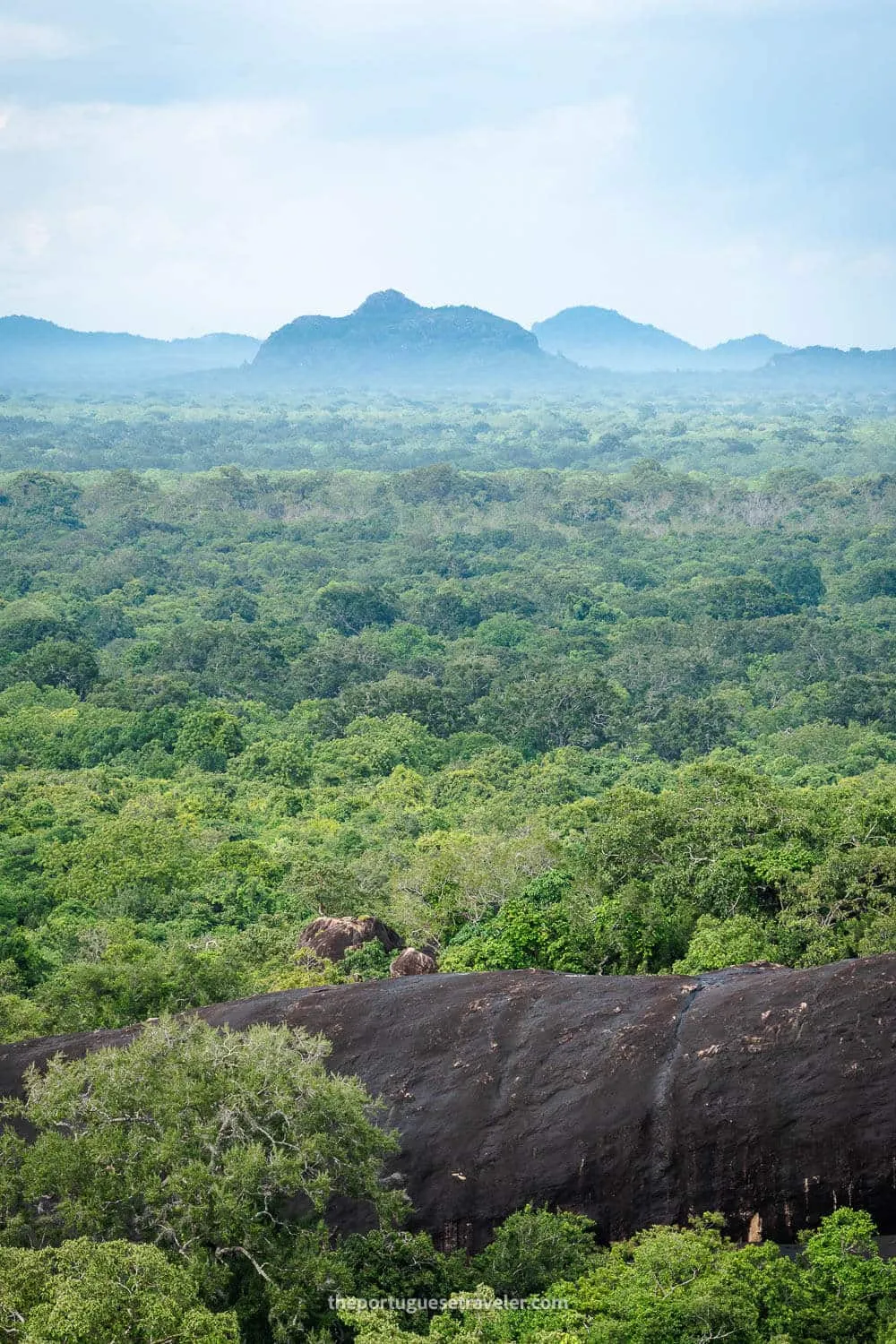
A detail of the jungle and rock formations around Sithulpawwa
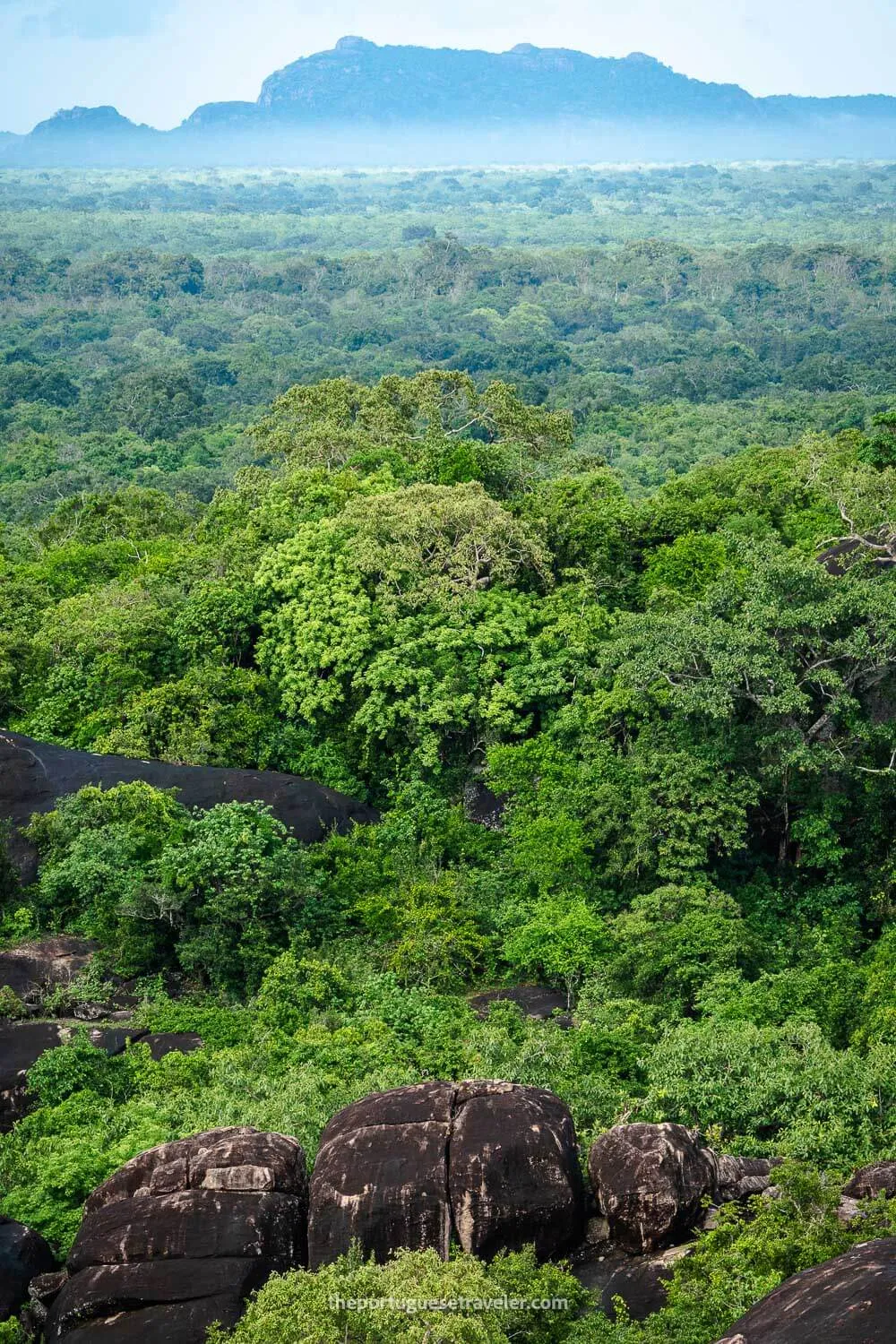
A close-up of the same view
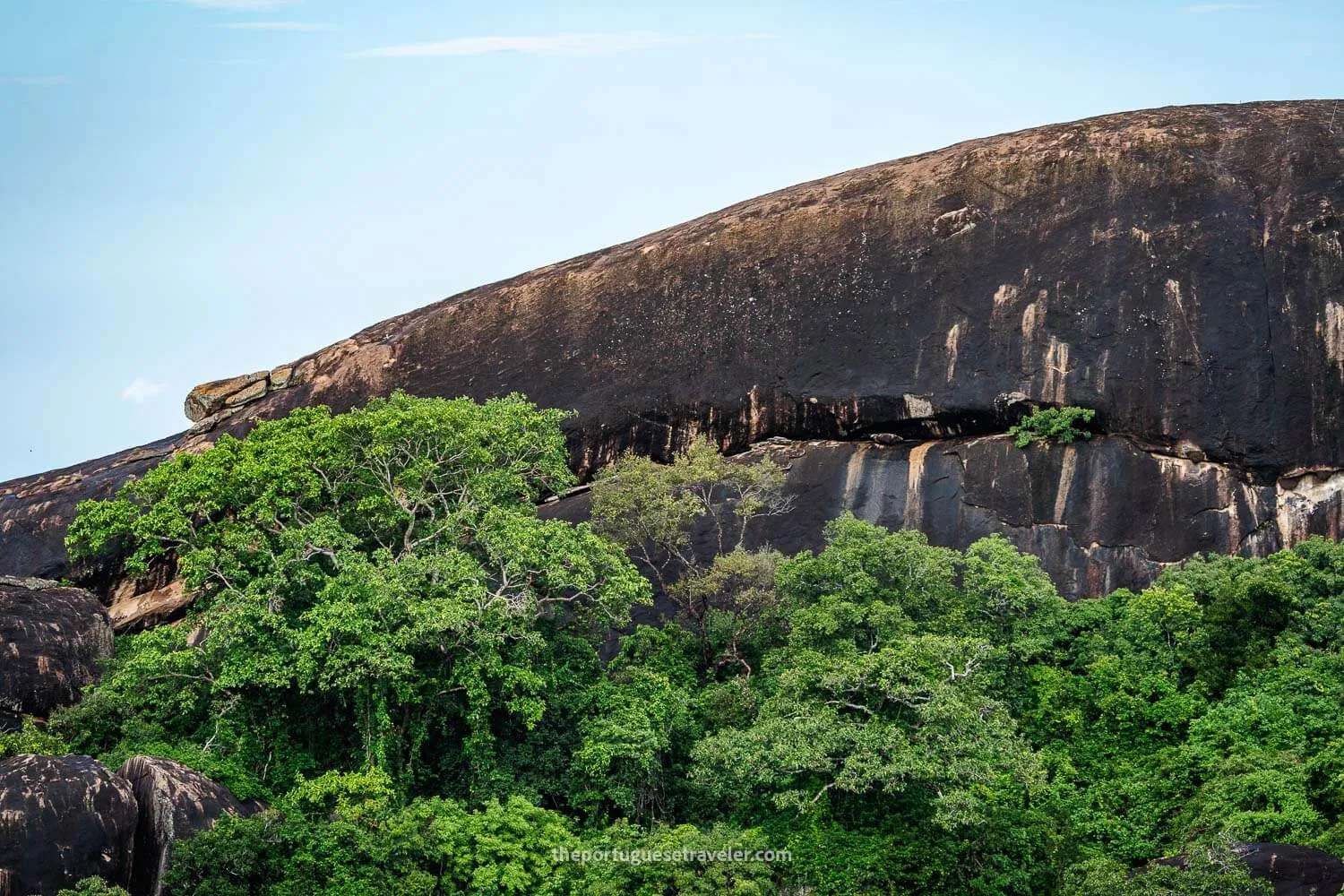
A detail of the neighbouring rock
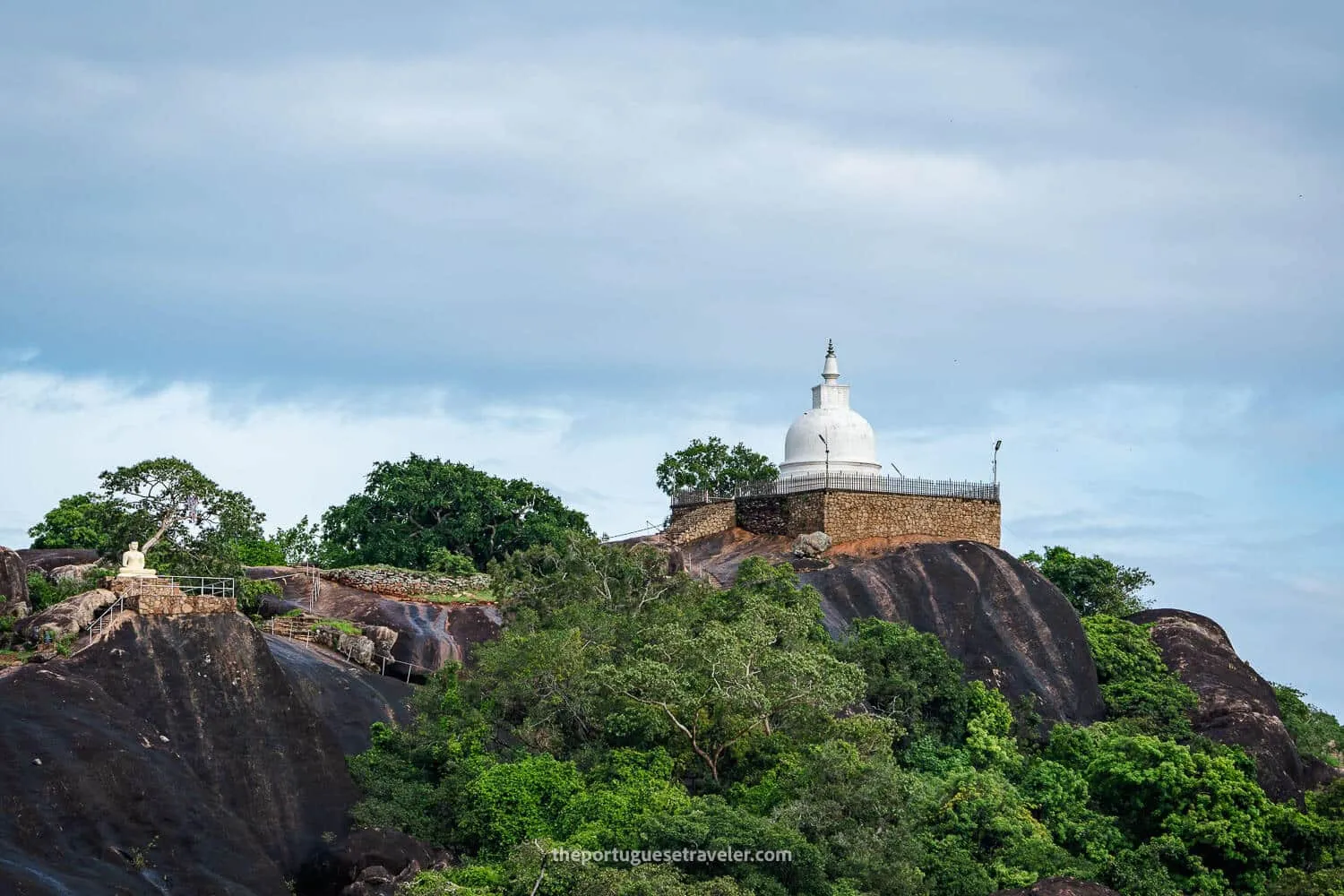
The temple near Sithulpawwa
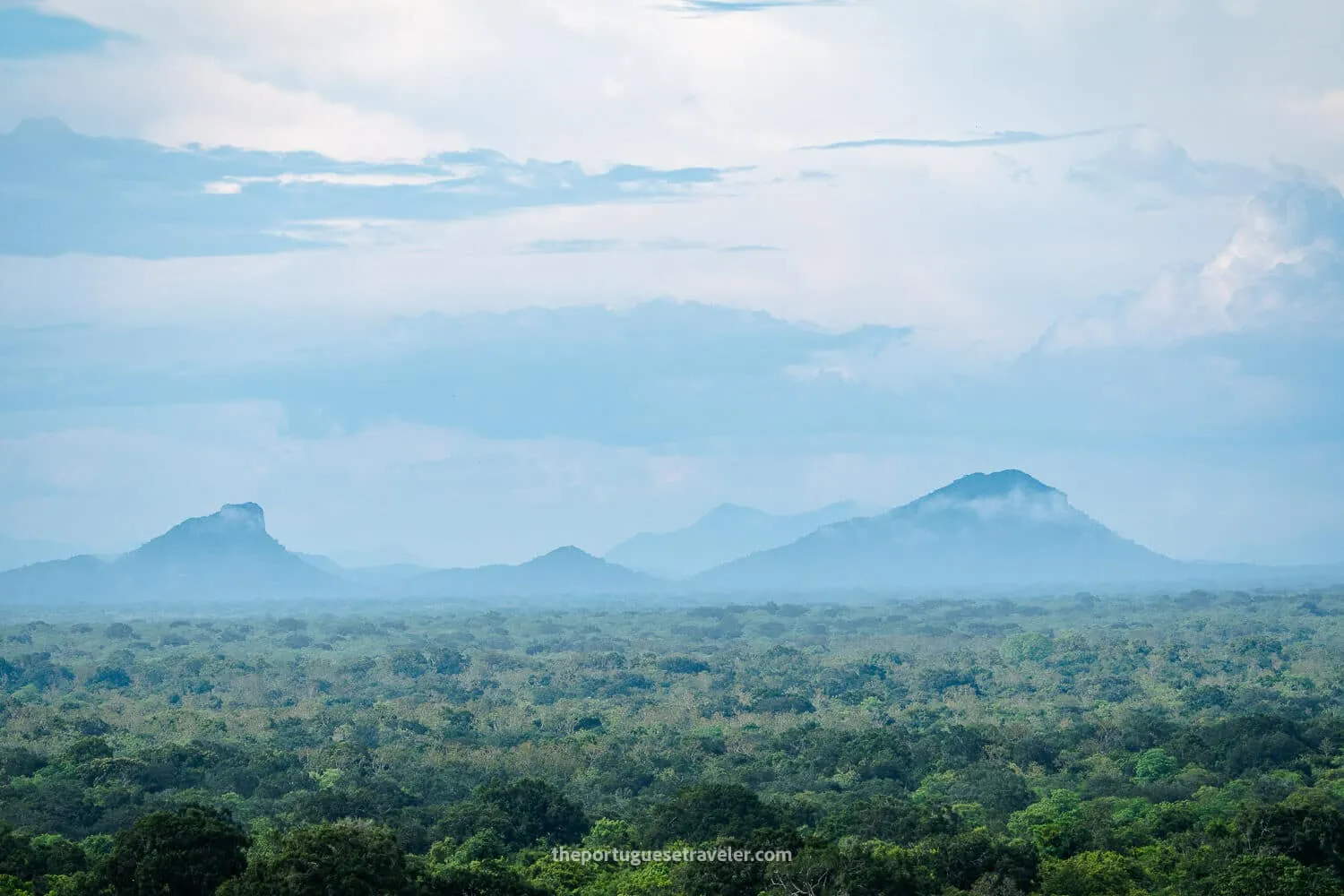
The surrounding hills of the Situhlpawwa Rock Temple, at the Yala National Park
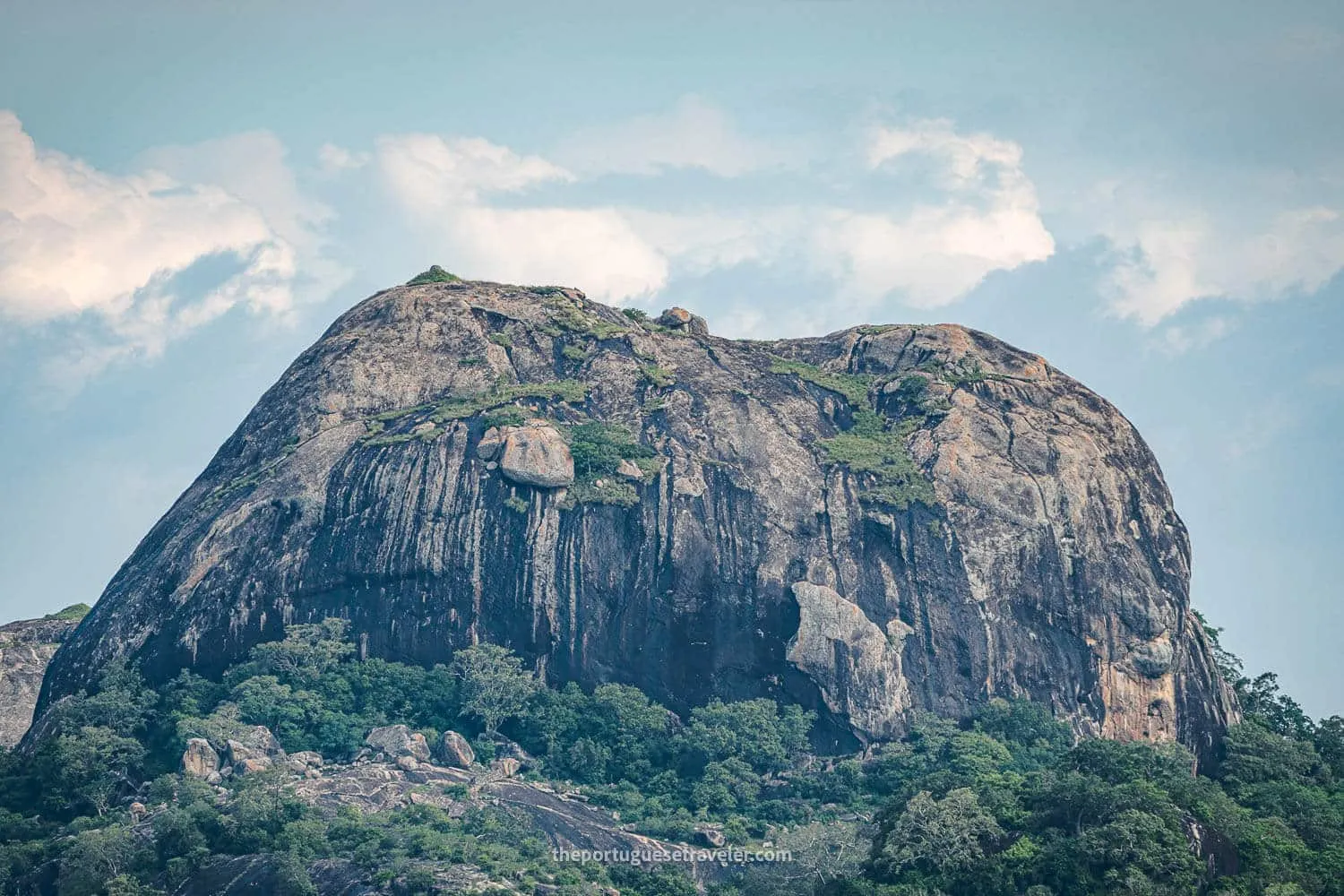
A detail of the Elephant Rock
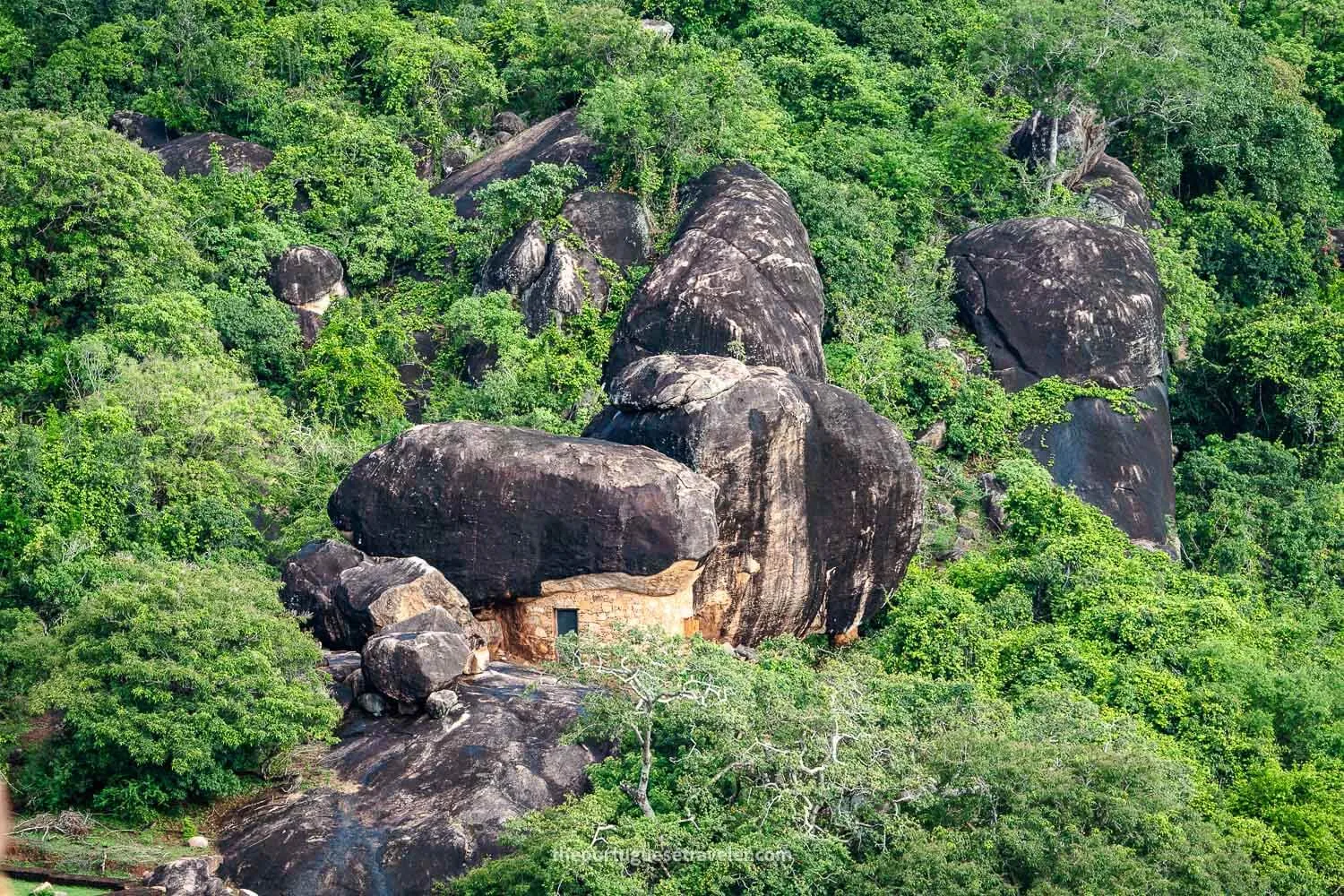
The structures made by men around the landscape
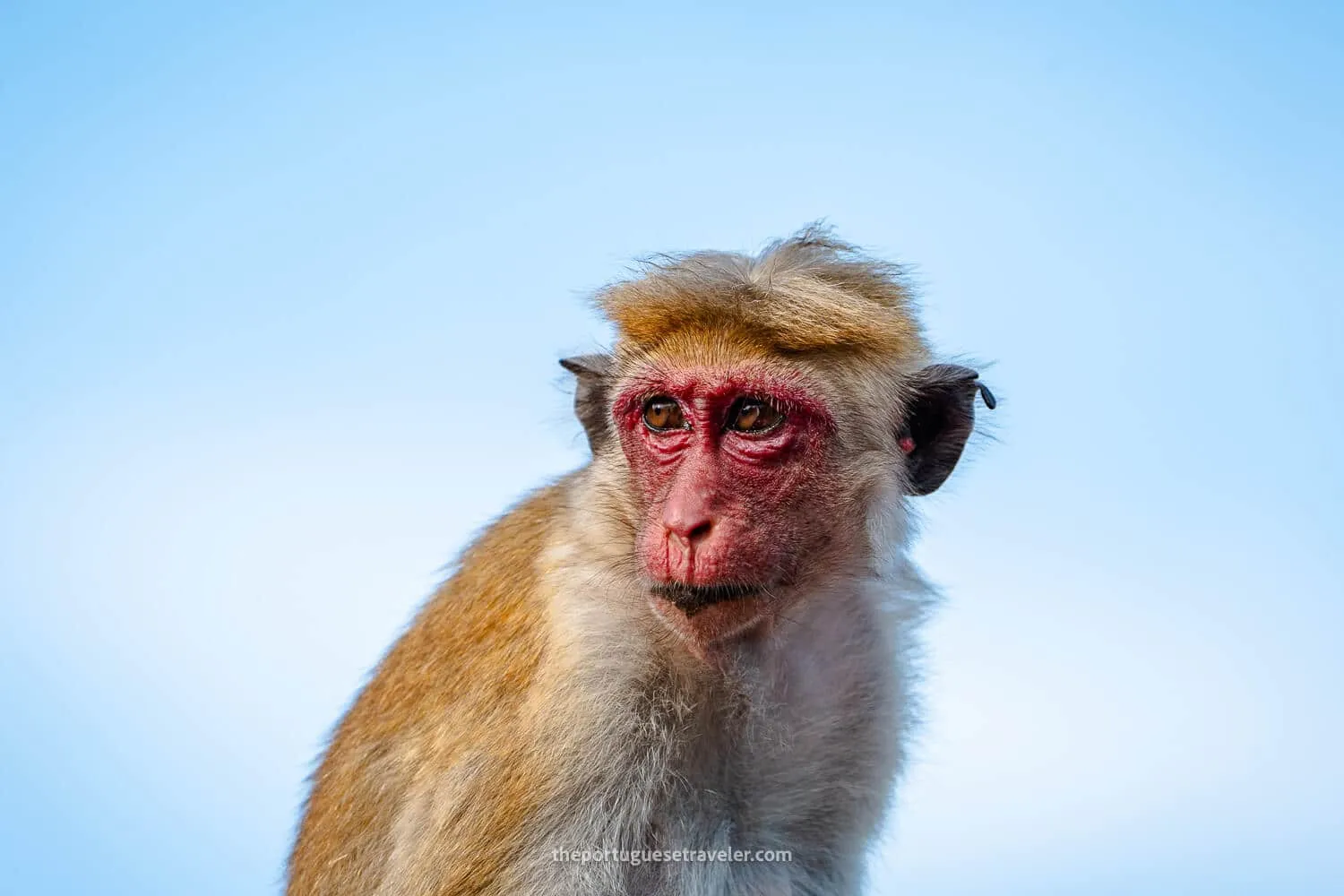
A Toque Macaque at the Sithulpawwa Rock Temple
Ancient Temples, Statues, and Rock Carvings
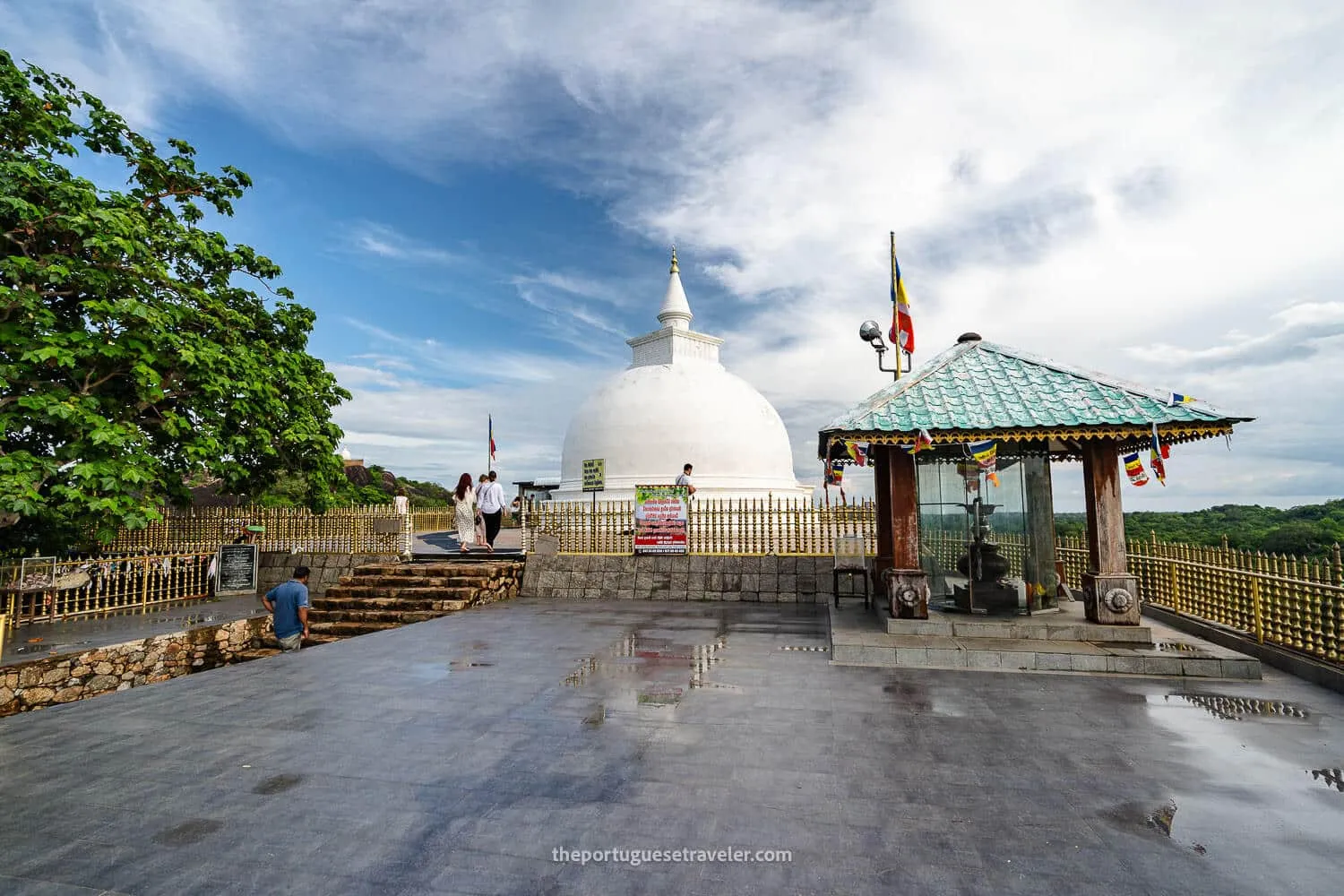
At the top, we reached the stupa, and from there, we were treated to a 360-degree view that left us speechless. The surrounding lakes, lush jungle, and towering rocks with other stupas were absolutely mesmerizing. With the monk’s approval, we launched our drones into the air, capturing stunning shots of the temple and the surrounding landscape. The sight of the temple atop the rock, framed by lakes, jungle, and majestic rock formations, was breathtaking. After a while, our drone batteries were nearly depleted, so we brought them down and ventured to the opposite side of the temple. On our descent, we encountered a monk being interviewed by the local media, and we continued to an area near a large lake, overshadowed by another massive rock formation with a similar stupa at its summit. There, we discovered ancient ruins, from what seemed to be the remnants of an old temple. Crocodiles drifted lazily in the lake, while Malabar pied hornbills perched on nearby trees Continuing down the stairs, we were surprised to discover another hidden gem beneath the rock where the stupa stood: a temple carved into the rock. We washed our feet at a fountain and entered the temple barefoot, where we were greeted by a spectacular scene. Inside, we found a massive painted reclining Buddha statue and another sitting Buddha statue. The whole atmosphere was serene, and we spent time soaking it all in. Outside, we discovered ancient bodhisattva statues, carefully protected by glass. A temple guide walked us through the site, explaining the history and significance of the temple, as well as Buddhist teachings. While I was fascinated by the temple’s architecture and its incredible surroundings, I must admit that I didn’t absorb as much about the monks’ daily lives—though I did pick up bits and pieces from our guide’s explanations. After exploring the temple, we climbed back up to the plateau where the monk was being interviewed, and our guide showed us a rock with ancient inscriptions. The carvings detailed tax collection related to the monks of the monastery. We then continued our walk around the lake, retracing our steps back to the shuttle. On the way back, I had a bit of an unexpected adventure. I was almost caught off guard by the resident wild boars near the bathroom, but thanks to some barking dogs, they scurried off, and I was safe—thank you, little doggies!
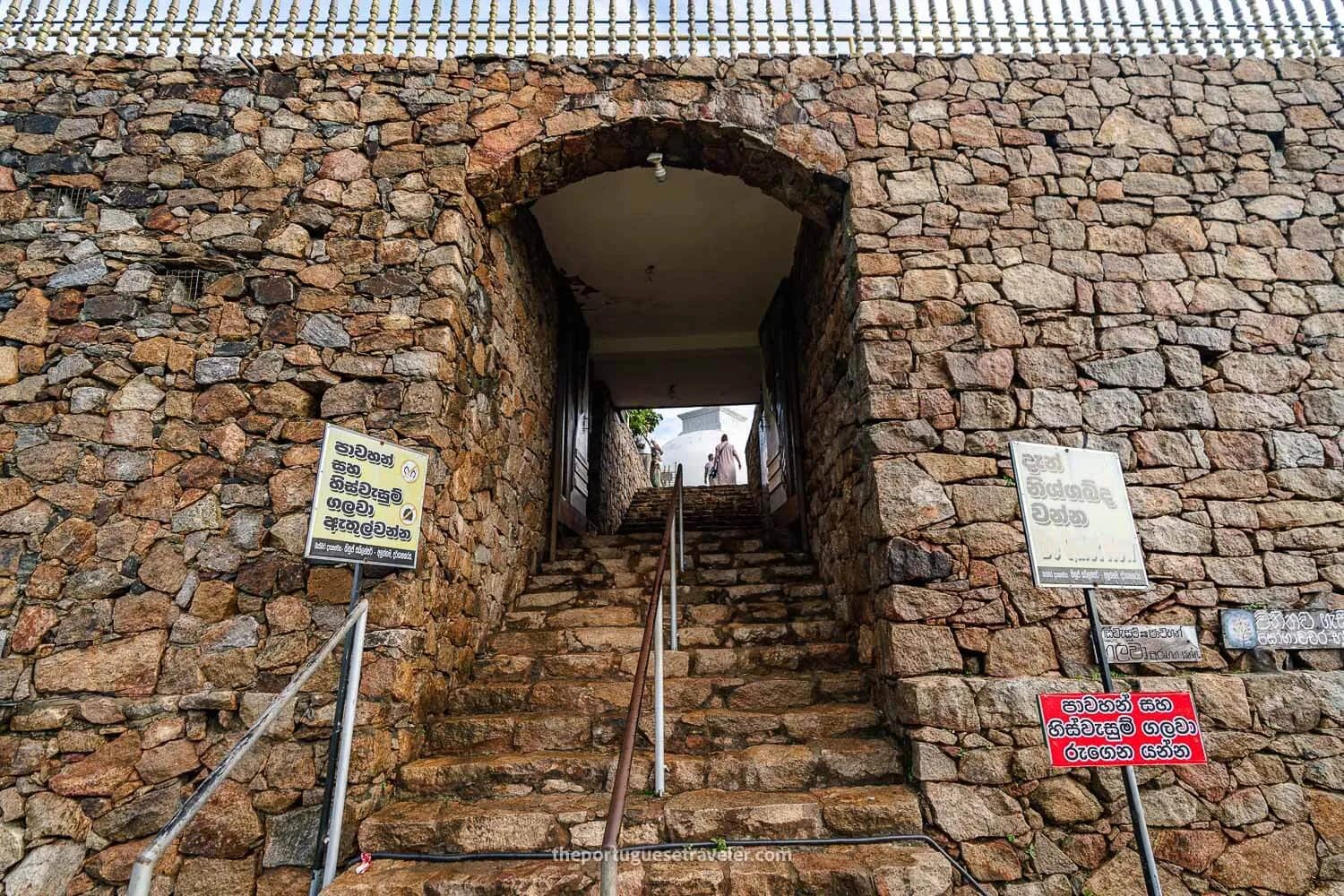
The entrance to the top of the temple
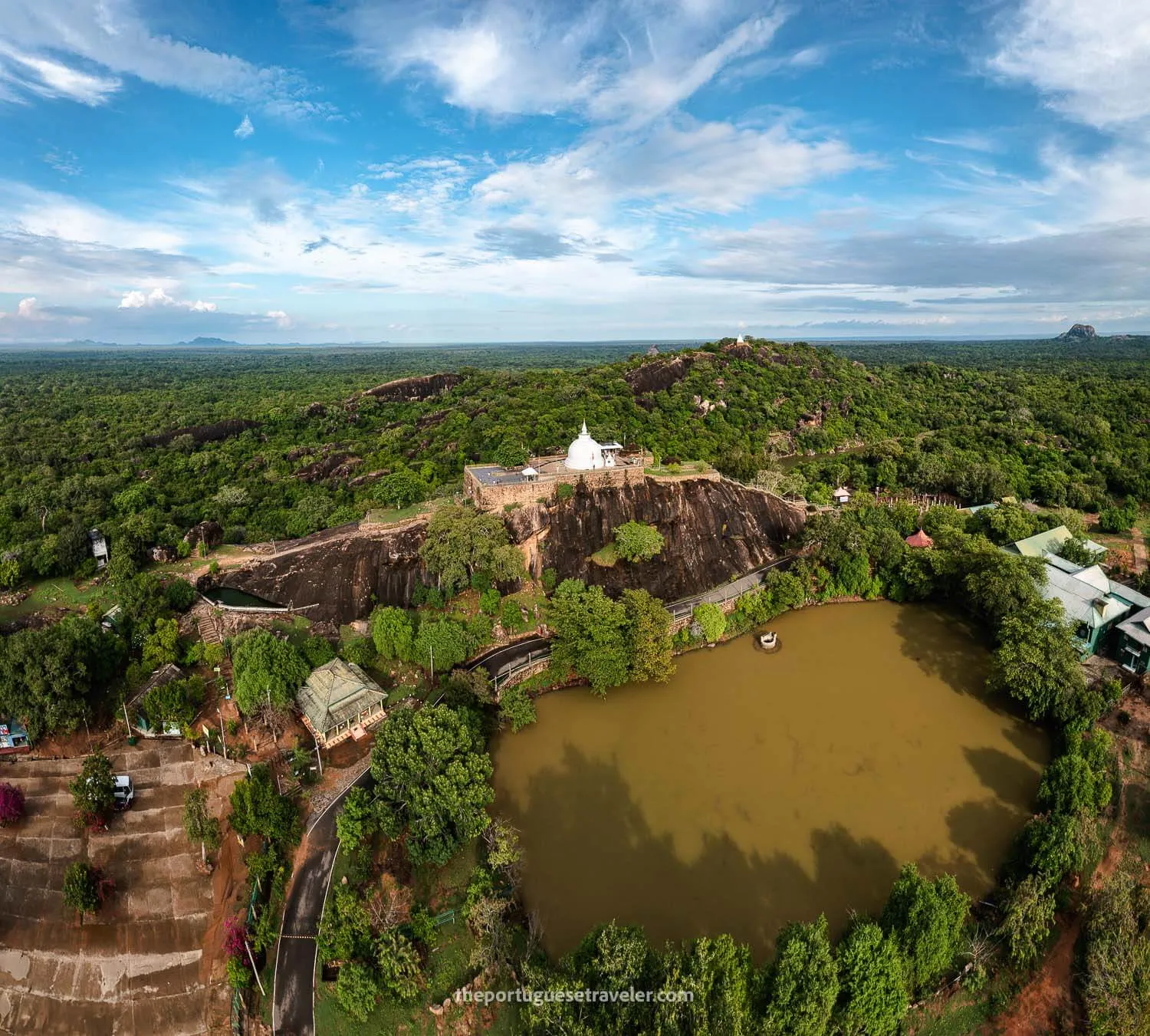
The Sithulpawwa Rock Temple seen from above
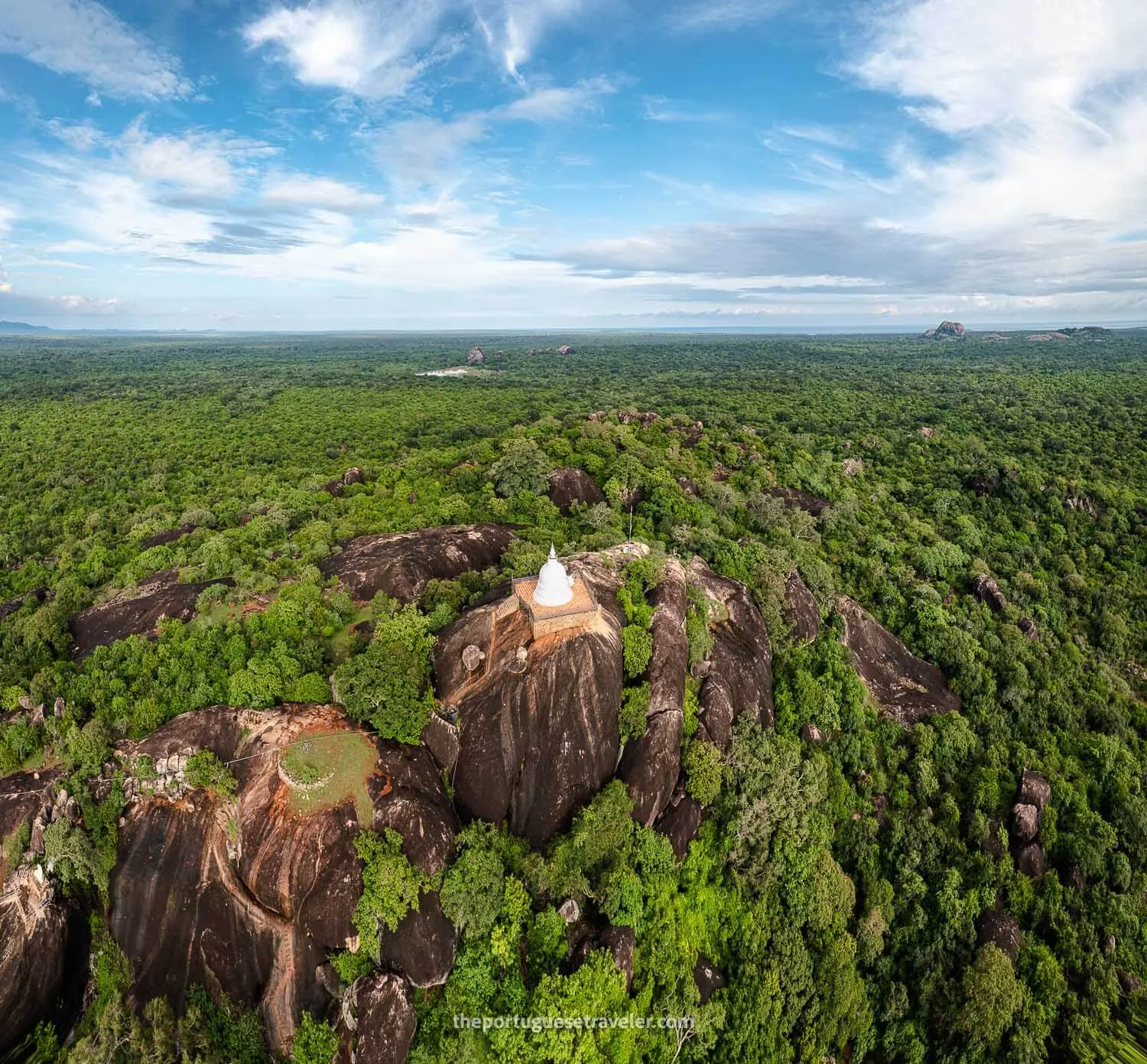
A drone shot over the temple near the Sithulpawwa Rock Temple
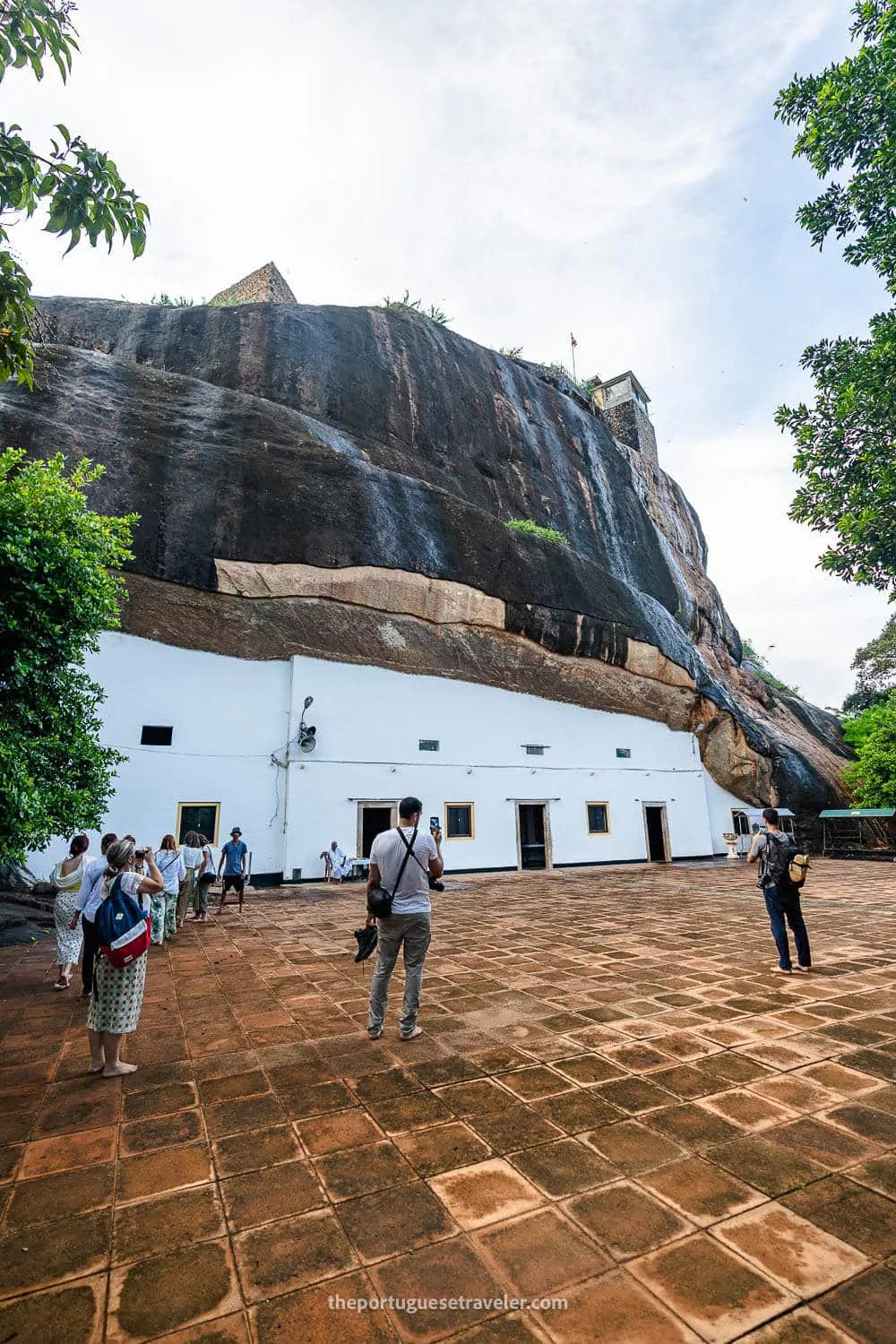
The temple underneath the rock at Sithulpawwa
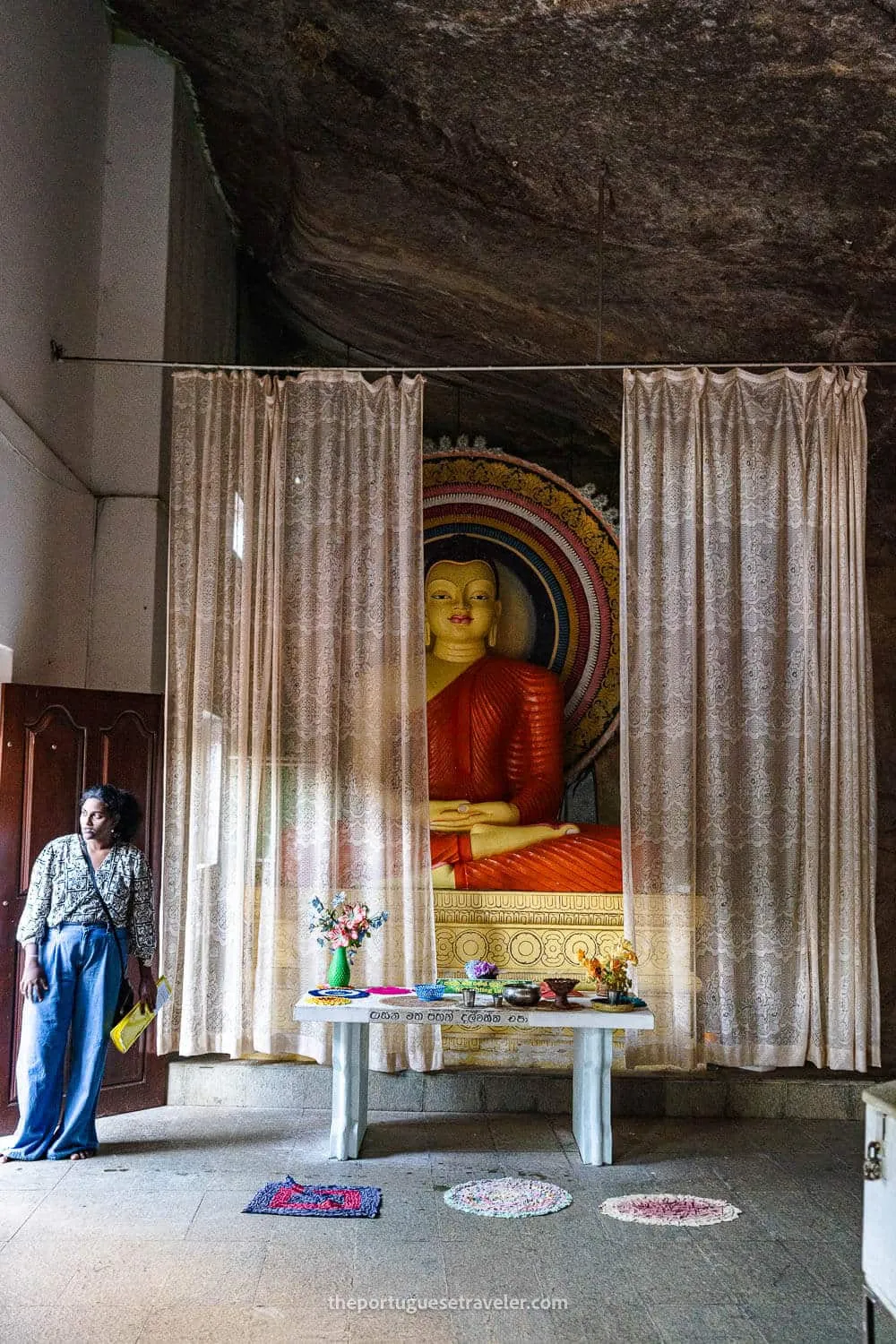
The seated Buddha statue inside the temple
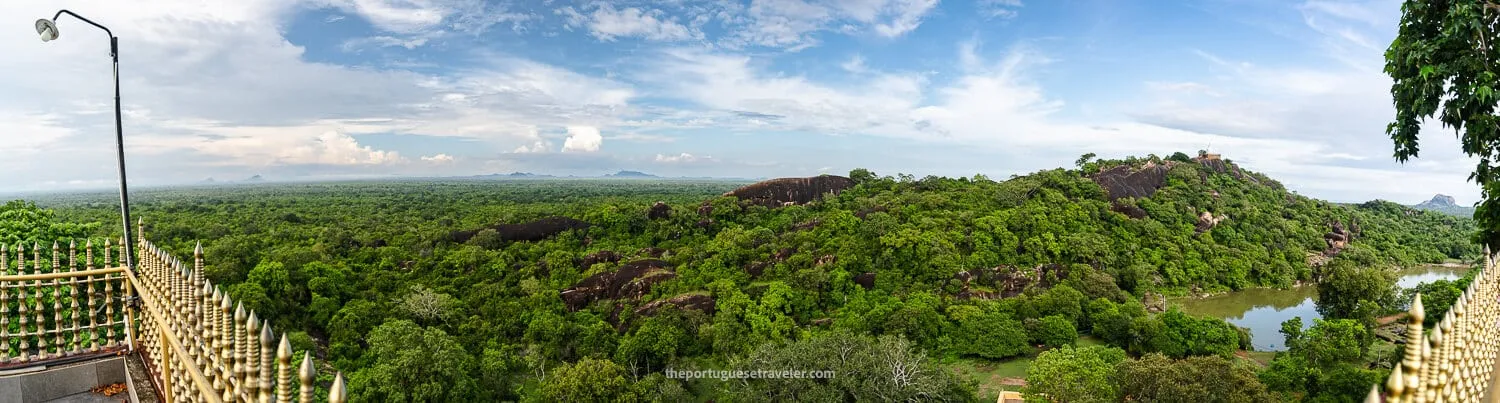
The 360º View at the Temple
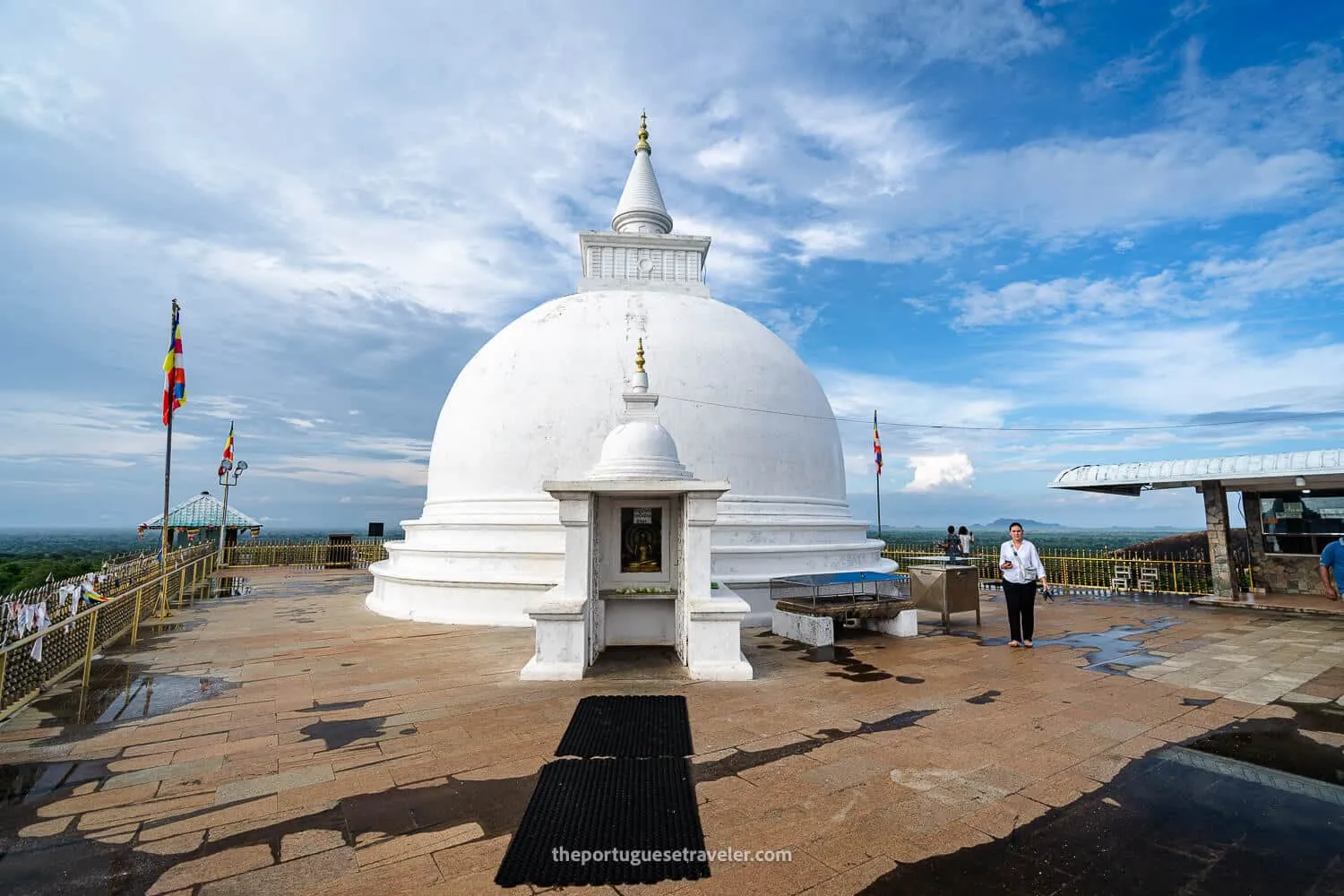
The stupa at the Sithulpawwa Rock Temple
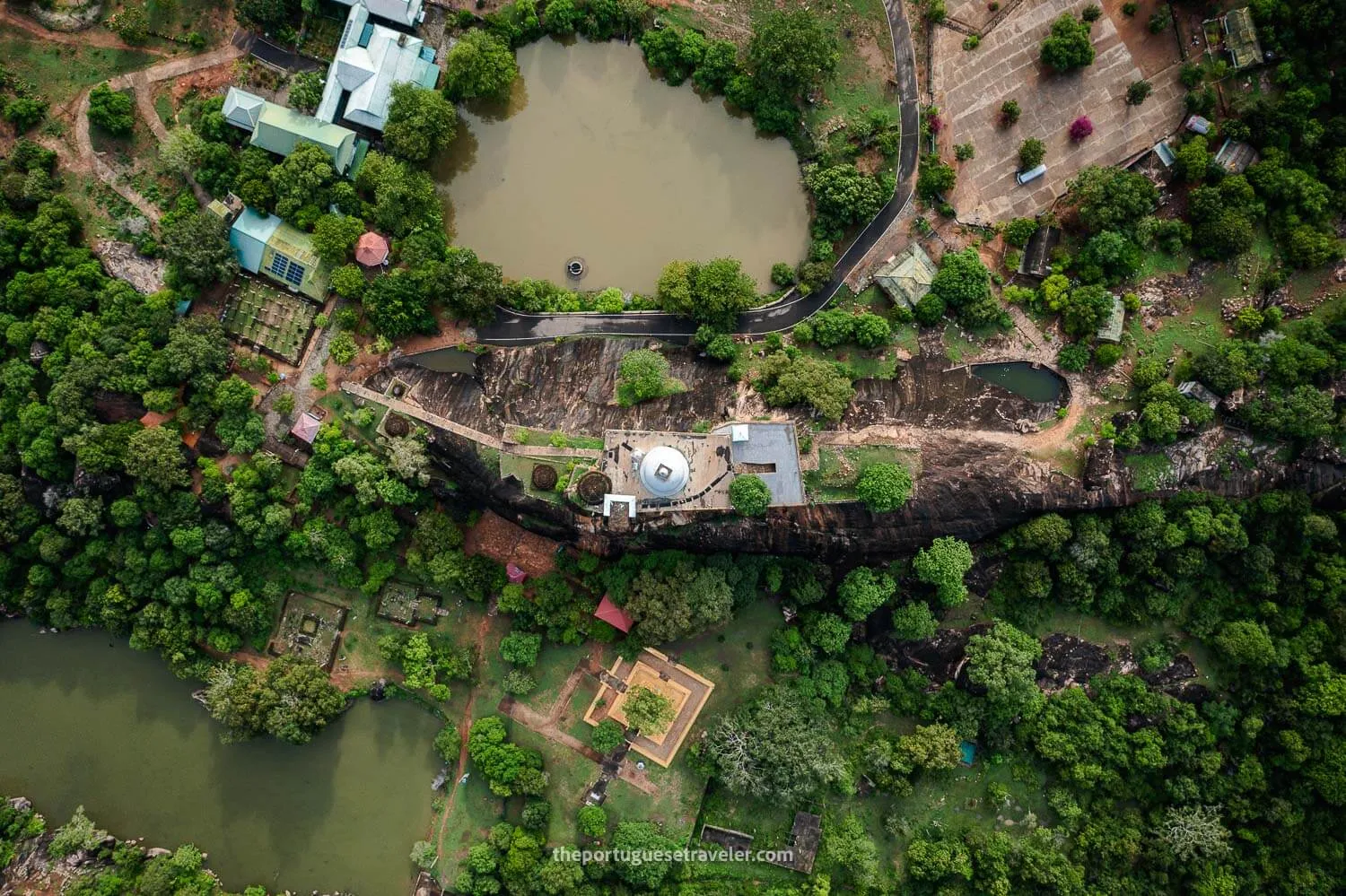
A top-view shot of the Sithulpawwa Rock Temple
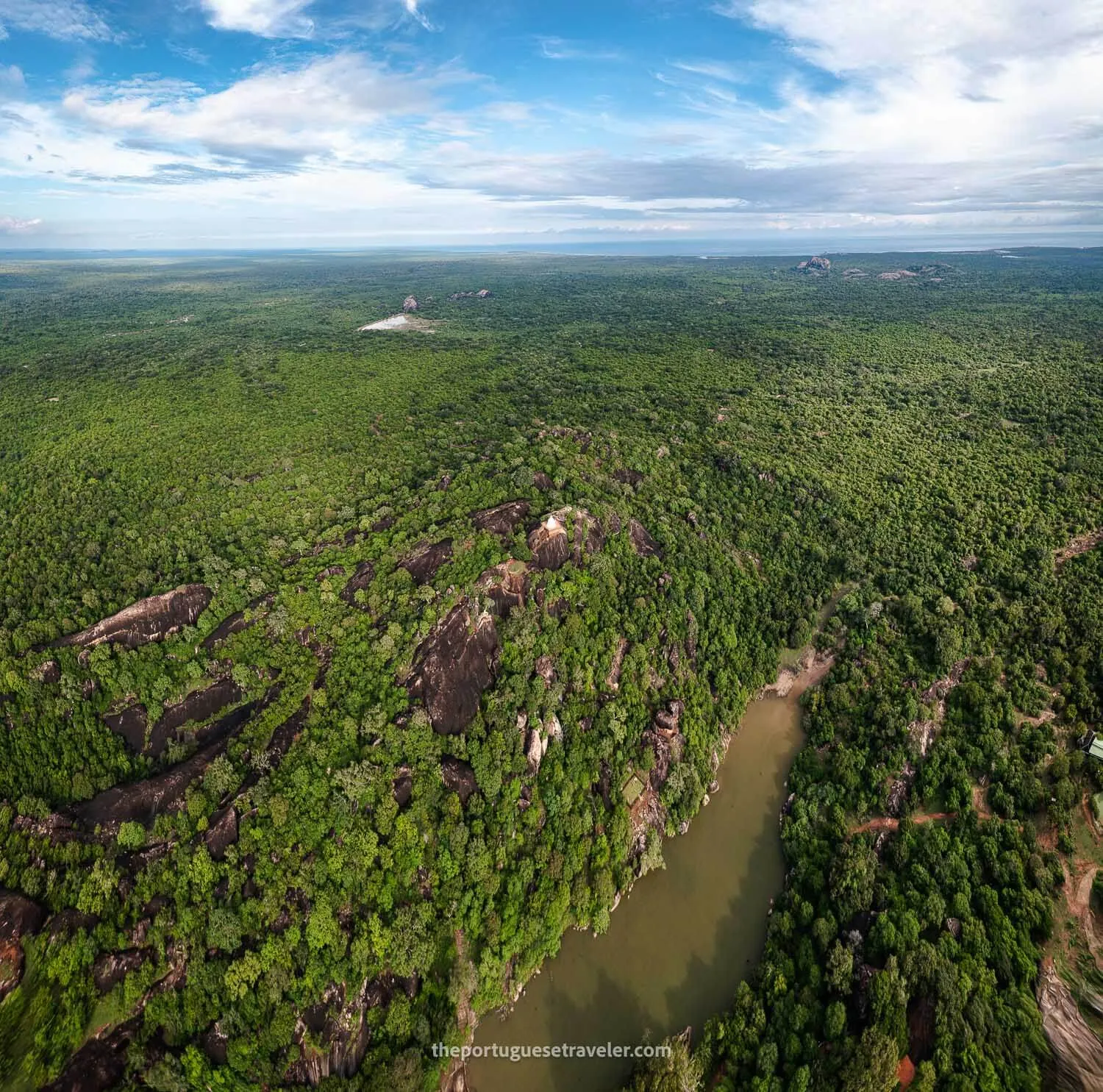
A panorama of the Sithulpawwa Rock Temple’s surroundings inside the Yala National Park
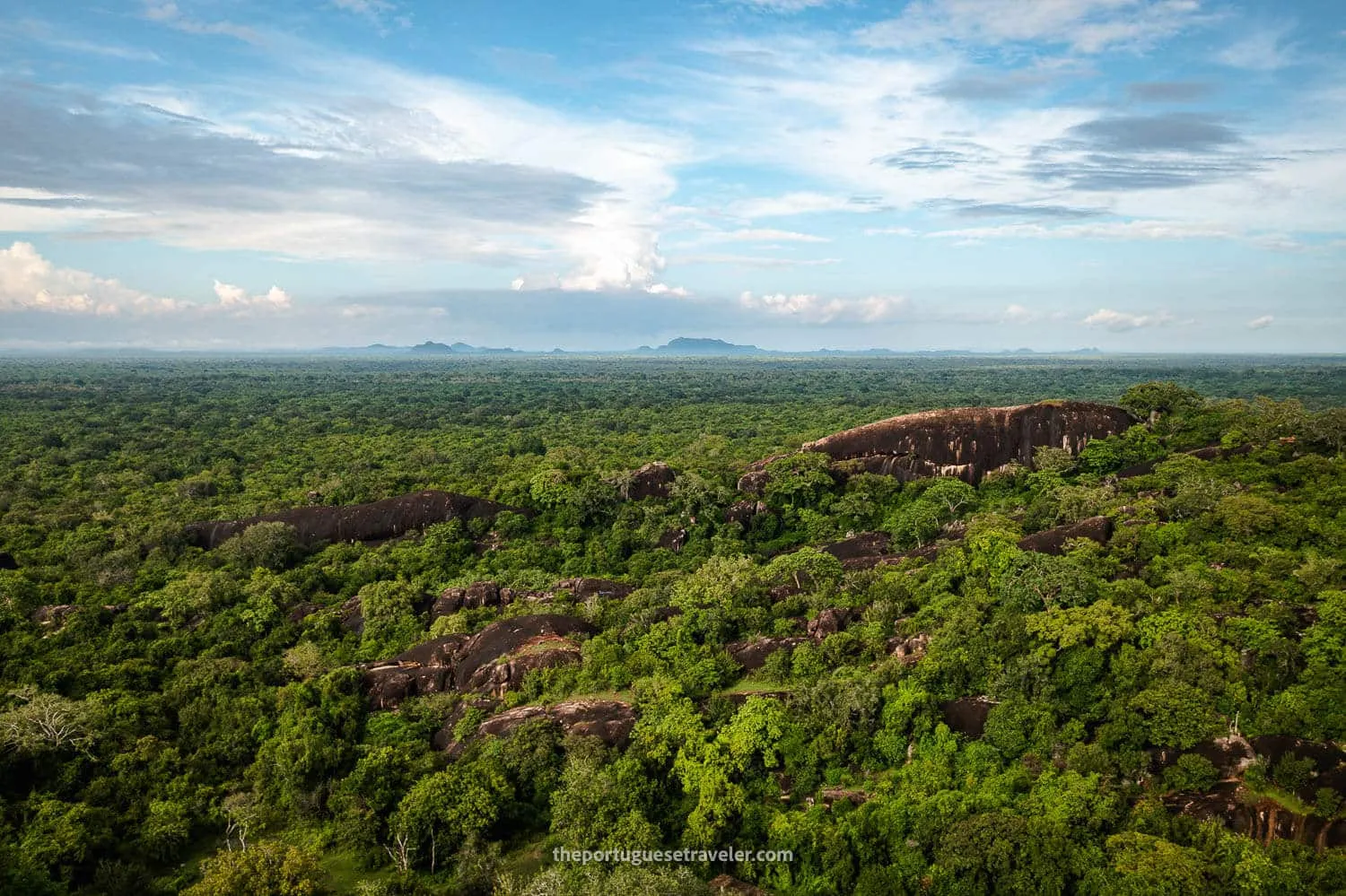
The rock formations in Yala National Park
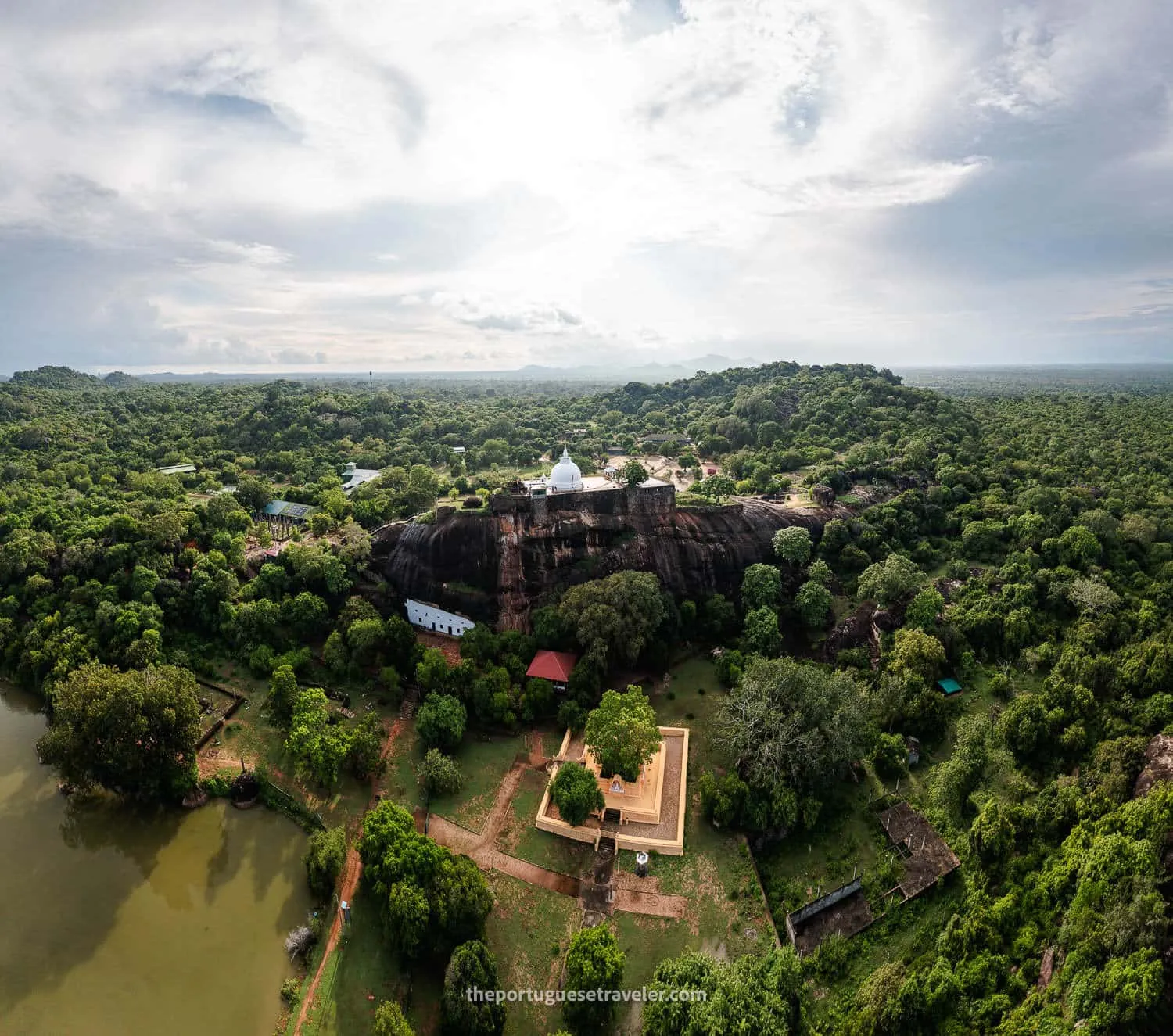
The Sithulpawwa Rock Temple and its surroundings (a bodhi tree at the bottom)
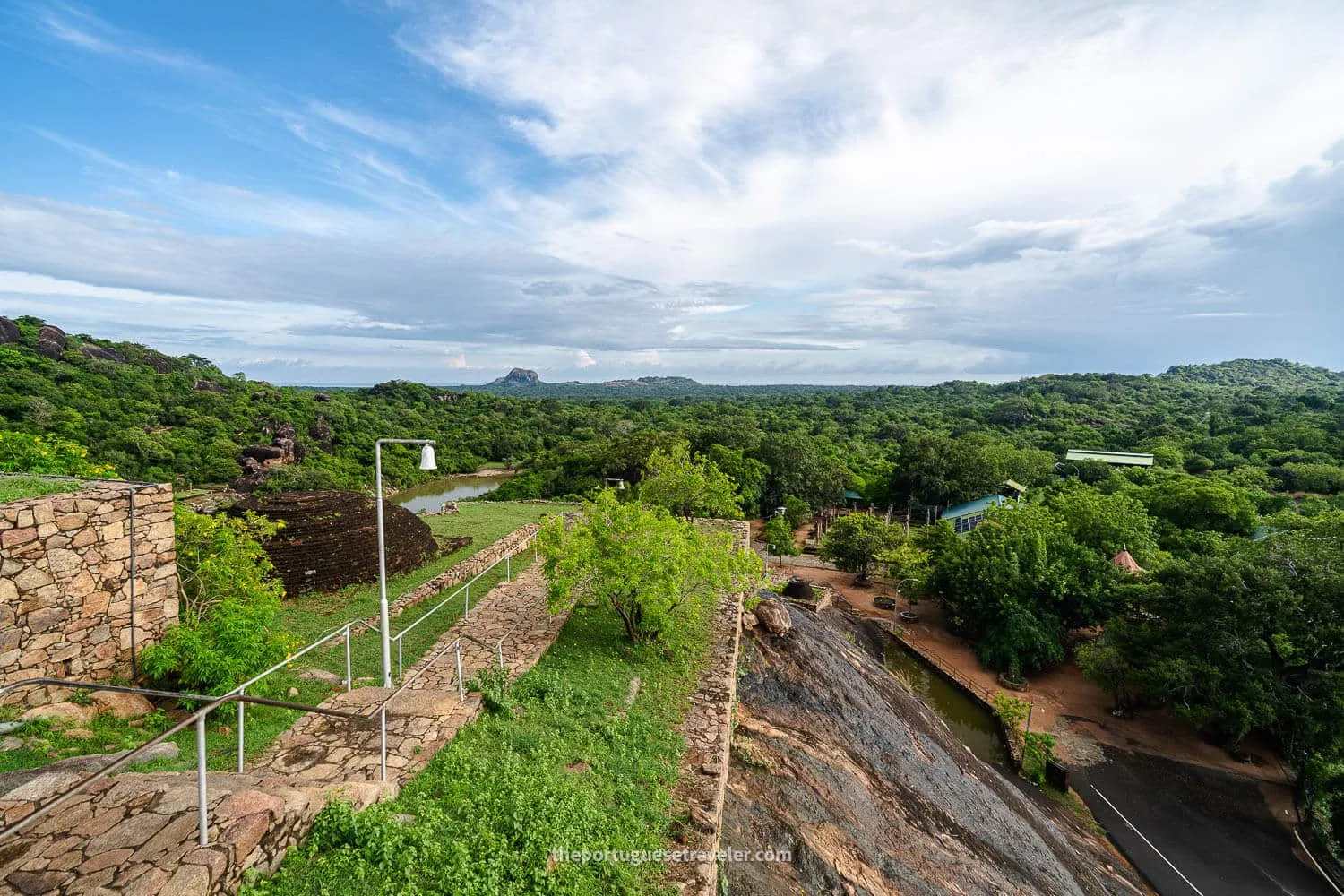
The view on the way down after the stupa
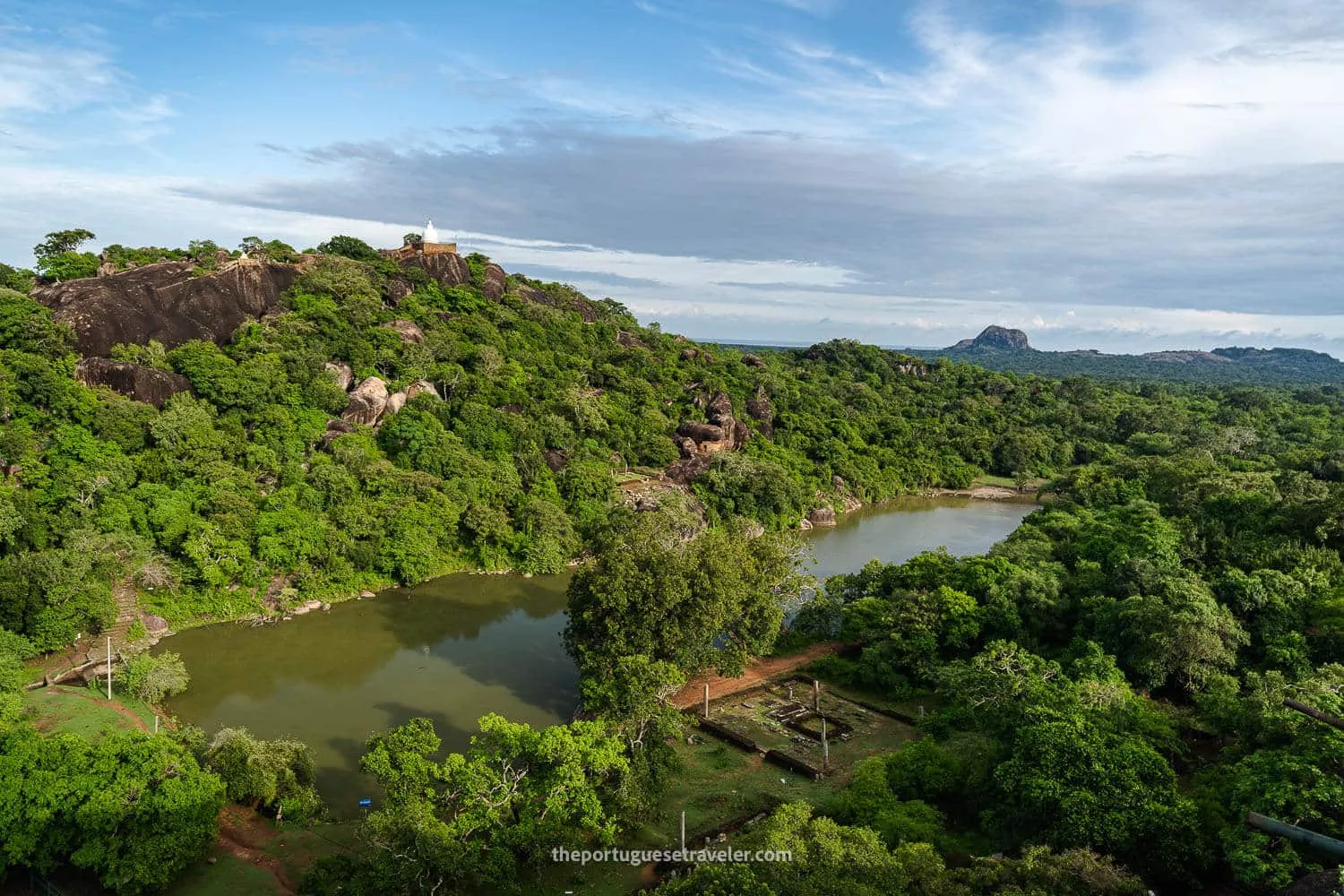
The surroundings of the Sithulpawwa Rock Temple and ancient remains on the bottom
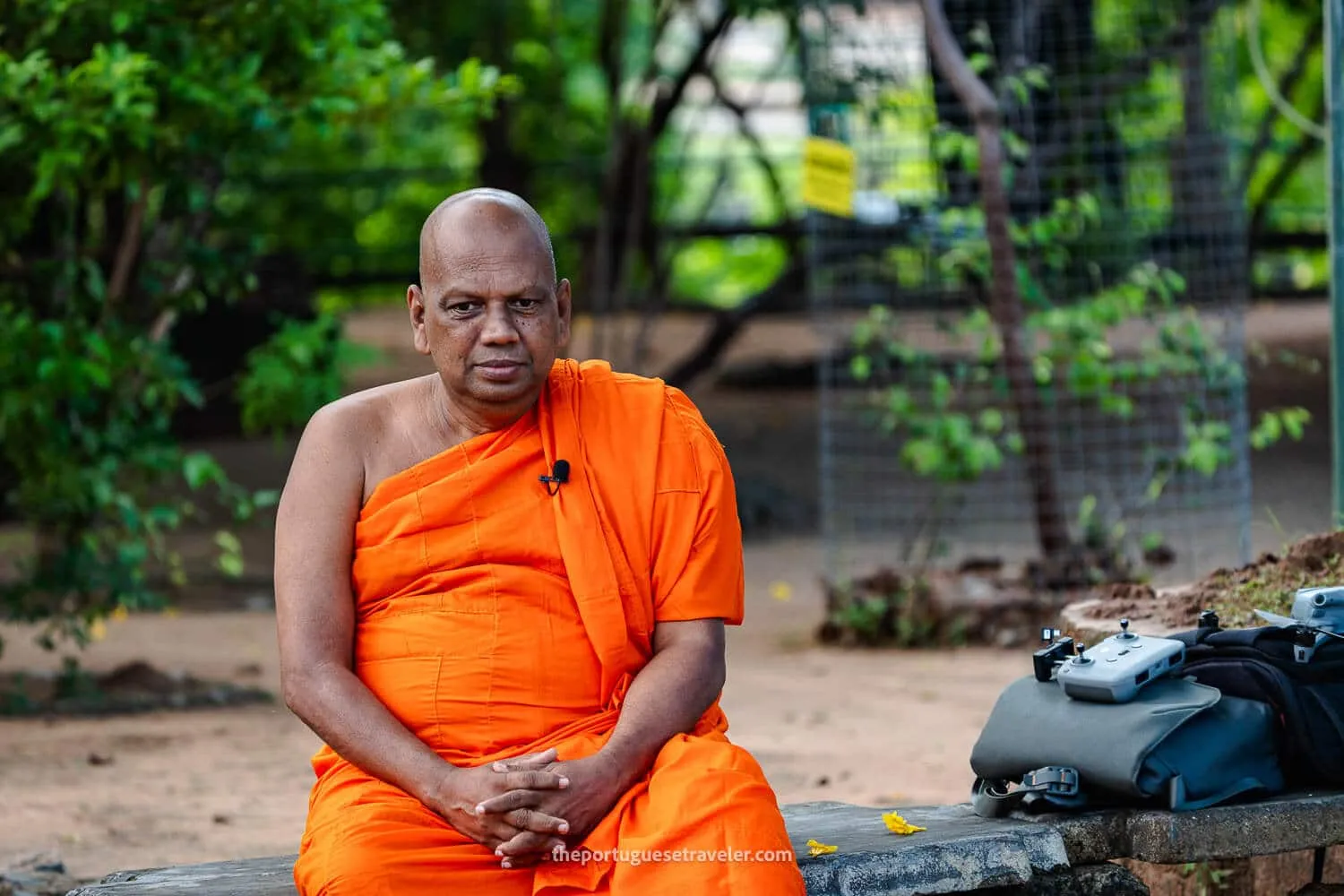
The monk being interviewed by the local media
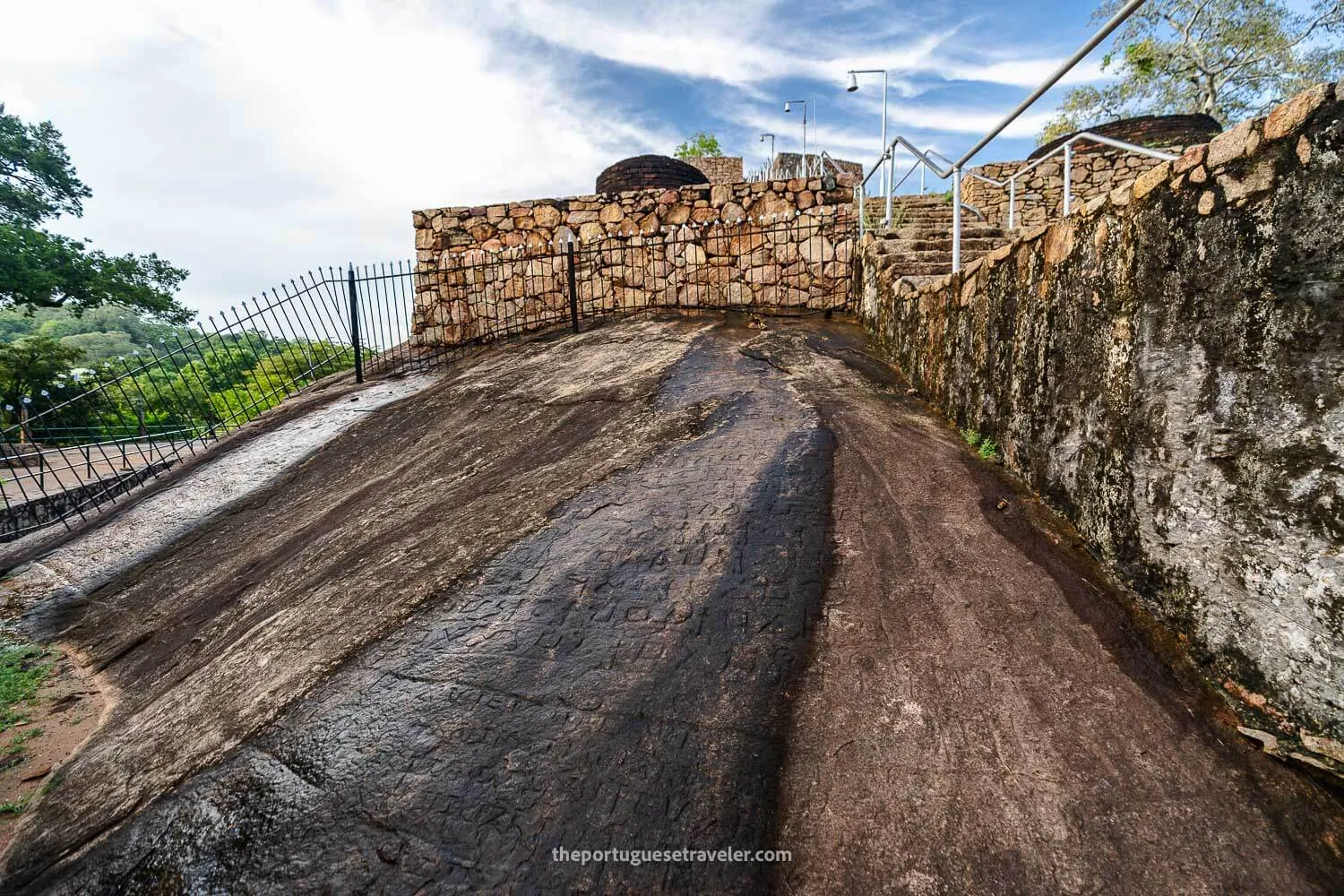
The carved taxes inscriptions on the rock at Sithulpawwa Rock Temple
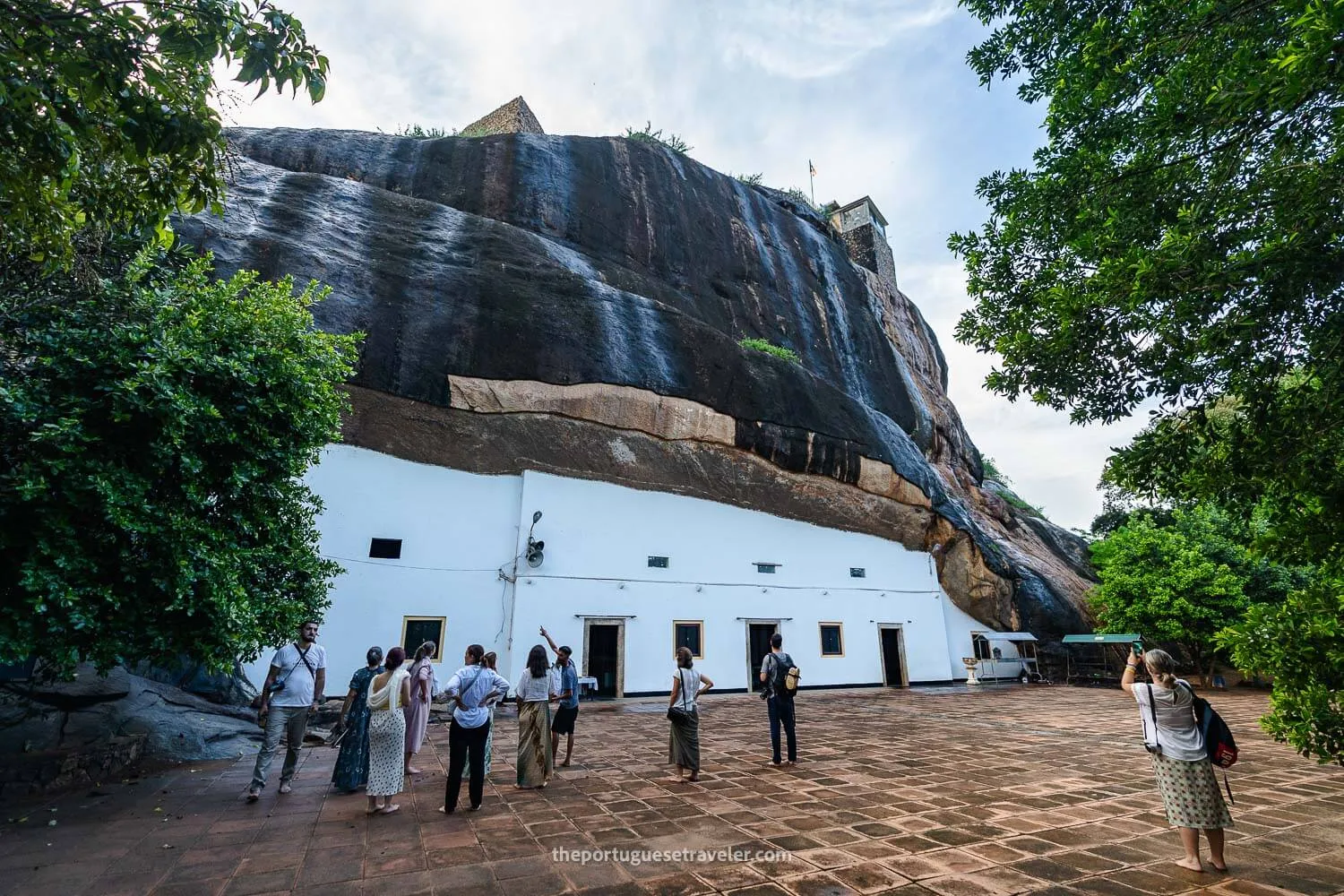
The Sithulpawwa under the rock hidden temple in Yala
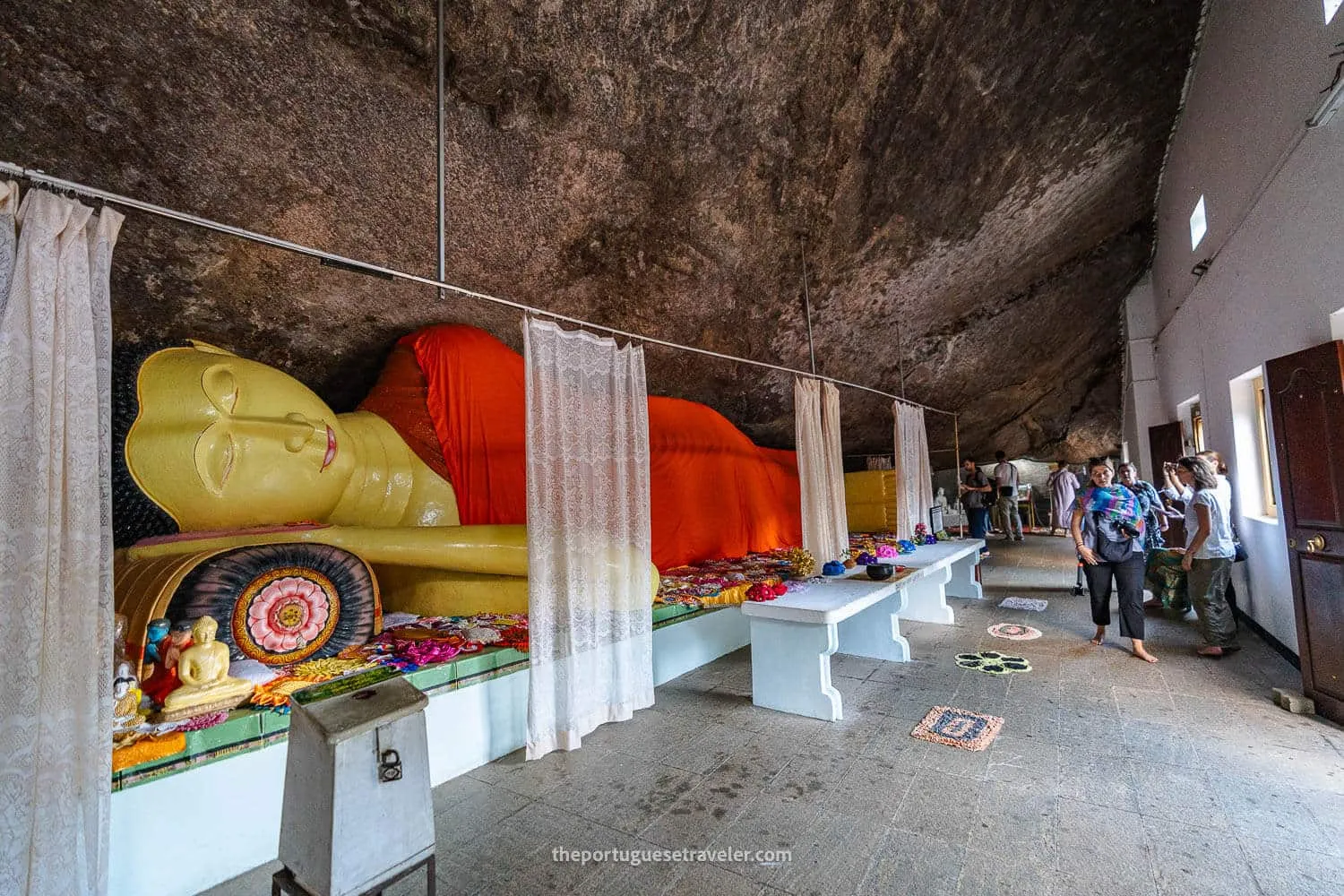
The reclining Buddha underneath the temple
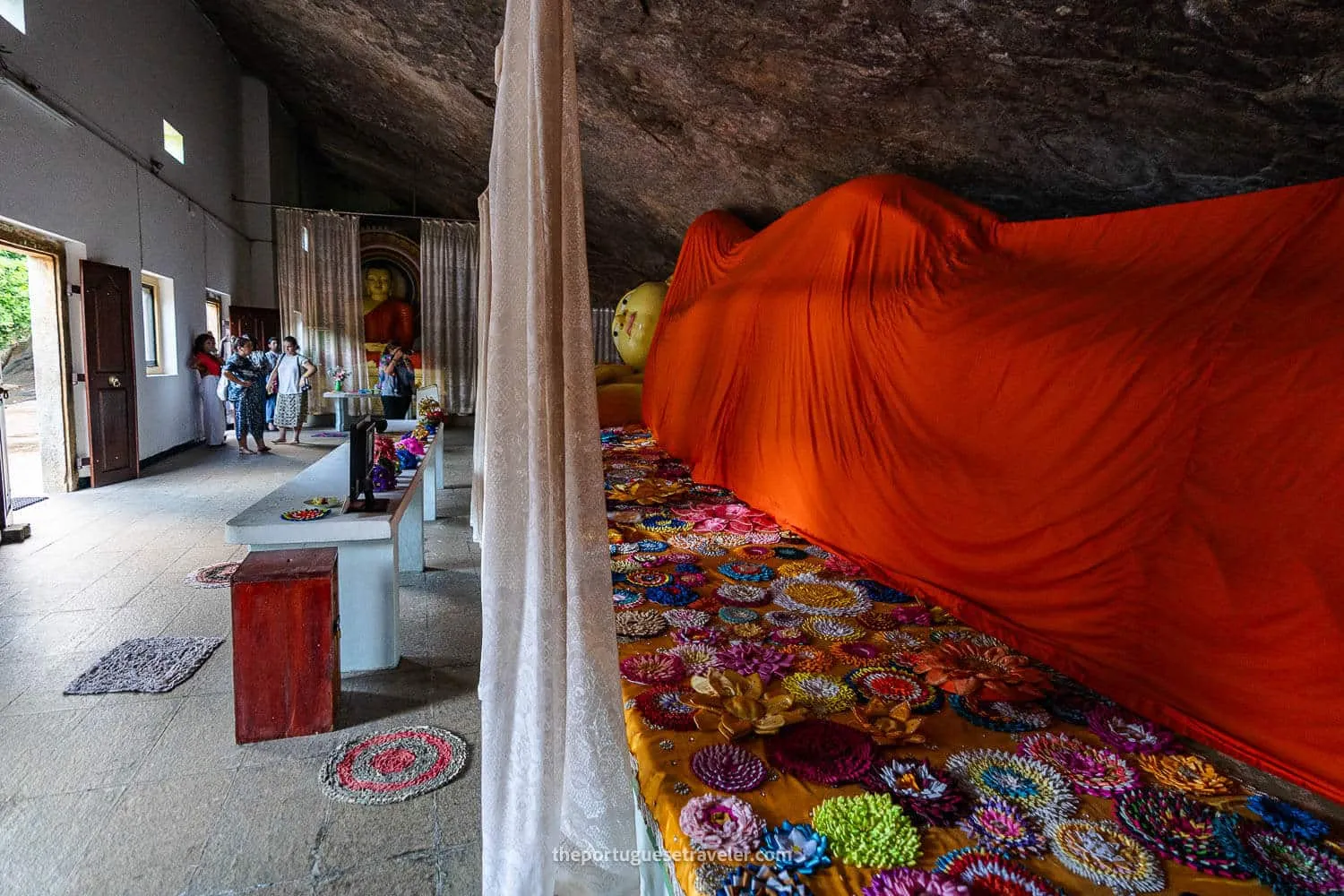
The interior of the cave at the Sithulpawwa Rock Temple
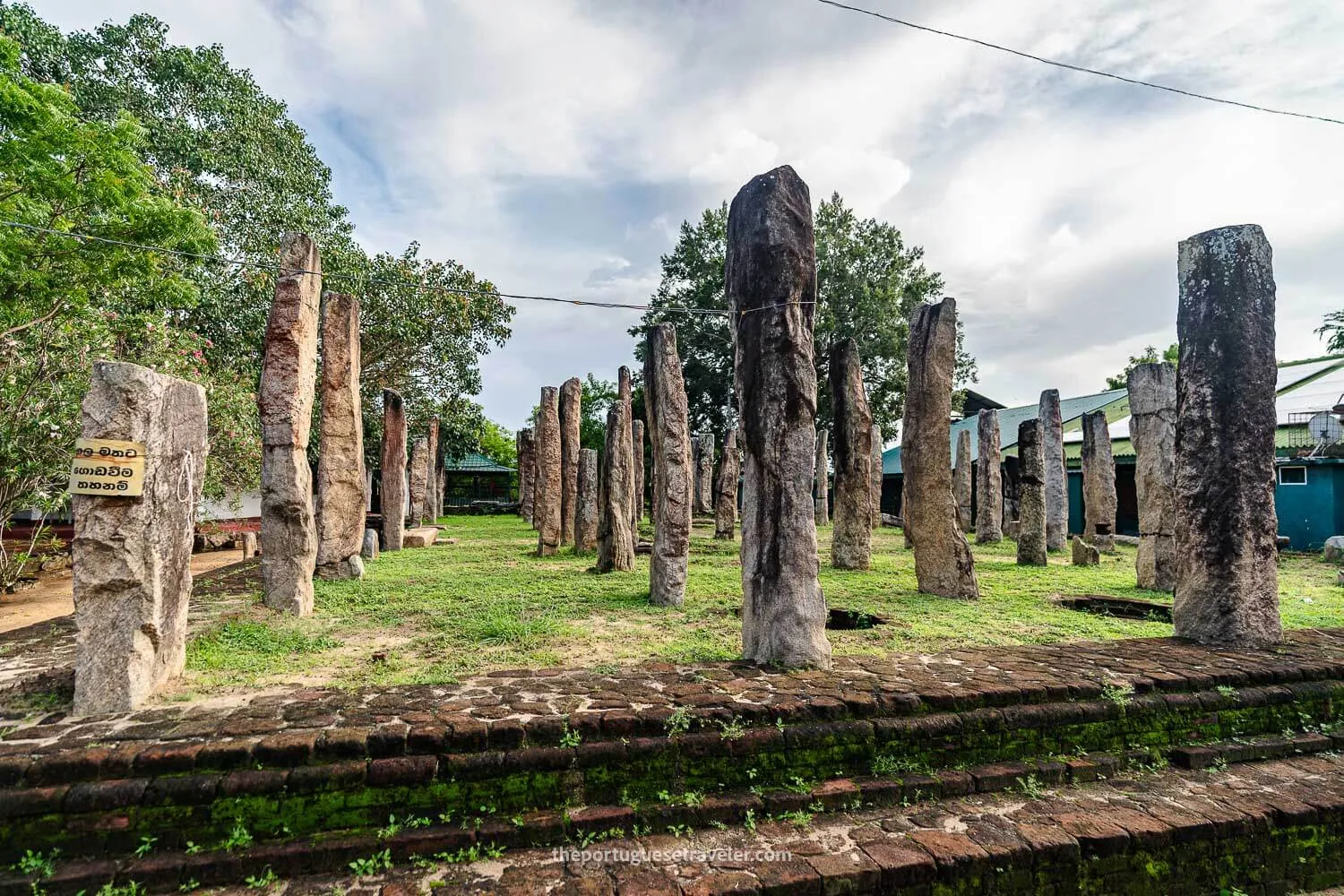
The ancient remains near the temple
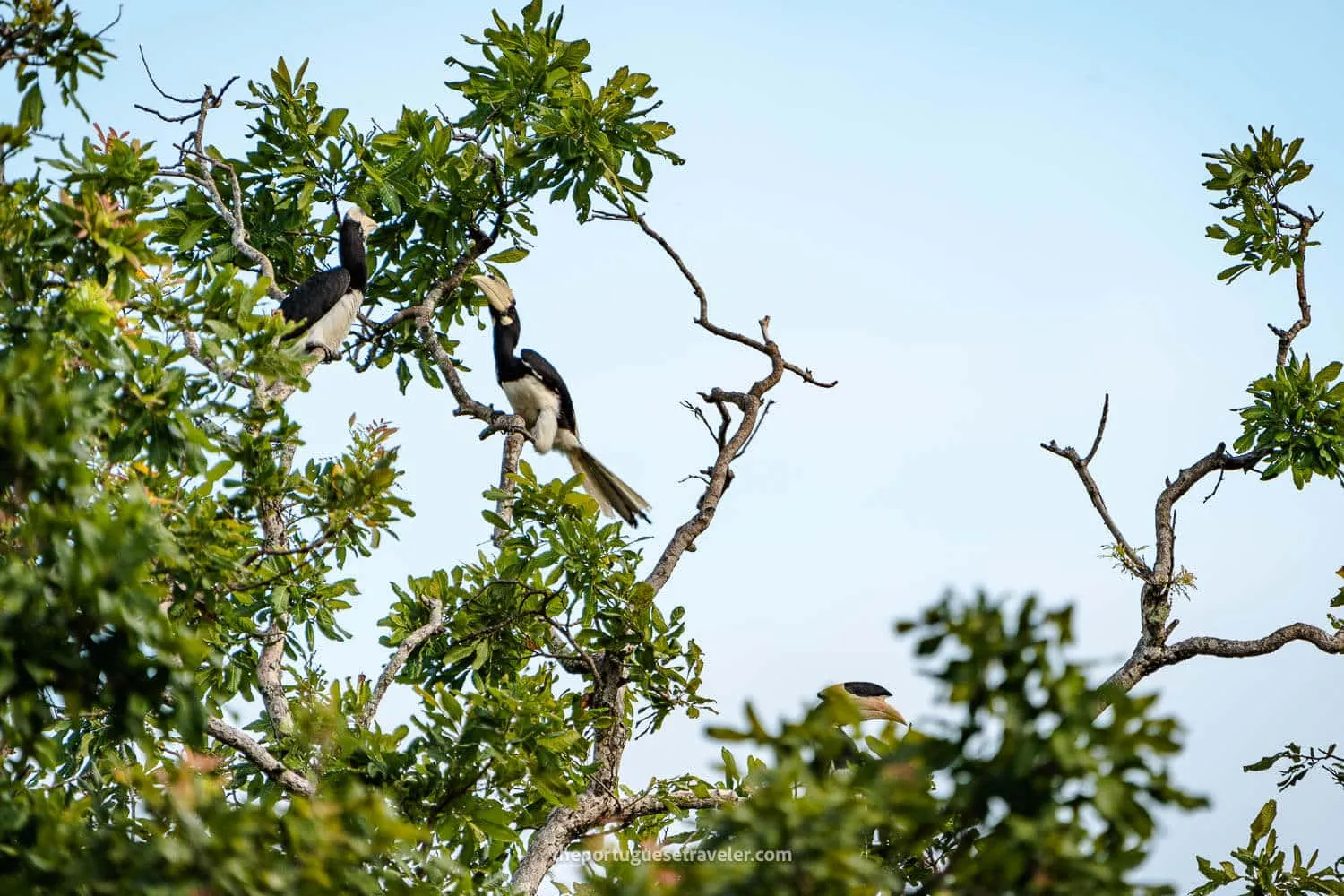
Malabar Pied Hornbill perched on a tree at the temple
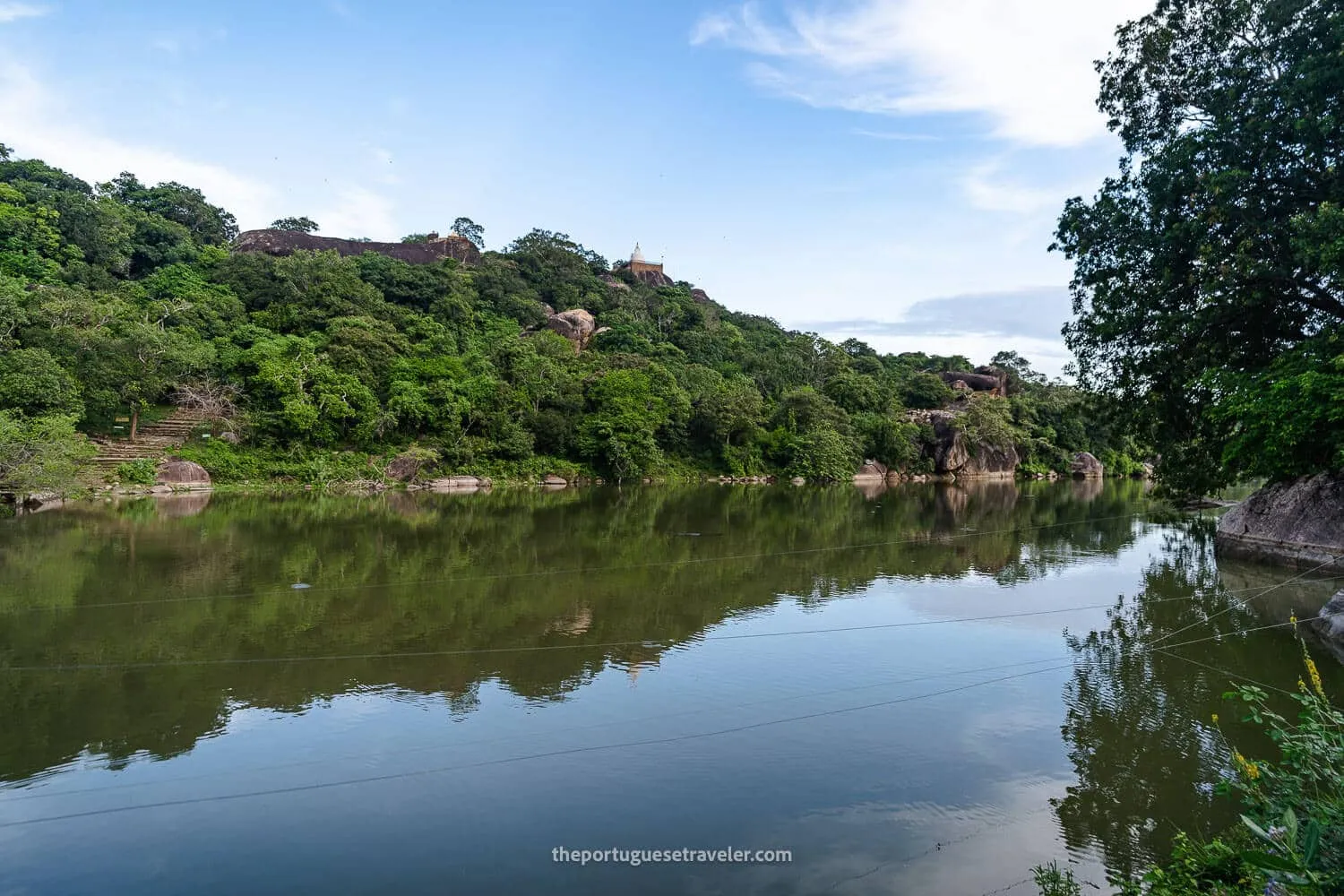
The crocodile lake in between rock formations and temples
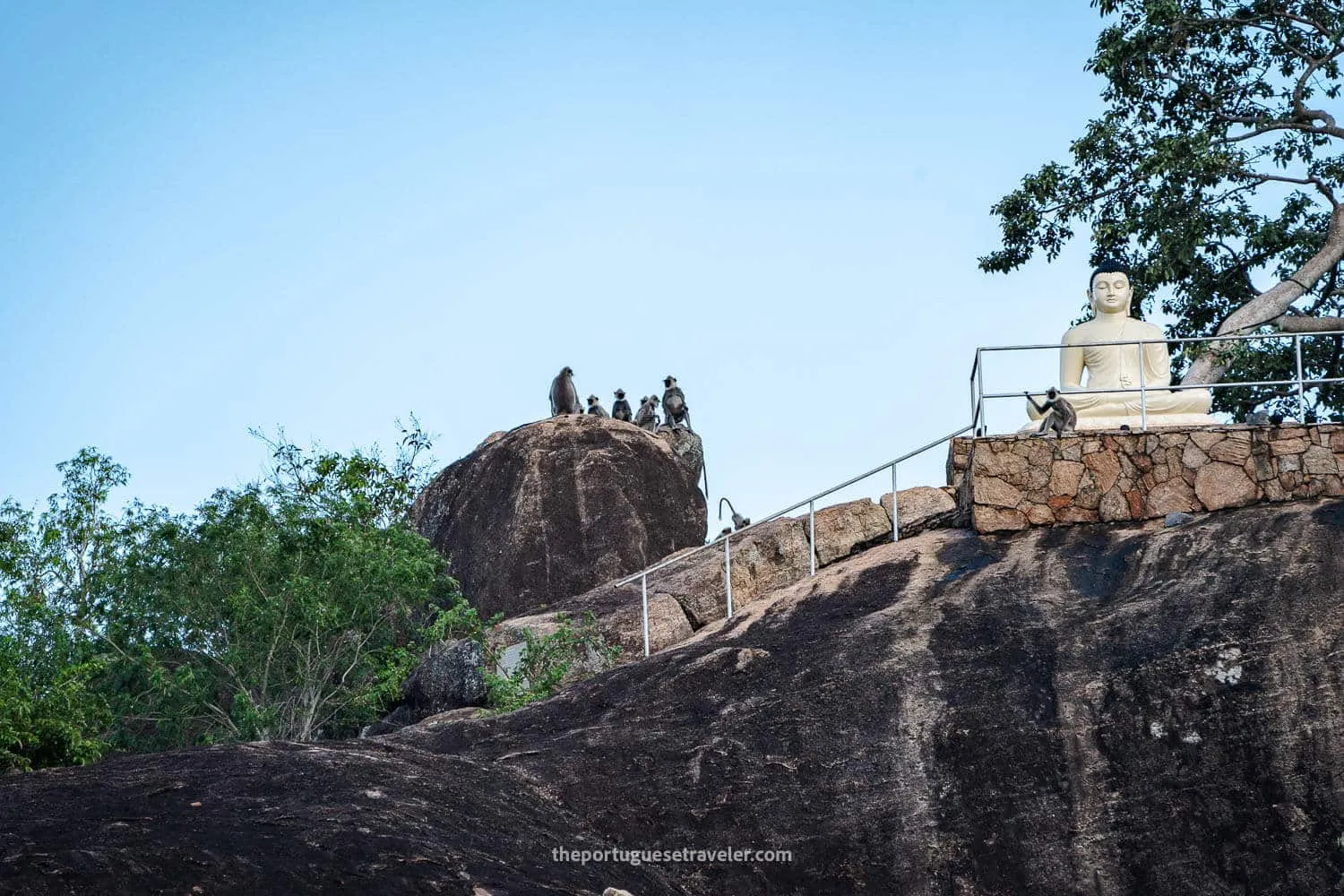
A meeting of grey langurs at the Yala National Park
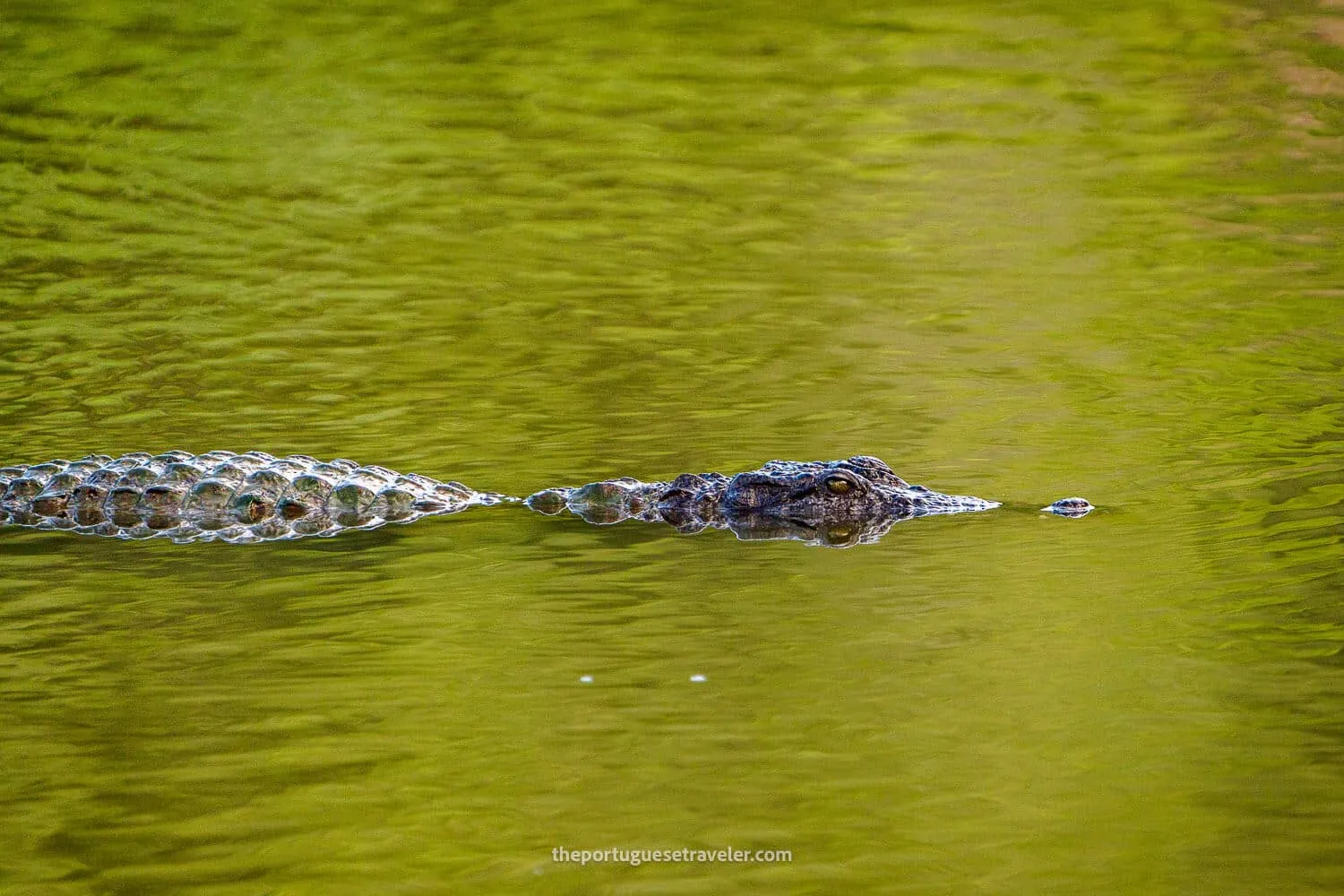
One of the crocodiles at this lake at the Sithulpawwa Rock Temple complex
As we left the temple, I kept my eyes peeled for more rare species of animals, eagerly awaiting the next surprise. If you’re visiting Yala, I can’t recommend a trip to the Sithulpawwa Rock Temple enough, it’s an unforgettable adventure you won’t regret, I promise!